You’re 32, your prescription hasn’t changed in years, and yet your eyes feel exhausted by 3 p.m. every day. Your optometrist suggests “anti-fatigue lenses” — and suddenly you’re looking at a $180 upgrade quote. What exactly are these lenses, do they actually work, and is the price justified?
What Are Anti-Fatigue Lenses?
Anti-fatigue lenses — also called “extended focus,” “digital comfort,” or “occupational single-vision” lenses — are a hybrid lens design aimed at young-to-middle-aged adults who spend significant time on screens. They look and function like standard single-vision lenses for distance, but have a subtle power boost (+0.50 to +0.88 D) in the lower portion of the lens.
The idea is to reduce the accommodative effort required when your ciliary muscles switch from distance to near focus repeatedly — which is exactly what happens during extended screen use. The small addition in the lower zone reduces the strain of close-focus work without requiring you to tip your head or shift gaze the way progressives require.
Popular branded versions include:
- Essilor Eyezen — available in four “boost” levels (0.40 to 1.00)
- Zeiss Digital Lenses
- Hoya Sync III
- Shamir Relax
Anti-Fatigue Lens Cost
| Lens Option | Cost (Lenses Only, Before Frames) |
|---|---|
| Standard single-vision (1.50 index) | $50–$100 |
| Anti-fatigue / digital lens (1.50 index) | $130–$250 |
| Anti-fatigue with high-index (1.67) | $200–$400 |
| Branded Eyezen / Zeiss Digital (mid-tier practice) | $180–$320 |
| Anti-fatigue online (e.g., Zenni Blokz+) | $35–$75 |
| Entry-level progressive as alternative | $200–$500 |
Who Actually Benefits
Anti-fatigue lenses are designed for a specific profile: adults roughly ages 25–42 who don’t yet need reading glasses but are experiencing digital eye strain. They’re not ideal for everyone:
Good candidates:
- Ages 25–42 with prescription that’s stable for distance
- 6+ hours of screen time per day
- Experiencing end-of-day eye fatigue, headaches, or difficulty focusing after screen sessions
- Currently wearing single-vision distance glasses full-time
- Not yet ready (or not yet needing) progressive lenses
Not the right fit:
- Adults over 45 who actually need reading power — they need progressives or separate reading glasses, not anti-fatigue lenses
- People who rarely use screens — standard single vision is fine
- Anyone with convergence insufficiency or binocular vision disorder — these need vision therapy, not a passive lens design change
- People who primarily do close work only — occupational (office) lenses or readers make more sense
The Digital Eye Strain Context
The vision industry uses anti-fatigue lenses partly in response to the massive rise in screen use. The Vision Council’s 2023 Digital Eye Strain Report found that 76% of American adults report digital eye strain symptoms. The AAO notes that digital eye strain — officially termed “computer vision syndrome” — doesn’t cause permanent damage, but the symptoms (eye fatigue, headaches, dry eyes, blurred vision after screen use) are real and common.
Whether a $0.50 D boost in the lower lens segment meaningfully reduces those symptoms is debated. Clinical evidence is limited and often comes from the lens manufacturers themselves. Anecdotally, many patients report improvement. The effect is modest for most, significant for some, and undetectable for others.
Anti-fatigue lenses address accommodative demand — the focusing effort. They don’t fix dry eyes from reduced blinking (the 20-20-20 rule helps more), they don’t address binocular vision issues, and they don’t change your monitor brightness. If your eye strain is primarily dry eye-related or is caused by a poor workstation setup, anti-fatigue lenses won’t solve the problem. Make sure your OD rules out other causes before you invest in a lens upgrade.
Anti-Fatigue vs. Progressive Lenses
This is the most common comparison. Here’s the honest difference:
Anti-fatigue: Distance correction everywhere, subtle near boost in the lower 10–20% of the lens. Natural to adapt to. No need to adjust head position for intermediate distances.
Progressive: True distance, intermediate, and near zones. Requires adaptation. Some distortion at the lens periphery. More useful for people who genuinely need near correction (over 40+, or patients with a significant near prescription).
For a 34-year-old with 20/20 near vision who just wants screen comfort — anti-fatigue is the right tool. For a 46-year-old who struggles to read menus and phone screens — progressives are what’s actually needed.
Cheaper Alternatives
Online anti-fatigue options have improved significantly. Zenni’s Blokz+ anti-fatigue lenses combine anti-fatigue design with blue light filtering for $35–$75 — a fraction of the branded retail cost. The optical quality is lab-certified. For simple distance prescriptions, this is a legitimate option.
Computer glasses with a specific reading/intermediate Rx: Instead of an anti-fatigue single-vision lens, some patients benefit more from a second pair of single-vision glasses with the exact add power needed for their monitor distance. A dedicated computer prescription is often $100–$200 total for a basic online pair.
Free eye strain interventions first: Before spending $200 on lenses, try:
- The 20-20-20 rule (every 20 minutes, look 20 feet away for 20 seconds)
- Adjust monitor height so you’re looking slightly downward
- Use lubricating eye drops if your eyes feel dry
- Reduce overhead glare and reflections from windows
- Increase text size on your devices
If these help significantly, your lens choice matters less. If they don’t touch the fatigue, anti-fatigue lenses may be worth trying.
- Ask your OD specifically which “boost level” is appropriate for your prescription — Eyezen offers levels from 0.40 to 1.00, and the right one depends on your accommodative reserve
- Compare the Essilor/Zeiss branded price at your optical practice vs. Zenni’s anti-fatigue option — the functional difference is often minimal for stable simple prescriptions
- Check whether your vision insurance covers “lens enhancements” — VSP plans often pay $50–$100 toward lens upgrades including anti-fatigue designs
- If you work from home, order anti-fatigue lenses in a second frame to use as dedicated computer glasses, keeping your regular glasses as your primary pair
Bottom Line
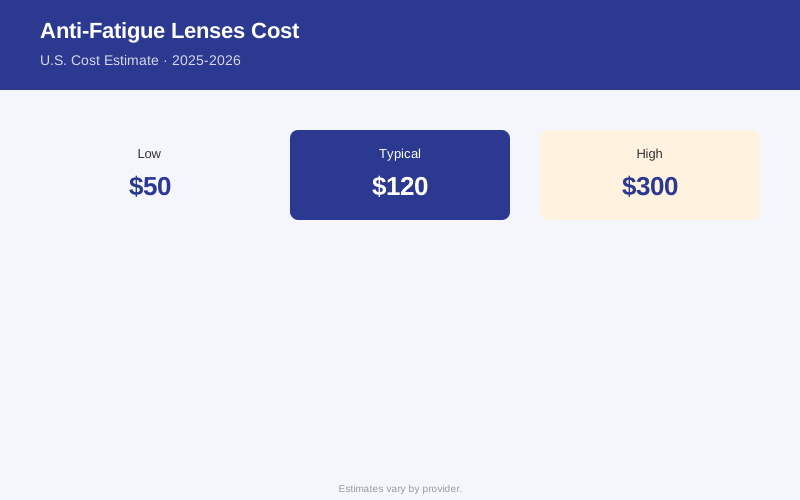
Anti-fatigue lenses cost $130–$320 at most optical practices, or $35–$75 online for comparable designs. They’re a genuine tool for screen-heavy adults in their 30s who experience accommodative fatigue by end of day. They’re not magic, they won’t help everyone, and they’re not a substitute for addressing dry eyes, monitor ergonomics, or binocular vision problems. But for the right patient profile, they’re a reasonable, modest-cost upgrade that may add real comfort to long workdays.