Most contact wearers assume monthly lenses are the cheap option. They’re right — but the gap is bigger than they think. A wearer on Biofinity monthlies often spends less than half of what a daily-disposable wearer pays for comparable comfort. That’s the quiet advantage CooperVision’s flagship lens has held for years.
Biofinity is a silicone hydrogel monthly lens, meaning you replace it every 30 days rather than every day or two weeks. According to the Vision Council, monthly and two-week reusables still account for a large share of the roughly 45 million U.S. contact wearers, largely because the math is friendly. Here’s that math.
Biofinity Price by Package
Biofinity comes in 6-packs and value 12-packs. Because they’re monthly lenses, a single box stretches a long way.
| Package | Typical Price | Per Lens | Covers (both eyes) |
|---|---|---|---|
| 6-pack | $25–$45 | $4.17–$7.50 | ~3 months |
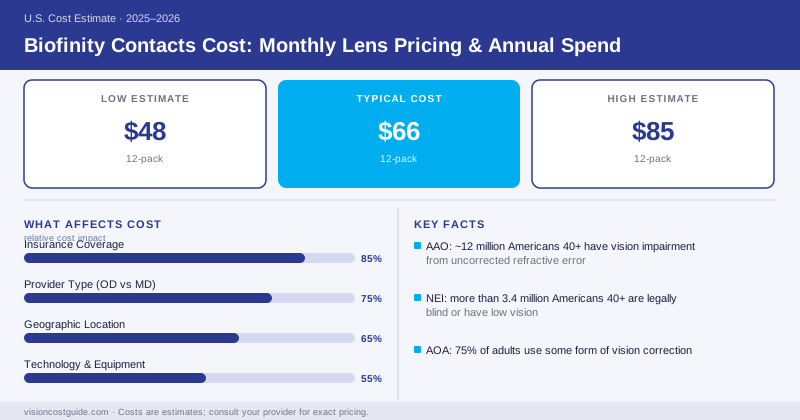
| 12-pack | $48–$85 | $4.00–$7.08 | ~6 months |
Worn daily and replaced on schedule, you need about 12 lenses per eye per year. That puts standard Biofinity at roughly $150–$320 annually for both eyes — among the lowest of any premium reusable lens.
Why Monthlies Cost Less
The savings come down to volume. You’re buying 24 lenses a year instead of 730. Even though each Biofinity lens costs more than a single daily, the total count crushes the daily-disposable bill. If you’re weighing the trade-off, compare against our daily contacts and monthly contacts breakdowns side by side.
Biofinity is one of the most cost-effective premium lenses on the market at $150–$320 a year. The trade-off versus dailies is cleaning and storage — you’ll need contact solution and a case, plus the discipline to replace on day 30, not day 45.
Toric and Multifocal Versions
If your prescription needs more than a standard sphere, expect to pay more.
| Lens Version | Per 6-Pack | Annual (both eyes) |
|---|---|---|
| Biofinity (standard) | $25–$45 | $150–$320 |
| Biofinity Toric (astigmatism) | $40–$65 | $290–$480 |
| Biofinity Multifocal (presbyopia) | $45–$70 | $320–$550 |
| Biofinity Energys (screen-focused) | $30–$50 | $180–$360 |
The Toric version corrects astigmatism, and the Multifocal handles presbyopia — the age-related near-vision loss that the National Eye Institute notes affects most adults past their mid-40s. Both cost a premium because they’re harder to manufacture. For the astigmatism options across brands, see our guide to toric contacts.
Where to Buy
You’ll find Biofinity at the eye doctor, online retailers, and warehouse clubs. Online sellers and clubs typically beat the in-office price by $4–$12 per box, and CooperVision runs periodic rebates on annual supplies that can return $80–$150.
The Cost Beyond the Lens
Monthlies carry one cost dailies skip: solution. Budget $80–$150 a year for multipurpose or hydrogen-peroxide solution and cases. Add the annual contact lens exam, which runs $100–$250 depending on whether your plan covers it. Speaking of which, our vision insurance cost guide explains how a typical $130–$200 contact allowance changes your out-of-pocket math.
Replace on schedule. Biofinity is approved for 30-day replacement, and protein and lipid deposits build up over the month. Stretching a monthly lens to six weeks to save a few dollars is a false economy — it raises infection risk, and the CDC links improper contact habits to roughly 1 million eye-infection-related medical visits a year.
Bottom Line
Standard Biofinity is a genuine value play at $150–$320 a year — cheaper than most premium reusables and a fraction of daily disposables. Add solution and the exam, buy in 12-packs online, and watch for a CooperVision rebate. Just don’t trade the savings for a stale lens.
Frequently Asked Questions
A 6-pack of Biofinity runs $25–$45, which covers six months for one eye since they're monthly replacement lenses.
Much cheaper. Biofinity monthlies typically cost $150–$320 a year versus $500–$900 for daily disposables.
Yes. Biofinity Toric and Multifocal usually run $40–$70 per 6-pack, pushing annual spend to $300–$550.