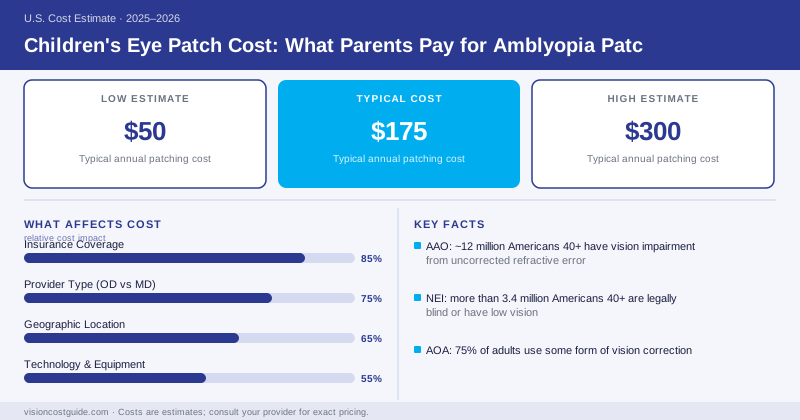
Here’s a number that surprises most parents: the treatment for lazy eye, one of the most common childhood vision problems, can cost less than a fast-food meal. Disposable eye patches run about $0.20 to $1 each. The patch is cheap. The commitment is the hard part.
Patching treats amblyopia, where the brain favors one eye and the other doesn’t develop properly. Covering the strong eye forces the brain to use the weaker one, strengthening it over time. It’s simple, proven, and inexpensive, but it requires consistency.
What Patches Actually Cost
| Patch Type | Cost | Best For |
|---|---|---|
| Adhesive disposable patches | $0.20–$1 each ($20–$40/box) | Younger kids, all-day adhesion |
| Reusable cloth patch (over glasses) | $8–$20 each | Kids who wear glasses |
| Decorated/fun-design patches | $0.50–$2 each | Improving compliance |
| Atropine drops (patch alternative) | $30–$80/month | Kids who resist patches |
| Typical annual patching cost | $50–$300 | Full treatment course |
The patches are the cheapest part of amblyopia care by far. What adds up is the year-plus of disposables for daily use, plus the follow-up exams to track progress. Even so, the total patch cost over a full treatment course is modest, usually $50 to $300.
Eye patches cost $0.20–$1 each for disposables or $8–$20 for reusable cloth versions. A full year of patching runs $50–$300. The patches are cheap; the real investment is daily consistency over months.
How Much Patching, and for How Long?
This is where parents get anxious, but the research is reassuring. The Pediatric Eye Disease Investigator Group (PEDIG), funded by the NEI, ran landmark trials that changed practice. They found that for moderate amblyopia, 2 hours of daily patching worked as well as 6 hours. For severe cases, 6 hours matched full-time patching.
That means less patching than the old all-day approach, which is easier on kids and families. Treatment length varies, often a few months to two years, depending on severity and how early it started. Earlier is better: the CDC notes amblyopia is most treatable before age 7 to 9, while the visual system is still developing.
Patches vs. Atropine Drops
Patches aren’t the only route. For kids who fight the patch, atropine drops in the strong eye blur its vision instead, achieving the same goal of forcing the weak eye to work.
- Patches: cheapest, no medication, but visible and sometimes resisted
- Atropine drops: easier compliance, no visible patch, but pricier at $30 to $80/month
- PEDIG trials found both work comparably for moderate amblyopia
Many families switch to drops when patching becomes a daily battle. Our amblyopia treatment cost guide compares the full options and total program costs.
Boosting Compliance
The biggest predictor of success isn’t the patch, it’s whether your child actually wears it. Tricks that help:
- Use fun, decorated patches kids pick themselves
- Tie patching to a favorite show or screen time
- Use a sticker chart or reward system
- Patch during a consistent daily routine so it becomes habit
- Get the school and caregivers on board if patching happens during the day
A reusable cloth patch that slips over kids’ glasses is comfortable and reusable, but it only works if your child wears the glasses. Adhesive patches stick directly to skin and prevent peeking around the edges, which younger kids are notorious for.
Don’t stop patching early just because vision seems better. Amblyopia can regress if treatment ends too soon, and the PEDIG studies built in tapering schedules to prevent that. Always follow your eye doctor’s full plan and keep follow-up appointments, even when your child’s vision appears normal.
Bottom Line
Eye patching is one of the best-value treatments in all of children’s eye care. For the price of a box of patches and a handful of follow-up visits, you can correct a condition that, untreated, causes permanent vision loss in one eye. The science is solid, the cost is low, and modern guidelines ask for less daily patching than parents fear.
The real work is consistency over months, not money. Start with a pediatric eye exam to confirm the diagnosis and get a patching prescription. Then make it routine, reward the effort, and keep every follow-up. The patch costs pennies; sticking with it is what gives your child a lifetime of two working eyes.
Frequently Asked Questions
Adhesive disposable patches cost about $0.20 to $1 each, or $20 to $40 for a box of 30 to 50. Reusable cloth patches that slip over glasses run $8 to $20 each. A year of patching typically costs $50 to $300.
It depends on severity. Doctors often prescribe 2 to 6 hours of daily patching, and treatment can last months to a couple of years. The PEDIG studies found 2 hours daily worked as well as 6 hours for moderate cases.
Patches themselves are inexpensive and usually paid out of pocket, but the exams and follow-up visits to manage amblyopia are typically covered by medical insurance. FSA and HSA funds cover the patches.