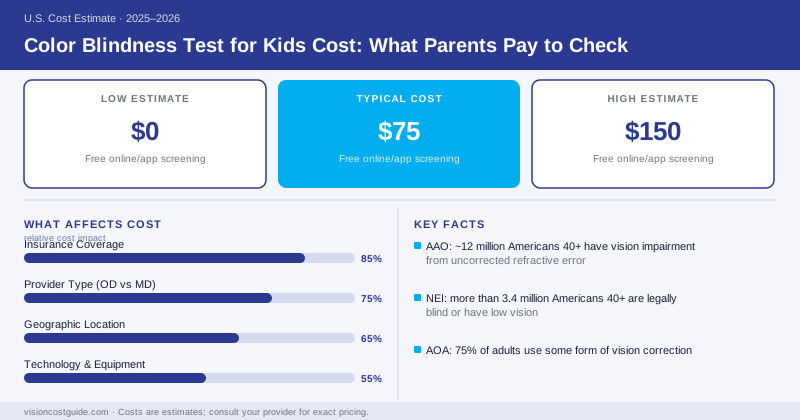
Roughly 1 in 12 boys is color blind, yet most aren’t diagnosed until they struggle with a color-coded worksheet in school. A quick test, often free, can catch it years earlier. So what does checking a child’s color vision actually cost? Anywhere from nothing to about $75.
Color blindness, more accurately color vision deficiency, is almost always inherited and far more common in boys than girls. It’s rarely a medical danger, but knowing early smooths out school and, eventually, certain career paths.
How Common Is It?
The numbers are higher than most parents expect. The National Eye Institute reports color vision deficiency affects about 8% of men, roughly 1 in 12, and under 1% of women, around 1 in 200. The huge gender gap exists because the most common forms are tied to the X chromosome.
Most cases are red-green deficiency, where reds, greens, browns, and oranges blur together. True total color blindness, seeing only in grayscale, is extremely rare.
What the Test Involves
Testing a young child takes special tools, since they can’t always read numbers.
- Ishihara-style plates: dotted circles with hidden numbers or shapes; kid-friendly versions use shapes and trails instead of numbers
- Color-matching tests: sorting or matching colored caps (like the Farnsworth D-15) for older kids
- Computerized tests: increasingly used in clinics for precise results
The screening is quick, a few minutes, and painless. The challenge is just getting a young child to engage, which is why picture-based tests exist for ages 4 and 5.
What It Costs
| Test Type | Where | Cost |
|---|---|---|
| Color screening within an eye exam | Optometrist | Often included |
| Standalone color vision screening | Optometrist | $0–$75 |
| Detailed test (Farnsworth D-15, anomaloscope) | Specialist | $50–$150 |
| Free online/app screening | Home | $0 (informal only) |
The cheapest reliable option is bundling it into a comprehensive pediatric eye exam, where color screening is frequently included at no extra charge. Free online tests exist but aren’t diagnostic, treat them as a hint, not an answer.
A color blindness test for kids costs $0–$75, and it’s often free when bundled into a regular pediatric eye exam. Since about 1 in 12 boys is affected, screening boys early is a small, smart step, especially before color-coded schoolwork begins.
Why Test Early?
Color vision deficiency is invisible to the child, they assume everyone sees what they see. That can quietly cause trouble:
- Misreading color-coded charts, maps, and worksheets in class
- Confusion with colored teaching materials and educational games
- Frustration that looks like a learning problem but isn’t
- Later, limits on careers like pilot, electrician, or some military roles
Catching it around age 4 to 5 lets parents and teachers make simple accommodations, like labeling colors with words, before it affects confidence or grades.
Living With It
There’s no cure for inherited color blindness, but it’s very manageable once known. Practical steps help a lot:
- Tell teachers so materials can be labeled or adapted
- Teach the child to use position and labels (like traffic-light order) instead of color alone
- Consider color-filtering glasses, which help some kids distinguish certain shades; our color blind glasses cost guide covers options
For a deeper look at the diagnostic side and adult testing, see our color vision deficiency test cost guide.
A sudden change in color vision, or color problems in just one eye, is different from inherited color blindness and can signal an eye-health issue. Inherited color deficiency is present from birth, affects both eyes equally, and doesn’t change. Any acquired or one-sided color vision loss should be evaluated by an eye doctor promptly.
Bottom Line
A color blindness test is one of the easiest and cheapest checks you can do for a child, often free, always quick, and genuinely useful. With about 8% of boys affected, screening early, especially before color-coded schoolwork ramps up, spares a lot of unnecessary frustration.
The simplest move: ask for color vision screening at your child’s next comprehensive eye exam. If the result flags a deficiency, a specialist test confirms the type, and a few small accommodations handle the rest. It won’t change your child’s vision, but knowing changes how everyone around them can help.
Frequently Asked Questions
A basic color vision screening is often free as part of a comprehensive pediatric eye exam. A standalone test runs $0 to $75, and more detailed diagnostic tests like the Farnsworth D-15 may cost more at a specialist.
Children can be reliably tested around age 4 to 5, once they know colors and shapes well enough to respond. Picture-based tests work for kids too young to read numbers.
Inherited color blindness can't be cured, but it's usually mild and manageable. Knowing about it early helps with classroom accommodations and, later, career planning. Special tinted glasses help some kids distinguish certain colors.