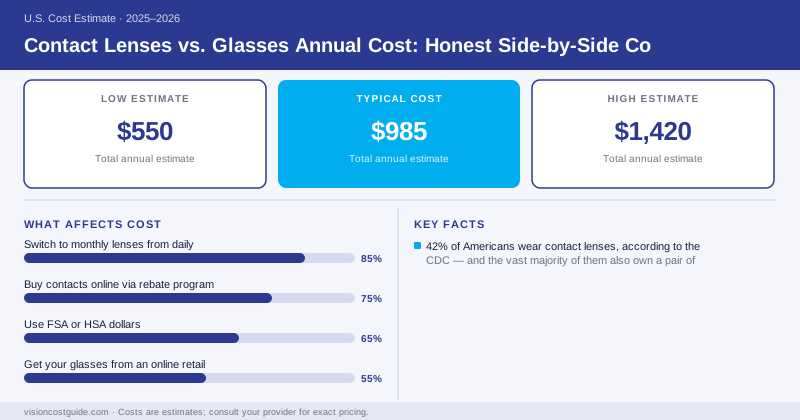
42% of Americans wear contact lenses, according to the CDC — and the vast majority of them also own a pair of glasses. Which means the real question isn’t “contacts or glasses.” It’s “how much does being a dual-mode wearer actually cost, and is there a smarter configuration?”
Here’s the full annual cost breakdown for each mode, plus the honest math on the hybrid approach most people actually use.
Annual Cost: Contacts vs. Glasses
| Cost Item | Contact Lenses (annual) | Eyeglasses (annualized) |
|---|---|---|
| Lenses / frames | $200–$700 | $75–$400/yr (based on $200–$1,000 pair every 2–3 yrs) |
| Contact lens solution | $100–$200 | $0 |
| Contact lens exam / fitting | $50–$120 | $0 (included in standard exam) |
| Comprehensive eye exam | $100–$200 | $100–$200 |
| Glasses as backup (contacts wearers) | $100–$200 | N/A |
| Total annual estimate | $550–$1,420 | $175–$600 |
Glasses look much cheaper on paper — but the annualized comparison is misleading in one important way: most people who wear glasses full-time still have a pair of prescription sunglasses or a second pair for sports, pushing actual annual glasses spending higher than the base case suggests.
The Lens Type Variable Changes Everything
Not all contacts cost the same. Daily disposables are the most expensive modality but the most convenient and hygienic. Monthly lenses are cheaper per-lens but require solution and care. Specialty lenses (toric for astigmatism, multifocal for presbyopia) cost more in any modality.
The AOA estimates that more than 45 million Americans wear contact lenses — and surveys consistently show most contact wearers underestimate their annual lens spend. A daily disposable wearer who uses contacts 5 days a week spends $400–$600 per year on lenses alone, before solution, exam fees, or backup glasses.
Contact lenses beat glasses on annual cost in exactly one realistic scenario: a glasses-only wearer who replaces premium frames every year. That scenario doesn’t describe most people. For typical wearers — contacts most days, glasses for evenings and weekends — the total annual spend on both modalities combined is $600–$1,000 per year. That’s the real number to budget.
The Hybrid Approach: What Most People Actually Spend
The honest picture: most contact lens wearers don’t choose between contacts and glasses. They use both — contacts for work, exercise, or social situations, glasses for evenings and mornings. The AOA reports that contact wearers average 12–14 hours of wear on contact-wearing days and wear glasses for the remaining hours.
What this means for your budget:
- Contact lenses: $200–$700/year (lens cost)
- Contact lens solution + case: $100–$200/year (skipped if daily disposable)
- Primary glasses pair: $200–$600 every 2–3 years = $75–$300/year annualized
- Contact lens exam: $50–$120/year (on top of glasses exam)
- Comprehensive eye exam: $100–$200/year
Combined annual total for a typical dual-mode wearer: $525–$1,520/year
Does Vision Insurance Change the Calculation?
Yes, significantly. Most VSP and EyeMed plans offer:
- One comprehensive exam per year (copay $10–$40)
- A contact lens allowance OR a frame/lens allowance of $130–$200 per year — not both
That allowance gap matters. VSP’s standard contact lens benefit pays $130–$150 toward contacts. Daily disposable wearers spend $400–$700 on lenses annually — so insurance covers 20–35% of their lens cost. Glasses wearers using the frame/lens allowance can come out better if they buy within the allowance.
You cannot use the contact lens allowance AND the glasses/frames allowance in the same benefit year on most VSP and EyeMed plans. You choose one or the other. If you buy both contacts and glasses in the same year, the second purchase has no benefit coverage. Plan your timing around your benefit year, not the calendar year.
Strategies to Cut Your Annual Vision Bill
Switch to monthly lenses from daily. The annual savings can be $150–$300. Yes, monthly lenses require solution and careful hygiene — but they’re clinically safe and widely used. Daily disposables are more convenient but carry a meaningful cost premium.
Buy contacts online via rebate programs. 1-800 Contacts, Coastal, and Contacts Direct often match in-office prices and stack with manufacturer rebates of $50–$100 per year. Ask your OD for the lens rebate form — most manufacturers offer them.
Use FSA or HSA dollars. Contact lenses, glasses, and eye exams are all FSA/HSA-eligible expenses. If you have an FSA, use it before year-end rather than forfeiting the funds. See HSA/FSA Vision Expenses for what qualifies.
Get your glasses from an online retailer. A $50 pair from Zenni for your backup or evening glasses saves $150–$350 compared to a second pair from your optometrist. See Zenni Glasses Cost and Warby Parker Glasses Cost for specific comparisons.
See also: Contact Lenses Cost for a full annual breakdown by lens type and Eyeglasses Cost for frame and lens pricing tiers.