“Your cornea is slowly failing.” That’s what Fuchs’ dystrophy feels like to hear. The good news in 2025 is that modern corneal transplant techniques have revolutionized outcomes—and costs are more predictable than patients often fear. Here’s what you’ll actually pay.
Types of Corneal Dystrophy: A Cost-Relevant Overview
There are over 20 types of corneal dystrophy. The ones that drive significant treatment costs are:
Fuchs’ endothelial dystrophy — The most common and most likely to require surgery. Endothelial cells pump fluid out of the cornea; as they degenerate, the cornea swells and vision blurs—especially in the morning. Affects an estimated 4% of Americans over 40.
Map-dot-fingerprint dystrophy (EBMD/ABMD) — Most common overall, usually manageable with drops and punctal plugs; rarely needs surgery.
Lattice, granular, macular dystrophy (stromal types) — Abnormal deposits in the corneal stroma; may require penetrating keratoplasty (PKP) if central vision is affected.
Reis-Bücklers and Thiel-Behnke — Superficial dystrophies that may respond to phototherapeutic keratectomy (PTK).
Treatment Cost by Type
| Treatment | Cost Range |
|---|---|
| Slit-lamp exam + diagnosis | $150–$400 |
| Specular microscopy (endothelial cell count) | $100–$250 |
| Corneal topography/tomography | $150–$350 |
| EBMD: lubricating drops + bandage contacts | $50–$200/year |
| EBMD: superficial debridement (in-office) | $200–$600 |
| PTK (phototherapeutic keratectomy) | $1,500–$3,500 per eye |
| DSAEK (Descemet’s stripping endothelial keratoplasty) | $8,000–$18,000 per eye |
| DMEK (Descemet’s membrane endothelial keratoplasty) | $10,000–$22,000 per eye |
| Full-thickness PKP (penetrating keratoplasty) | $13,000–$25,000 per eye |
| Rho-kinase inhibitor drops (Rhopressa) | $200–$400/month |
Fuchs’ Dystrophy: The Biggest Cost Driver
Fuchs’ is where most patients eventually face a significant financial decision. Early-stage Fuchs’ costs almost nothing to manage—just monitoring and, if mornings are particularly blurry, a 5% saline drop (Muro 128) that costs $15–$30/bottle and draws water out of the swollen cornea.
When surgery becomes necessary, the preferred technique has shifted dramatically from full-thickness PKP to partial-thickness endothelial transplants:
DSAEK replaces only the innermost layers of the cornea with donor tissue. Recovery is faster, risk is lower, and outcomes are excellent. Cost: $8,000–$18,000 per eye all-in (surgeon fee, facility, anesthesia, tissue procurement).
DMEK is technically more demanding but produces better visual outcomes in expert hands. It’s becoming the gold standard for Fuchs’. Cost: $10,000–$22,000 per eye.
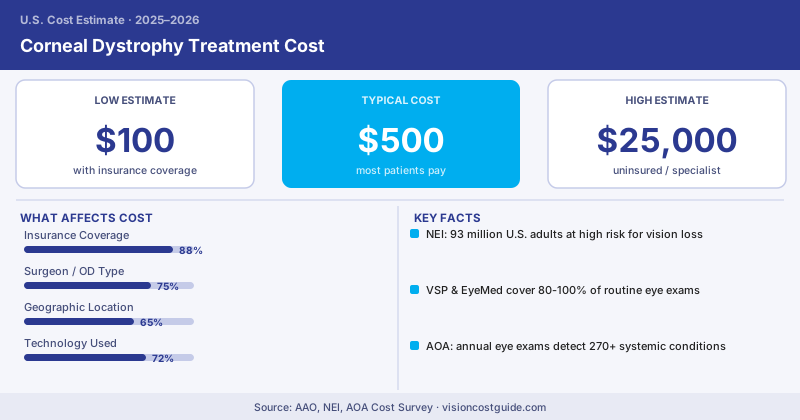
Insurance coverage: Both DSAEK and DMEK are medically necessary procedures covered by most health insurers and Medicare Part B when Fuchs’ has progressed to causing functional vision impairment. Expect to pay your deductible + 20% coinsurance. For a $15,000 procedure with a $1,500 deductible and 20% coinsurance (to $5,000 out-of-pocket max), your cost might be $3,500–$5,000.
Netarsudil (Rhopressa), originally developed for glaucoma, promotes endothelial cell regeneration and has shown promise in early Fuchs’ dystrophy in Phase II trials. It won’t reverse advanced disease, but for patients in the early haze-on-waking stage, it may delay surgery by years. Cost: $200–$400/month uninsured, $30–$80 with insurance. Ask your cornea specialist if you’re a candidate.
Map-Dot-Fingerprint Dystrophy: Usually Low Cost
EBMD (epithelial basement membrane dystrophy) causes recurrent corneal erosions—sharp, sudden pain when you wake up, often described as “glass in the eye.” Most patients manage with lubricating gel drops at bedtime ($15–$25) and avoid rubbing their eyes. Annual cost: under $100.
Recurrent episodes that don’t respond to drops may need in-office epithelial debridement ($200–$600) or PTK laser ($1,500–$3,500/eye). PTK is covered by insurance when recurrent erosion is documented and conservative treatment has failed.
Stromal Dystrophies (Lattice, Granular): PKP When Central Vision Is Threatened
Full-thickness PKP remains the procedure for stromal dystrophies that deposit opacities in the central cornea. It’s more disruptive than endothelial transplants—requiring 12–18 months of recovery and suture management—but delivers excellent long-term clarity. Cost: $13,000–$25,000/eye. Insurance-covered when medically indicated.
Managing Costs
- Use your medical insurance, not vision insurance, for all corneal dystrophy care
- Tissue banks provide donor corneas through non-profit channels—tissue procurement adds $2,500–$4,500 to transplant costs but is non-negotiable and covered as part of the procedure
- Academic medical centers often have lower surgeon fees while offering the most experienced cornea fellowship-trained surgeons
- CareCredit is widely accepted for the deductible and coinsurance portion
Early diagnosis and monitoring are cheap. Surgery is expensive but increasingly effective and often well-covered by insurance. If your cornea specialist recommends waiting, trust that advice—rushing to surgery before Fuchs’ progresses enough to justify it doesn’t benefit your vision or your wallet.