The inner corner of your eye is swollen, red, and painful — and squeezing it produces a discharge through your tear punctum. That’s dacryocystitis: an infection of the lacrimal sac, the small reservoir that collects tears before they drain into the nasolacrimal duct and down to the nose. It almost always develops as a consequence of nasolacrimal duct obstruction — stagnant tears become infected, the sac fills with pus, and you end up with what patients often describe as feeling like a hot marble under the skin next to the nose.
Dacryocystitis affects roughly 1 in 10,000 adults annually, with a strong female predominance — the American Academy of Ophthalmology attributes this partly to the anatomically narrower nasolacrimal duct in women.
Acute vs. Chronic: Different Courses, Different Costs
Acute dacryocystitis presents suddenly with pain, redness, and swelling over the lacrimal sac. Fever is possible if the infection spreads. Without treatment, it can progress to a lacrimal abscess requiring incision and drainage, or — in rare cases — orbital cellulitis. Acute cases respond to antibiotics, but the underlying duct obstruction that caused the infection remains, making recurrence common.
Chronic dacryocystitis presents more subtly: persistent watery eye, recurrent mild infections, and mucoid discharge expressed from the punctum. The duct is chronically blocked, the sac is chronically colonized, and antibiotics suppress but don’t cure it. Definitive treatment requires surgery (DCR).
Cost Breakdown
| Treatment | Low | Typical | High |
|---|---|---|---|
| Urgent care or ED visit | $150 | $350 | $700 |
| Ophthalmology consultation | $150 | $275 | $450 |
| Oral antibiotics (amoxicillin-clavulanate, 10-day course) | $20 | $50 | $150 |
| IV antibiotics (inpatient, if severe) | $800 | $2,500 | $6,000+ |
| Incision and drainage (abscess) | $300 | $700 | $1,500 |
| DCR surgery (definitive cure) | $3,500 | $5,500 | $8,000 |
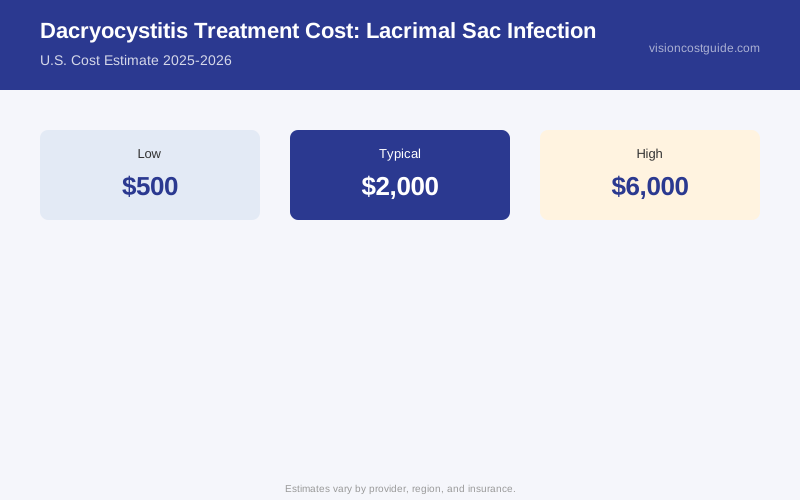
| Total (mild acute case, medical management) | $300 | $650 | $1,200 |
| Total (chronic, requiring DCR) | $4,000 | $6,500 | $10,000 |
Acute Management: Antibiotics and Drainage
First-line treatment for acute dacryocystitis is oral antibiotics targeting gram-positive organisms (Staphylococcus aureus is most common) and anaerobes. Amoxicillin-clavulanate (Augmentin) is the standard outpatient choice; fluoroquinolones (ciprofloxacin, moxifloxacin) are used for penicillin-allergic patients.
Most mild-to-moderate cases resolve with 7–14 days of oral antibiotics plus warm compresses. An ophthalmology or oculoplastics visit during the acute phase costs $150–$450 and includes a slit-lamp exam to assess the extent of infection and rule out orbital involvement.
If an abscess has formed — identified by fluctuant swelling that’s pointing toward the skin — incision and drainage (I&D) in the office or minor surgical setting relieves pressure, speeds healing, and prevents spontaneous rupture. An I&D runs $300–$1,500 depending on setting.
Severe cases with orbital spread or systemic signs require inpatient IV antibiotics (nafcillin, vancomycin for MRSA coverage), which can cost $2,500–$6,000+ for a 2–3 day hospital stay before transitioning to oral therapy.
Dacryocystitis is an infectious/medical condition covered under medical health insurance — not vision benefit plans. File under ICD-10 code H04.30 (unspecified dacryocystitis). The DCR surgery that often follows is also a covered medical procedure under health insurance when there’s documented chronic dacryocystitis or NLDO. Most major commercial insurers and Medicare cover DCR; prior authorization is required. Vision plans (VSP, EyeMed) do not cover dacryocystitis treatment.
The Recurrence Problem
Here’s what most patients aren’t told upfront: antibiotics cure the acute infection, but they don’t fix the blocked duct that caused it. Studies consistently show that 30–50% of patients who have acute dacryocystitis and are treated medically alone will have a recurrence within 12–24 months. Every recurrence involves another course of antibiotics, another office visit, possible I&D, and risk of progressive scarring that makes eventual DCR more difficult.
The evidence supports early definitive treatment with DCR after the acute infection resolves — typically 4–6 weeks after the acute episode, once inflammation has quieted. The total cost of multiple recurrent acute episodes can easily exceed the one-time cost of DCR surgery.
DCR: Definitive Treatment
Dacryocystorhinostomy creates a new drainage opening from the lacrimal sac directly into the nasal cavity, bypassing the obstructed duct entirely. It can be performed via an external approach (small skin incision at the inner canthus) or endoscopically (through the nose with no external incision).
External DCR has the highest success rate (90–95%) but leaves a small scar. Endoscopic DCR avoids the scar but requires an ENT or oculoplastic surgeon trained in nasal endoscopy. Both approaches are valid; the right choice depends on your anatomy and your surgeon’s training.
DCR costs $3,500–$8,000 all-in (surgeon fee + facility + anesthesia), is covered by medical insurance when medically necessary, and essentially cures chronic dacryocystitis permanently in the vast majority of cases.
Don’t delay treatment of acute dacryocystitis hoping it will resolve on its own. The lacrimal sac sits immediately adjacent to the orbital septum — the thin tissue that separates the eyelid contents from the orbit. In rare cases, untreated dacryocystitis spreads posterior to this septum, resulting in orbital cellulitis: a sight-threatening infection requiring emergent IV antibiotics and possible surgical drainage. Any dacryocystitis with proptosis (forward displacement of the eye), restricted eye movement, or visual changes should be evaluated as an ophthalmic emergency.
Finding a Specialist
Dacryocystitis should be managed by an ophthalmologist, with referral to an oculoplastic surgeon (ASOPRS-trained) for any case requiring I&D, evaluation for surgery, or recurrent episodes. Avoid managing this condition exclusively through urgent care or primary care — the nuances of distinguishing preseptal from orbital involvement, and the decision of when to proceed to surgery, require ophthalmology expertise.