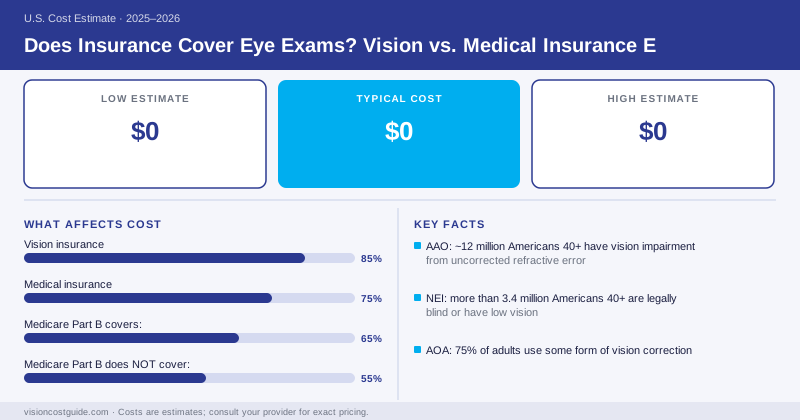
Most people have one insurance card and assume eye exams are either covered or they’re not. The reality is more complicated — and getting it wrong means either a denied claim or unnecessarily paying out of pocket when your medical insurance should cover the visit.
There are two completely separate insurance systems for eye care. Understanding which one applies to your visit is the single most useful piece of knowledge for avoiding billing surprises.
Vision Insurance vs. Medical Insurance: The Core Distinction
| Type of Visit | Which Insurance Applies | Typical Out-of-Pocket |
|---|---|---|
| Routine refraction (getting glasses/contacts prescription) | Vision insurance | $0–$40 copay |
| Glaucoma evaluation or monitoring | Medical insurance | $20–$60 specialist copay |
| Diabetic eye exam (retinal screening) | Medical insurance | $0–$60 (often preventive) |
| Macular degeneration monitoring | Medical insurance | $20–$60 specialist copay |
| Dry eye evaluation and treatment | Medical insurance | $20–$60 copay |
| Pink eye / eye infection visit | Medical insurance | $20–$50 primary care or urgent care |
| LASIK consultation | Usually neither (elective) | $0–$150 |
Vision insurance (VSP, EyeMed, Davis Vision, Humana Vision, UnitedHealthcare Vision) covers routine care: the annual or biennial comprehensive exam for refraction, glasses and contact lens allowances. An exam under vision insurance typically has a $10–$40 copay. Vision insurance does NOT cover the treatment of eye diseases.
Medical insurance (your health plan, whether HMO, PPO, or HDHP) covers the diagnosis and treatment of eye conditions classified as diseases. An ophthalmology visit billed with diagnosis codes for glaucoma, diabetic retinopathy, macular degeneration, or other medical diagnoses goes through your health plan — the same as any specialist visit.
Medicare and Eye Exams
Medicare Part B covers medically necessary eye exams — but not routine refraction. This distinction catches many patients by surprise.
Medicare Part B covers:
- Annual dilated eye exam for diabetics (one per year, at no cost as a preventive benefit)
- Glaucoma screening once a year for high-risk individuals (those with diabetes, family history of glaucoma, or African Americans 50+)
- Medical eye visits for diagnosis and treatment of eye disease (subject to Part B deductible and 20% coinsurance after meeting deductible)
Medicare Part B does NOT cover:
- Routine eye exams for glasses or contact lens prescriptions
- Eyeglasses or contact lenses (with one exception: glasses after cataract surgery with standard IOL implant get a one-time benefit)
The AAO notes that Medicare beneficiaries who want routine vision care coverage should look into Medicare Advantage plans — many include a vision benefit — or purchase a standalone vision insurance plan through VSP, EyeMed, or others at $10–$20/month.
Medicaid coverage of eye exams varies significantly by state. Most states cover annual or biennial eye exams for adults as part of Medicaid benefits, plus glasses every 1–2 years. Children covered by Medicaid or CHIP are entitled to comprehensive eye exams and medically necessary eyewear under federal Early and Periodic Screening, Diagnostic, and Treatment (EPSDT) requirements. If you or your child is on Medicaid, call your state’s Medicaid program to understand the specific vision benefit included.
Employer Vision Benefits: What They Actually Cover
The most common employer-sponsored vision plans are VSP and EyeMed. Both typically include:
- One comprehensive eye exam per benefit year (copay $0–$40)
- Frame allowance of $130–$200 toward glasses
- Lens benefit covering standard single-vision or progressive lenses
- OR a contact lens allowance of $130–$175 (in lieu of glasses)
Most plans use a “benefit year” (often January–December or tied to enrollment date) rather than calendar year. If you’re due for an exam in late November, it may be worth waiting until January if your benefit resets then — or getting the exam in late November and using the allowance before year-end. Know your benefit year dates.
Using your vision insurance at an out-of-network provider (an OD not in VSP or EyeMed’s network) still typically provides some reimbursement — just less. VSP’s out-of-network benefit reimburses roughly $45–$80 for an exam and $70–$100 toward glasses. If your preferred OD isn’t in-network, the out-of-pocket difference may be worth it for continuity of care.
Getting Covered for Routine Exams Without Vision Insurance
If you don’t have vision insurance, options exist:
Community health centers. Federally Qualified Health Centers (FQHCs) provide eye exams on a sliding-fee scale — often $20–$60 for a comprehensive exam based on income. Use HRSA’s health center finder at findahealthcenter.hrsa.gov.
Retail optical chains. Walmart Vision Center offers exams at $75–$100 independent of glasses purchase. Costco Optical runs $75–$130 for members.
VSP individual plans. VSP sells individual vision insurance starting around $13–$17/month. For someone who needs an exam plus glasses annually, the math often favors purchasing coverage.
FSA/HSA payment. Eye exam costs are FSA and HSA eligible. If you have either account, your pre-tax dollars make the out-of-pocket cost 22–37% cheaper than paying with after-tax income.
See also: Eye Exam Cost for what different settings charge, Vision Insurance Cost for standalone plan options, and Medicare Vision Coverage for the full Medicare benefit breakdown.