Every fall, millions of workers stare at the vision benefits checkbox during open enrollment and think, “Eh, I’ll skip it.” For a lot of them, that’s a $100-a-year mistake. Employer vision coverage is one of the cheapest, most predictable benefits your job offers — and the math for opting in is usually pretty lopsided. Here’s how to decide.
What Employer Vision Coverage Actually Costs
The reason employer vision is such a good deal is the subsidy. Your company picks up part of the premium, so you pay far less than you would buying the same plan yourself.
| Coverage | Through Employer | Buying Solo |
|---|---|---|
| Individual | $5–$15/mo | $15–$30/mo |
| Employee + spouse | $12–$22/mo | $30–$50/mo |
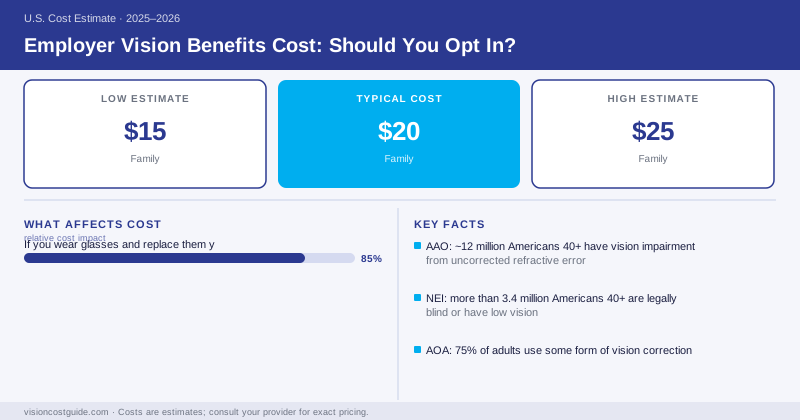
| Family | $15–$25/mo | $35–$60/mo |
That’s often less than half the individual-market price for the same VSP, EyeMed, or Davis Vision plan. And it’s widely available: KFF’s 2024 Employer Health Benefits Survey found that the large majority of big employers offer vision benefits, usually as a cheap voluntary add-on.
Why so cheap? Two reasons. First, your employer negotiates a group rate that no individual can match — carriers price group plans lower because they’re insuring a whole risk pool at once. Second, many companies subsidize part of the premium as a low-cost perk that boosts benefits satisfaction without costing them much. The result is that the same coverage you’d pay $25/month for on your own might cost you $8 through work. That gap is the entire reason employer vision is usually the smart pick when it’s on the table.
What You Get for the Premium
Employer vision plans follow the standard vision insurance structure:
- Annual comprehensive eye exam: 100% covered or a $10–$15 copay
- Frame allowance: $130–$200 every 12–24 months
- Lens benefit: Single vision, bifocal, and progressive lenses with copays
- Contact lens allowance: $130–$150 in place of glasses
The covered exam alone often justifies the premium. A standalone comprehensive eye exam costs $100–$150 out of pocket. If your employer plan runs $10/month ($120/year) and covers that exam at 100%, you’ve nearly broken even before you even touch the frame allowance. For anyone who gets a yearly exam, opting in is close to free money.
The Break-Even Math
Take a typical employer individual plan at $10/month ($120/year):
If you wear glasses and replace them yearly:
- Plan cost: $120
- Exam copay: $10
- Frames after $150 allowance: ~$50
- Lens copay: $25
- Total out-of-pocket: $205
- Without insurance: $130 exam + $250 glasses = $380
- Net savings: roughly $175/year
That’s a strong return for a $10/month decision. The family math is even better — at $20/month ($240/year) for a household where everyone needs an exam and at least one person buys new glasses or contacts, the covered exams alone can exceed the premium.
When to Skip It
Employer vision isn’t automatic for everyone. Skip it if:
- You rarely get exams and keep the same frames for years — paying cash may cost less
- You already have vision through a spouse’s plan (don’t double-pay)
- You’re planning LASIK soon and won’t need glasses afterward — though check our LASIK cost guide first, since most people still need an exam
Don’t assume the employer plan covers LASIK or medical eye conditions — it’s a discount on surgery (10–25% off) at best, and medical eye disease runs through your health plan. Also confirm whether there’s a benefit waiting period before your frame allowance activates. If you need eyewear right away, ask HR when materials coverage starts.
How to Decide at Open Enrollment
Run a 30-second gut check: Do you get an annual eye exam? Do you or anyone in your household wear glasses or contacts? If yes to either, the subsidized premium almost always pays off — opt in. If you genuinely never touch eye care, skip it and put the money in an FSA, where vision costs remain eligible expenses you can pay pre-tax.
For most working households, employer vision is the single cheapest way to get vision coverage. Don’t leave that subsidy on the table.
Frequently Asked Questions
Employer-sponsored vision coverage typically costs $5–$15/month for an individual after the employer subsidy, and $15–$25/month for family coverage — often less than half the individual-market price.
For most people who get an annual eye exam or buy glasses or contacts, yes. The subsidized premium plus the covered exam usually means the plan pays for itself within a year.
Yes. Most employer plans let you add a spouse and dependents during open enrollment for $15–$25/month total, which is a strong value for households that all wear glasses or contacts.