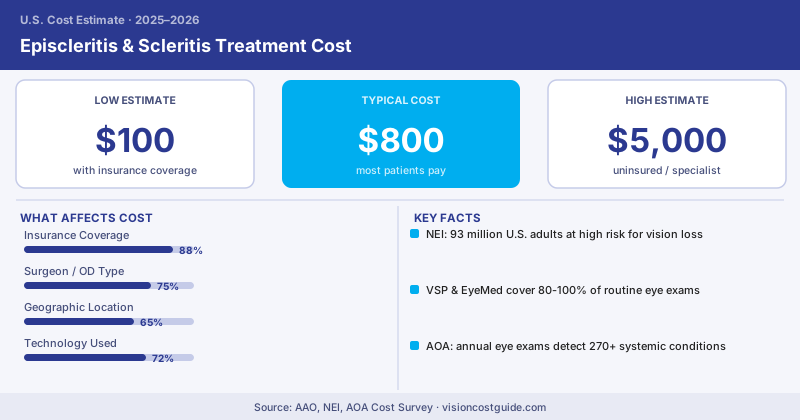
Most red eyes are pink eye. Some are dry eye. But when the redness is sectoral, accompanied by a deep aching pain that worsens when you move your eye—that’s a different situation. Episcleritis and scleritis look similar. Their costs don’t.
The Key Difference
Episcleritis is inflammation of the thin tissue between the conjunctiva and the white of the eye. It’s usually self-limiting, mildly uncomfortable, and rarely a sign of serious disease. Scleritis is inflammation of the sclera itself—deeper, more painful, and in roughly 50% of cases, associated with a systemic autoimmune disease like rheumatoid arthritis, lupus, or vasculitis.
That distinction drives the cost divide.
Treatment Cost Comparison
| Condition & Treatment | Typical Cost |
|---|---|
| Ophthalmology exam | $100–$350 |
| Episcleritis: artificial tears only | $10–$30 |
| Episcleritis: topical NSAID drops | $40–$120 |
| Episcleritis: oral ibuprofen course | $5–$20 |
| Scleritis: oral NSAIDs (indomethacin) | $30–$80/month |
| Scleritis: systemic workup (labs, imaging) | $500–$1,500 |
| Scleritis: oral corticosteroids | $20–$80/month |
| Scleritis: immunosuppressants (methotrexate) | $15–$200/month |
| Scleritis: biologics (rituximab infusion) | $8,000–$25,000/infusion |
Episcleritis: Usually Cheap
Episcleral inflammation typically resolves on its own within 7–10 days. For mild cases, preservative-free artificial tears and cool compresses are the treatment—cost is under $20. For more persistent or recurrent episodes, topical NSAID drops like ketorolac ($15–$40 generic) or a short course of oral ibuprofen handles most cases.
A 2020 review in Survey of Ophthalmology found that only about 11% of episcleritis cases are associated with systemic disease, and extensive workup is rarely warranted on first presentation. Total out-of-pocket for uncomplicated episcleritis: $100–$300 including the doctor visit.
The exception: recurrent episcleritis (3+ episodes per year) warrants rheumatology evaluation, which adds $200–$500 in consultations and basic labs.
Scleritis: Can Get Expensive Fast
Scleritis is a different animal. The pain is severe—often described as deep, boring, radiating to the forehead or jaw. Scleral tenderness on palpation is characteristic. And because half of cases have an underlying systemic etiology, the initial workup is significant.
A standard scleritis workup includes: CBC, CMP, ESR, CRP, ANA, ANCA, RF, anti-CCP, chest X-ray, and sometimes CT or MRI. That panel runs $400–$1,200 in lab fees, plus specialist consultation.
Treatment escalates based on severity:
- Diffuse anterior scleritis (most common): oral NSAIDs, sometimes oral prednisone—$50–$200/month
- Nodular scleritis: often requires steroid taper
- Necrotizing scleritis (rare, most severe): immunosuppressants, sometimes biologics like rituximab
Rituximab infusions, used for the most refractory cases, cost $8,000–$25,000 per infusion and are typically given in 2-infusion cycles. Medical insurance covers rituximab for FDA-indicated conditions (RA, vasculitis) but prior authorization is usually required.
Never use topical steroids for scleritis without close ophthalmologic supervision. Steroid drops can mask worsening inflammation while allowing scleral thinning (scleromalacia) to progress silently—a complication that can threaten the eye’s structural integrity and require surgery costing $3,000–$8,000.
Insurance Coverage
Both conditions are medical (not vision) diagnoses. File with your health insurance, not your vision plan. Ophthalmology visits, lab work, and medications are covered under standard medical benefits.
Without insurance, the full scleritis workup and first month of treatment can run $1,500–$2,500. GoodRx can reduce oral indomethacin to $10–$20/month. The systemic workup is harder to discount—but federally qualified health centers (FQHCs) offer sliding-scale fee visits if you’re uninsured.
When to See a Doctor Immediately
Don’t wait for a routine appointment if you have:
- Eye pain that worsens with eye movement
- Pain radiating to the jaw, temples, or scalp
- Scleral redness that doesn’t blanch with phenylephrine drops
- Any vision change alongside red eye
These signs suggest scleritis, not episcleritis. The cost of missing scleritis—corneal involvement, uveal effusion, or scleral perforation—dramatically exceeds the cost of same-week specialist care.
The Bottom Line
Episcleritis: probably $100–$300 total, and you’ll be fine. Scleritis: expect $500–$3,000+ for diagnosis and initial management, potentially much more if systemic disease is confirmed. The most important money you’ll spend is on a proper ophthalmology exam to tell them apart—a distinction that’s essentially impossible to make accurately from a photo or urgent care visit.