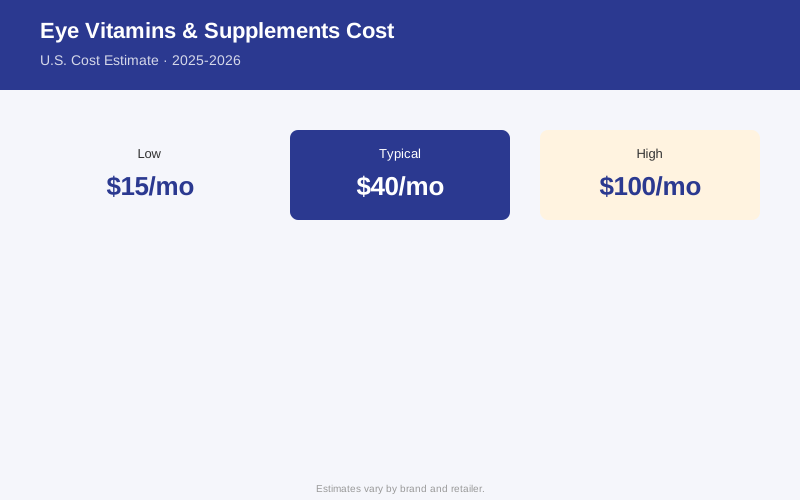
The “eye health” supplement market is a $2.5 billion industry. Walk into any pharmacy and you’ll find dozens of products with names like “Vision Formula,” “Eye & Vision Support,” and “Complete Eye Health.” Most of them have essentially no clinical proof behind them. One category — AREDS2 formula supplements — has rigorous trial data. Here’s how to tell the difference, what things actually cost, and when supplements are worth buying.
The Only Supplement Formula With Clinical Evidence: AREDS2
The Age-Related Eye Disease Study 2 (AREDS2) was a landmark National Eye Institute clinical trial that followed over 4,000 participants for five years. The study tested whether specific antioxidant vitamins could slow progression of intermediate or advanced age-related macular degeneration (AMD) to advanced stages.
The AREDS2 formula reduced the risk of AMD progression to advanced disease by 25% in people already diagnosed with intermediate AMD or advanced AMD in one eye. That’s a meaningful, proven benefit in a specific patient population.
The AREDS2 formula contains:
- Vitamin C: 500 mg
- Vitamin E: 400 IU
- Lutein: 10 mg
- Zeaxanthin: 2 mg
- Zinc: 80 mg
- Copper (cupric oxide): 2 mg
Nothing else has this level of evidence for eye disease. AREDS2 supplements are not magic — they don’t prevent AMD, they don’t restore lost vision, and they only benefit people with established intermediate-stage AMD. But if you’re in that group, they’re genuinely clinically indicated.
Eye Supplement Cost Comparison
| Product | Monthly Cost | Evidence Level |
|---|---|---|
| Generic AREDS2 formula (CVS, Walgreens store brand) | $18–$28/month | Strong (AREDS2 trial) |
| PreserVision AREDS2 (Bausch + Lomb) | $30–$50/month | Strong (AREDS2 trial) |
| Ocuvite Adult 50+ (B+L) | $20–$35/month | Moderate (AREDS2 ingredients) |
| MacuHealth (lutein-zeaxanthin-meso-zeaxanthin) | $45–$65/month | Limited (smaller trials) |
| Generic lutein/zeaxanthin supplement | $10–$25/month | Limited for AMD prevention |
| “Eye health” blends (various brands) | $20–$50/month | Little to none |
| Omega-3 (EPA+DHA, eye health claim) | $15–$40/month | Good for dry eye; not AMD |
What About Lutein and Zeaxanthin Without AREDS2?
Lutein and zeaxanthin are carotenoids that concentrate in the macula. They function as antioxidants and filter high-energy blue light. They are the “treatment zone” difference in AREDS2 vs. the original AREDS formula (which used beta-carotene, now replaced because it increased lung cancer risk in smokers).
For people with AMD, lutein and zeaxanthin in AREDS2 doses are clearly beneficial. For people without AMD, the evidence for lutein supplements preventing the disease is suggestive but not proven. The NEI notes that dietary sources of these carotenoids (leafy greens, eggs, corn) are associated with lower AMD risk in observational studies, but whether supplements in healthy people prevent disease onset is not established.
Standalone lutein/zeaxanthin supplements cost $10–$25/month. They’re unlikely to cause harm. Whether they’re worth the cost for primary prevention is genuinely uncertain.
Omega-3 Fatty Acids for Eye Health
Omega-3s (specifically EPA and DHA) have solid evidence for dry eye disease — the AAO recommends them for meibomian gland dysfunction, which is the leading cause of evaporative dry eye. The Dry Eye Assessment and Management (DREAM) study (NEI-funded) showed omega-3 supplements improved dry eye symptoms compared to olive oil placebo over 12 months, though the magnitude of benefit was modest.
For AMD, large randomized trials have NOT found that omega-3 supplementation slows progression. Don’t buy fish oil specifically for AMD.
Omega-3 dose for dry eye: 1,000–2,000 mg EPA+DHA daily. Look for products that specify EPA+DHA content, not just “fish oil” — a 1,000 mg fish oil capsule may contain only 300 mg EPA+DHA. Cost: $15–$40/month for quality products.
The AREDS2 evidence applies to a specific population. Take AREDS2 if your ophthalmologist has diagnosed you with:
- Intermediate AMD (many medium-sized drusen, or one large druse)
- Advanced AMD in one eye (geographic atrophy or wet AMD in one eye; intermediate in the other)
Do NOT take AREDS2 if:
- You have early AMD (small drusen only) — no benefit shown
- You have no AMD — no evidence of benefit for prevention
- You smoke or recently quit — high-dose zinc and other components may have interactions; discuss with your doctor
Always confirm with your ophthalmologist before starting. The AAO recommends AREDS2 supplements for appropriate AMD patients following its clinical practice guidelines.
The Marketing vs. Evidence Gap
The supplement market relies on the Dietary Supplement Health and Education Act (DSHEA) of 1994, which allows supplement manufacturers to make structure/function claims without FDA approval of the claim. “Supports eye health” doesn’t mean “proven to treat or prevent eye disease.” Companies can legally print “supports macular health” on a product that has never been tested in a clinical trial.
Common supplements sold for eye health with weak or no clinical evidence:
- Bilberry extract — marketed for night vision; no clinical trial support in humans
- Ginkgo biloba — sometimes marketed for glaucoma; evidence is weak
- Astaxanthin — antioxidant; some small studies, no robust RCT data
- Saffron — some small AMD-related trials, not FDA-endorsed
- Eye health “blends” with small doses of many ingredients — rarely match tested doses of any individual component
Spending $40–$60/month on an unproven blend when you could buy generic AREDS2 for $18–$28/month (if you have AMD) is a poor trade.
Buying AREDS2 for Less
Generic AREDS2 products at CVS, Walgreens, Walmart, and Costco contain the identical formula as brand-name PreserVision at 40–60% lower cost. The AREDS2 formula is not proprietary — any supplement manufacturer can formulate to its specifications. Check that the product contains the exact amounts (500 mg vitamin C, 400 IU vitamin E, 10 mg lutein, 2 mg zeaxanthin, 80 mg zinc, 2 mg copper) and you’re getting the same product.
Costco’s Kirkland brand omega-3 and lutein supplements consistently receive high marks from third-party testing organizations (ConsumerLab, NSF) for purity and dose accuracy. For a two-month supply, Costco typically runs $20–$35.
Bottom Line
Eye vitamins and supplements cost $10–$65 per month depending on product type. AREDS2 formula supplements have the only robust clinical evidence in eye care — they reduce AMD progression risk by 25% in patients with intermediate or advanced AMD. Generic AREDS2 at $18–$28/month is functionally identical to brand-name PreserVision at twice the cost. Omega-3s are worth $15–$30/month for dry eye patients. Everything else in the “eye health supplement” aisle is mostly marketing. Don’t let a compelling label substitute for asking your ophthalmologist what the evidence actually shows.