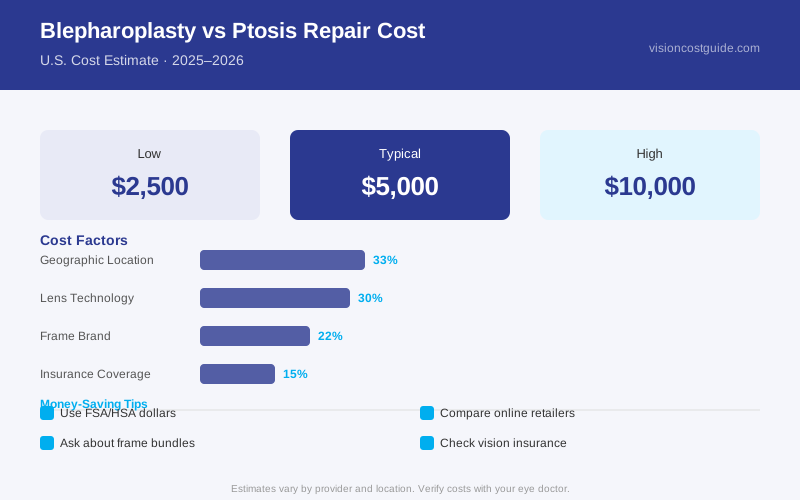
Two patients sitting in the same oculoplastic surgeon’s waiting room, both with drooping upper eyelids, both asking about surgery. One will pay $5,000 out of pocket. The other’s insurance might cover 80% of the procedure. The difference? It comes down to whether the drooping is cosmetic excess skin (blepharoplasty) or a muscle/nerve problem causing functional impairment (ptosis). The documentation to prove which one you have is more important than you’d think.
The Two Conditions and Their Procedures
Blepharoplasty (eyelid lift): Removes excess skin, fat, and sometimes muscle from the upper and/or lower eyelids. The most common reason is cosmetic — aging eyelids lose elasticity, and the resulting hood can make people look tired. Upper blepharoplasty can also be functional when excess skin obstructs the superior visual field enough to impair daily activities like driving.
Ptosis repair: Addresses drooping caused by weakness or damage to the levator muscle (which lifts the upper eyelid) or its aponeurosis (the tendon). Ptosis has causes ranging from aging and congenital muscle weakness to neurological conditions (Horner syndrome, third nerve palsy, myasthenia gravis). Ptosis is more likely to be covered by insurance because it’s a structural or neurological problem, not just skin excess.
Cost Breakdown
| Procedure | Surgeon Fee | Facility/ASC Fee | Anesthesia | Total Typical Range |
|---|---|---|---|---|
| Upper blepharoplasty (cosmetic) | $2,000–$4,000 | $500–$1,500 | $400–$800 | $3,000–$7,000 |
| Upper blepharoplasty (bilateral, cosmetic) | $2,500–$5,000 | $600–$1,500 | $400–$800 | $3,500–$8,000 |
| Lower blepharoplasty | $2,000–$4,500 | $500–$1,500 | $400–$800 | $3,000–$8,000 |
| Upper lid ptosis repair (unilateral) | $2,000–$4,000 | $500–$1,200 | $300–$700 | $2,500–$6,000 |
| Upper lid ptosis repair (bilateral) | $2,500–$4,500 | $600–$1,200 | $400–$800 | $3,500–$7,000 |
| Combined blepharoplasty + ptosis repair | $3,500–$6,000 | $700–$1,500 | $500–$1,000 | $4,500–$10,000 |
The American Society of Plastic Surgeons’ 2024 statistics show blepharoplasty as the fourth most performed cosmetic surgical procedure in the US — over 175,000 procedures annually.
The Insurance Coverage Test: Functional vs. Cosmetic
This is the most important practical question in eyelid surgery. Insurance companies cover functional procedures; they don’t cover cosmetic ones. The criteria differ by insurer, but the standard functional test is:
Visual field testing. A formal visual field test (Humphrey or Goldmann) is performed with the drooping eyelids in their natural position, then repeated with the eyelids taped up. If the obstruction reduces the superior visual field by 12–30% (the threshold varies by insurer — often 30% or 12 degrees above fixation), the procedure may qualify as medically necessary.
Photography. Standardized clinical photographs documenting the degree of ptosis or dermatochalasis (excess skin) are submitted to the insurer as supporting evidence.
Symptom documentation. The clinical record should document functional symptoms: difficulty reading, driving limitations, brow ache from compensatory forehead muscle use, cervical spine strain from head-tilting.
The documentation strategy matters as much as the underlying condition. A surgeon experienced in insurance coverage for eyelid surgery will order the right tests, document symptoms correctly, and submit a compelling prior authorization package.
A common clinical situation: the right eye has documented functional ptosis meeting insurance criteria; the left eye is symmetric but cosmetically drooping without the same functional impact.
Insurers typically cover the functional eye. They may refuse the second eye as cosmetic. But a bilaterally asymmetric outcome is a real complication — fixing one eyelid and leaving the other different-looking.
Surgeons in this situation often quote a “functional” portion covered by insurance and a “cosmetic” portion for the second side paid out of pocket. The split billing approach is legitimate when properly documented — ask your surgeon explicitly how they handle bilateral cases where only one side meets functional criteria.
For combined procedures (blepharoplasty to remove skin excess + ptosis repair to address muscle weakness in the same patient), each component is coded separately. The ptosis component may be covered; the blepharoplasty component may not. Ask for a detailed estimate showing which portions of the procedure fall under which CPT codes.
Who Performs Eyelid Surgery?
Three types of surgeons perform eyelid procedures:
Oculoplastic surgeons (ophthalmic plastic and reconstructive surgeons): Ophthalmologists with additional fellowship training in eyelid, orbital, and lacrimal surgery. The most specialized and typically preferred for ptosis repair and complex cases.
Plastic surgeons: Board-certified plastic surgeons with cosmetic surgery training. Often perform more blepharoplasties than ptosis repairs; better for cosmetically-driven procedures.
Facial plastic surgeons (otolaryngology background): ENT surgeons with facial plastic fellowship training; appropriate for cosmetic blepharoplasty.
For functional procedures involving ptosis, insurance coverage documentation, or neurological causes, an oculoplastic surgeon is usually the right choice. For cosmetic blepharoplasty in a healthy patient, a board-certified plastic surgeon with demonstrated eyelid experience is also appropriate.
Recovery and Secondary Costs
Don’t overlook recovery-related costs:
- Prescription antibiotic ointment/drops: $20–$60
- Lubricating eye drops (essential for 2–4 weeks): $15–$40
- Cold compresses and wound care supplies: $10–$30
- Follow-up appointments: Usually included in the surgical fee, but confirm
- Work time off: Upper blepharoplasty patients typically look presentable in 10–14 days; lower lid procedures take 2–3 weeks for significant bruising resolution
Blepharoplasty and ptosis repair are not reversible procedures. Removing too much skin from the upper lid causes lagophthalmos — inability to fully close the eye — which leads to corneal exposure damage, severe dry eye, and potentially serious vision problems. Board certification and significant experience with eyelid surgery specifically are minimum requirements. Oculoplastic surgeons are required to document hundreds of supervised procedures before completing fellowship training. General surgeons or dermatologists offering “quick eyelid lifts” at heavily discounted prices warrant extreme caution.
Bottom Line
Upper blepharoplasty runs $3,000–$7,000 and is usually cosmetic (self-pay). Ptosis repair runs $2,500–$6,000 and may be covered by health insurance if functional visual field impairment is documented. The documentation process — visual field testing, photography, symptom records — is worth doing properly even if you’re not confident of coverage, because the insurance win (80% of $5,000) is a real financial outcome worth pursuing. See an oculoplastic surgeon for both the clinical evaluation and the coverage strategy.