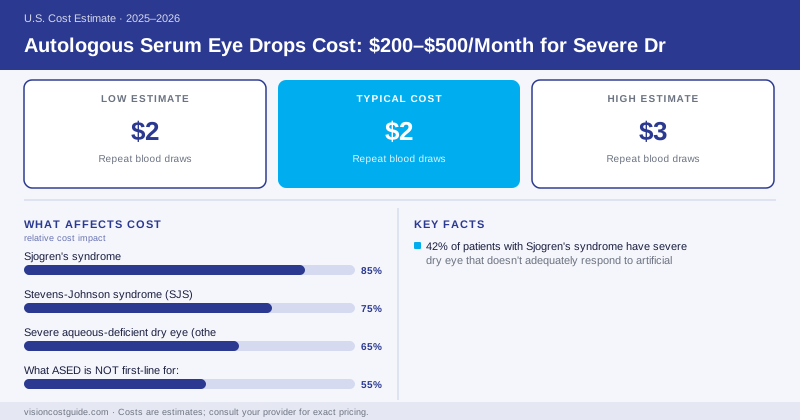
42% of patients with Sjogren’s syndrome have severe dry eye that doesn’t adequately respond to artificial tears alone, according to the Sjogren’s Foundation. For those patients — and for people recovering from bone marrow transplant, Stevens-Johnson syndrome, or just plain severe aqueous-deficient dry eye — the standard toolkit often falls short. The drops aren’t working. The plugs aren’t enough. The anti-inflammatories barely move the needle.
Autologous serum eye drops are where the conversation goes next. Made from your own blood. Expensive. Not covered by every insurance plan. But for the right patients, genuinely effective.
Here’s the full cost picture.
What Autologous Serum Eye Drops Are
Autologous serum eye drops (ASED) are eye drops made from your own blood serum — the liquid component of blood after red and white cells and clotting factors are removed. What remains in serum includes growth factors (EGF, TGF-β, fibronectin), vitamins (A, C, E), immunoglobulins, and albumin — many of the same bioactive proteins found in natural tears.
Commercial artificial tears mimic the water and electrolyte composition of tears. They don’t contain growth factors. ASED does — and for patients whose ocular surface has been damaged by chronic inflammation (Sjogren’s), toxic medication exposure (chemo, graft rejection drugs), or severe disease, those growth factors matter for healing.
The process works like this:
- You get a blood draw at a clinical lab (usually 60–100 mL depending on how many vials you need)
- The sample is shipped to a compounding pharmacy that specializes in ASED preparation
- The pharmacy centrifuges the blood, separates serum, dilutes to the prescribed concentration (typically 20%, 50%, or sometimes 100%), and dispenses into individual sterile vials
- You receive a batch of vials — typically 30–90 — shipped on dry ice
- Store unopened vials frozen (−20°C); open vials refrigerated and use within 7 days
2026 Cost Breakdown
| Cost Component | Typical Range | Notes |
|---|---|---|
| Blood draw (lab fee) | $50–$150 | Separate from pharmacy cost; may be covered by medical insurance |
| Compounding pharmacy fee | $200–$500/month | For 30-day supply; varies by concentration and vial count |
| 20% ASED (standard) | $200–$350/month | Most common starting concentration |
| 50% ASED (higher dose) | $300–$450/month | For more severe disease |
| Shipping (temperature-controlled) | $25–$75 per batch | Some pharmacies include this |
| Repeat blood draws | Every 2–3 months | Ongoing cost for continuous therapy |
20% serum drops are the standard starting concentration — well-studied, generally well-tolerated. 50% concentration has more growth factors and is used when 20% doesn’t produce adequate response. The higher the concentration, the more vials produced from each blood draw, but the preparation cost is also higher. Your ophthalmologist will specify the starting concentration based on your disease severity.
Who Should Consider ASED
The NEI notes that severe ocular surface disease presents management challenges when conventional therapies — artificial tears, cyclosporine (Restasis), lifitegrast (Xiidra), punctal plugs, moisture chamber glasses — don’t provide adequate relief. ASED is positioned at the top of the treatment pyramid, not the bottom.
Primary indications where ASED has strong clinical support:
Sjogren’s syndrome — autoimmune destruction of lacrimal and salivary glands produces aqueous-deficient dry eye that doesn’t respond to lubricants aimed at the oil layer. ASED’s growth factors support corneal healing and reduce inflammation in a mechanism complementary to Xiidra.
Post-bone-marrow-transplant / graft-versus-host disease (GVHD) — ocular GVHD is one of the most severe forms of dry eye disease, driven by donor immune cells attacking the lacrimal glands and ocular surface. ASED has the strongest published evidence in this population.
Stevens-Johnson syndrome (SJS) — scarring of the conjunctiva and lacrimal duct openings from SJS creates multi-mechanism dry eye with both aqueous deficiency and severe surface damage. ASED is standard of care for severe ocular SJS sequelae.
Severe aqueous-deficient dry eye (other causes) — long-term contact lens wear damage to corneal nerves (neurotrophic keratitis), post-radiation, or idiopathic lacrimal gland failure.
What ASED is NOT first-line for:
- Evaporative dry eye / MGD (that’s LipiFlow territory)
- Mild-to-moderate dry eye
- Patients who haven’t yet tried Restasis/Xiidra or punctal plugs
ASED made from your own blood has essentially zero allergy or rejection risk since it’s autologous. However, anyone with certain blood conditions (active infection, malignancy with circulating tumor cells, severe anemia) may not be an appropriate candidate. The compounding pharmacy will review your medical history as part of the order process.
The Insurance Battle — Worth Fighting
Unlike most dry eye treatments, ASED has actual insurance coverage pathways — but getting coverage requires documentation and persistence.
Medicare Part B has covered autologous serum drops for appropriate diagnoses, typically billed as a compounded drug under J3490 or with diagnosis codes for:
- Keratoconjunctivitis sicca with Sjogren’s (H16.221)
- Graft-versus-host disease of the ocular surface
- Neurotrophic keratitis
- Persistent corneal epithelial defect
Your ophthalmologist submits a Letter of Medical Necessity documenting:
- Your diagnosis and severity
- Failed prior treatments (list every drop, plug, and Rx you’ve tried)
- Why ASED is medically necessary for your specific condition
Commercial insurance — BCBS, Aetna, Cigna, UHC — varies by plan and region. Some approve ASED without much friction for the above diagnoses; others deny and require appeals. Don’t accept the first denial. An appeal with ophthalmologist documentation has a real chance of succeeding.
Vision insurance (VSP, EyeMed, Davis) — does not cover ASED. This is a medical benefit.
Annual Cost Summary
| Coverage Scenario | Annual Cost to Patient |
|---|---|
| Full out-of-pocket | $2,700–$7,500/year |
| Medicare Part B (covers 80%) | $540–$1,500/year (patient pays 20%) |
| Commercial insurance (covered) | $240–$1,200/year (varies by copay structure) |
| Insurance denial, appealing | Full OOP during appeal; may retroactively cover |
Finding a Compounding Pharmacy
Not every compounding pharmacy makes ASED. Look for:
- PCAB (Pharmacy Compounding Accreditation Board) accreditation
- Experience with ophthalmic compounding and sterile preparations
- Clear cold-chain shipping procedures
- Coordination with your ophthalmologist’s office (established relationship often speeds the process)
Commonly used ASED compounding pharmacies include Leiter’s Compounding Pharmacy, Ocular ASED specialty providers, and large ophthalmic-focused compounding services. Your ophthalmologist can recommend specific pharmacies they’ve worked with.
How It Compares to Other Severe Dry Eye Treatments
| Treatment | Monthly Cost | Insurance | Best For |
|---|---|---|---|
| Autologous serum drops | $200–$500 | Sometimes (medical) | Aqueous-deficient, Sjogren’s, post-BMT |
| Restasis / Xiidra | $250–$400 (OOP); $30–$60 with Rx coverage | Often covered | Mild-moderate inflammatory DED |
| Scleral lenses | $1,500–$4,000 (one-time) | Sometimes (medical) | Irregular cornea + severe DED |
| Amniotic membrane (Prokera) | $500–$1,500 per cycle | Sometimes (medical) | Corneal surface damage, acute |
| LipiFlow | $1,200–$1,800 per treatment | Rarely | Evaporative / MGD dry eye |
The Bottom Line
Autologous serum eye drops represent the top of the therapeutic pyramid for aqueous-deficient dry eye. At $200–$500/month out-of-pocket, they’re expensive — but for patients with Sjogren’s syndrome, ocular GVHD, or severe treatment-refractory dry eye, they can restore comfort and corneal health that nothing else matches.
The key is getting insurance documentation right upfront. An ophthalmologist who’s familiar with ASED billing can dramatically reduce what you actually pay. And if you’re already spending $100–$200/month on artificial tears that barely help, the cost calculus looks different.
If you’re exploring the full cost of managing severe chronic dry eye, the dry eye treatment cost guide covers the complete treatment ladder from OTC drops through prescription therapies.
Frequently Asked Questions
Autologous serum eye drops (ASED) typically cost $200–$500 per month for the compounding pharmacy preparation. The cost varies based on concentration (20%, 50%, or 100%), the number of vials prepared per batch, the specific pharmacy, and your location. There's also an initial blood draw lab fee of $50–$150, which you pay separately. Most patients use 1–4 vials per month depending on the concentration and dosing frequency prescribed.
Coverage varies significantly. Medicare covers autologous serum drops (using billing code J3490 or other compounded drug codes) for certain diagnoses when medical necessity is documented — Sjogren's syndrome, graft-versus-host disease of the ocular surface, and post-bone-marrow-transplant dry eye have the strongest coverage history. Commercial insurance coverage is inconsistent: some plans cover it after conservative treatment failure with appropriate diagnosis codes, others deny routinely. Vision insurance almost never covers it. Always get a prior authorization before ordering the first batch.
ASED is typically reserved for severe, refractory dry eye that hasn't responded to artificial tears, Restasis/Xiidra, punctal plugs, and other standard treatments. The strongest evidence and best insurance coverage pathway is for: Sjogren's syndrome dry eye, post-bone-marrow-transplant ocular graft-versus-host disease, Stevens-Johnson syndrome ocular surface disease, and severe aqueous-deficient dry eye. For evaporative dry eye (MGD-dominant), other treatments like LipiFlow or IPL are usually more appropriate.