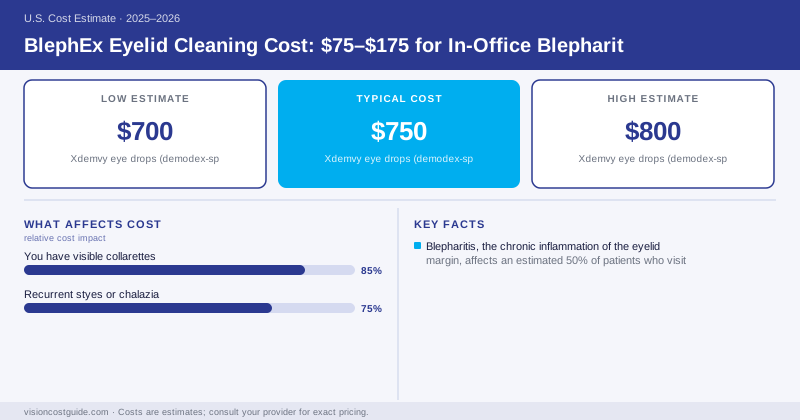
What does autologous serum actually cost, and does insurance cover it? Most people ask the wrong question first — they ask what their dry eye treatment costs before understanding what’s causing their dry eye. Blepharitis, the chronic inflammation of the eyelid margin, affects an estimated 50% of patients who visit eye care providers, according to the AOA. And most of them have never had their eyelids professionally cleaned.
BlephEx is the in-office answer to biofilm, scurf, and demodex mites that at-home lid scrubs can’t fully address. Here’s what you’ll pay and whether it’s worth it.
What BlephEx Actually Does
Blepharitis comes in two main forms. Anterior blepharitis affects the base of the eyelashes — bacteria, dead skin cells (scurf), and sometimes demodex mites colonize the eyelash follicles and produce biofilm and inflammatory waste products. Posterior blepharitis means meibomian gland dysfunction (blocked oil glands) deeper in the eyelid. Many patients have both.
BlephEx addresses the anterior component. The device — a handheld motorized handpiece with a small, medical-grade disposable microsponge tip — rotates at controlled speed along the eyelash margin. The spinning tip mechanically removes:
- Biofilm (a protective matrix bacteria secrete to resist treatment)
- Scurf (flaky skin debris at the base of lashes)
- Demodex mite debris and eggs lodged in follicles
- Collarettes — cylindrical crusting around individual lash bases (a hallmark sign of demodex)
The procedure targets the area 0.5–1mm at the base of each lash — precisely where at-home scrubs don’t reach. An appointment takes 8–15 minutes total for both eyes, using a fresh microsponge for each eyelid to avoid cross-contamination.
2026 Cost Breakdown
| Service | Typical Cost | Notes |
|---|---|---|
| BlephEx session (bilateral) | $75–$175 | Most common pricing |
| BlephEx (per eye) | $35–$75 | Some practices price per eye |
| Initial dry eye / blepharitis evaluation | $75–$150 | Often separate from treatment |
| Follow-up BlephEx (maintenance) | $60–$150 | Often discounted for repeat patients |
| At-home lid scrubs (monthly) | $15–$40 | Daily use between appointments |
| Xdemvy eye drops (demodex-specific Rx) | $700–$800/month | Prescription; insurance may help |
Some optometry practices offer BlephEx as an add-on to a routine eye exam for $75–$100 with minimal fanfare. Others market it as part of a “dry eye spa” package for $150–$300, bundled with LipiFlow evaluation, meibography, and tear testing. If you’re quoted over $175 for BlephEx alone, you’re likely being bundled into a package. Ask for line-item pricing.
Who Needs BlephEx (vs. Who Just Needs Better Lid Scrubs)
BlephEx makes sense when:
You have visible collarettes — the cylindrical waxy deposits at the base of individual lashes are almost pathognomonic for Demodex blepharitis. Collarettes can’t be adequately removed with foam scrubs or cotton pads. The AOA recommends in-office debridement for patients with significant collarette formation.
Chronic blepharitis that doesn’t improve with at-home treatment — if you’ve been doing foam scrubs twice a day for three months and still have red, itchy lid margins with crusting, there’s likely biofilm accumulation that needs mechanical disruption.
Recurrent styes or chalazia — meibomian gland cysts that keep coming back despite warm compresses are often fueled by chronic anterior blepharitis. Addressing the biofilm load can reduce the frequency.
Dry eye that isn’t improving with drops or supplements — chronic anterior blepharitis drives posterior meibomian gland inflammation. Treating the lid margin disease sometimes improves dry eye symptoms that weren’t responding to drops alone.
At-home lid hygiene is appropriate for mild blepharitis, for maintenance after BlephEx, and for patients who can’t access in-office treatment. But if you’ve been diligently doing lid scrubs and symptoms persist, that’s the signal for professional debridement.
Demodex: The Mite Nobody Talks About
Demodex folliculorum is a microscopic mite that lives in human eyelash follicles. It’s normal — nearly everyone has some. The problem starts when populations get out of control, which happens with age (Demodex prevalence increases significantly after 50), in immunocompromised patients, and in people with rosacea.
When Demodex overpopulation occurs, their waste products and egg casings trigger a persistent inflammatory response. Anterior blepharitis driven by demodex doesn’t respond well to standard antibiotic-based treatments (because bacteria aren’t the primary driver). It responds to:
- BlephEx — mechanical removal of mites and their debris
- Tea tree oil-based lid scrubs — diluted TTO (50% concentration for in-office, 5–10% for home use) is directly ovicidal to Demodex
- Xdemvy (lotilaner 0.25% ophthalmic) — the first FDA-approved pharmaceutical specifically for Demodex blepharitis, approved in 2023
Never apply tea tree oil directly to your eyelids at home unless specifically formulated for periocular use. Full-strength tea tree oil causes severe chemical burns to the ocular surface. Use only products labeled for eyelid use (like Cliradex or diluted TTO wipes) or have your doctor apply in-office concentrations.
How Often You Need It
BlephEx is a maintenance treatment, not a one-time cure. For patients with chronic blepharitis, expect:
- Every 3–6 months for moderate blepharitis with good at-home hygiene compliance
- Every 2–3 months for severe blepharitis, significant demodex load, or recurrent stye history
- After initial course of treatment for Demodex with Xdemvy drops
Annual cost at $75–$175 per session, treated every 4 months: $225–$525/year for in-office treatment, plus $180–$480/year for daily at-home lid scrubs. Total maintenance: roughly $400–$1,000 annually for actively managed blepharitis.
Does Insurance Cover BlephEx?
Almost never from vision or standard health insurance. The procedure lacks a well-established, universally covered billing code for routine blepharitis management. Some ophthalmology practices submit it under codes for eyelid margin debridement or anterior segment procedures, and occasional coverage occurs — but count on paying out-of-pocket.
FSA and HSA funds can be used. If your blepharitis is documented as contributing to a diagnosed medical condition (like recurrent chalazia requiring drainage, or corneal staining from chronic inflammation), there may be a path to medical insurance reimbursement — but it requires your doctor to make that documentation case.
The Bottom Line
BlephEx is the most accessible and cost-effective in-office intervention for anterior blepharitis. At $75–$175 per session, it’s not a huge expenditure — especially compared to the ongoing cost of dry eye drops, lid wipes, and eventually autologous serum eye drops if anterior lid disease drives your dry eye to that point.
If you have chronic blepharitis, visible collarettes on your lashes, or dry eye that isn’t responding to drops and warm compresses, ask your eye doctor about in-office microblepharoexfoliation. For many patients, it’s a missing piece in their treatment plan — not because it’s exotic, but because most providers don’t mention it unless you ask.
Frequently Asked Questions
BlephEx in-office eyelid exfoliation typically costs $75–$175 per treatment session. Some practices charge per eye ($35–$75 each), others charge a flat bilateral rate. The session itself takes 8–15 minutes. Most patients with chronic blepharitis need repeat sessions every 3–6 months to maintain results. Insurance rarely covers it — plan on full out-of-pocket expense.
At-home lid scrubs (foam, wipes, or diluted baby shampoo) clean the external eyelid margin but don't access the base of the eyelashes where biofilm, scurf, and demodex mites accumulate. BlephEx uses a medical-grade handheld device with a rotating microsponge tip that reaches into the eyelash follicle bases — the source of the bacterial biofilm and mite debris that drive chronic blepharitis inflammation. It's the difference between wiping a countertop and scrubbing a grout line.
No. Blepharitis is a chronic condition for most patients, and BlephEx is a maintenance treatment — it reduces the load of bacteria, biofilm, and demodex mites rather than eliminating the underlying tendency toward eyelid inflammation. Most patients need repeat sessions every 3–6 months, combined with daily at-home lid hygiene between appointments. Some patients with severe demodex infestation also require a topical treatment like Xdemvy (lotilaner) eye drops between BlephEx sessions.