Jasmine paid $9,500 to change her brown eyes to blue. Eighteen months later, she paid a lot more to try to save her vision.
That’s the story behind BrightOcular and similar cosmetic iris implants — silicone discs surgically placed over the natural iris purely to change eye color. You won’t find this procedure at a U.S. ophthalmology practice, and that’s not an accident. The device has never been approved by the FDA for use in the United States, which is exactly why nearly everyone who gets one flies to a clinic overseas.
What BrightOcular Actually Costs
Because it’s not performed domestically, pricing varies wildly by country, clinic, and whether both eyes are done in the same session.
| Location | Typical Price (Both Eyes) | Notes |
|---|---|---|
| Panama | $7,000–$9,500 | Most common destination for U.S. patients |
| Turkey | $6,500–$9,000 | Marketed heavily to medical tourists |
| India | $5,000–$7,500 | Lowest advertised prices |
| Dominican Republic | $6,000–$8,500 | Package deals with travel included |
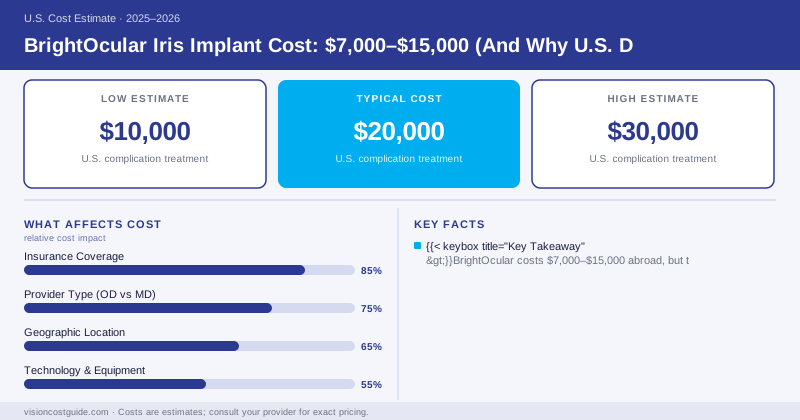
| U.S. complication treatment (if needed) | $10,000–$30,000+ | Glaucoma management, implant removal, corneal transplant |
That last row is the one nobody advertises. It’s also the one that matters most.
Why the FDA Never Approved It
The iris implant sits in the anterior chamber of the eye, wedged in front of the natural iris and lens. It’s not a contact lens or a dye — it’s a permanent foreign object crammed into a space that was never designed to hold one. Peer-reviewed case series tracking cosmetic iris implant patients have found alarmingly high complication rates, including chronic glaucoma, cataracts, corneal decompensation, and persistent inflammation — with a significant share of patients eventually needing the implant surgically removed. The American Academy of Ophthalmology has issued public warnings against the procedure, citing exactly this pattern: complications that sometimes don’t show up until years after the original surgery, by which point damage is already done.
BrightOcular costs $7,000–$15,000 abroad, but the device is not FDA-approved and no reputable U.S. ophthalmologist will implant or maintain one. Complication rates reported in the ophthalmic literature are high enough that professional bodies actively warn patients away from it. Treating the aftermath — glaucoma, corneal swelling, implant removal — routinely costs more than the original procedure.
The Real Financial Risk
Insurance won’t touch any of this. Cosmetic procedures are excluded by definition, and complications arising from an elective, non-FDA-approved device performed outside the country are exactly the kind of claim insurers deny outright. If glaucoma develops from a BrightOcular implant, you’re paying out of pocket for glaucoma surgery, ongoing eye pressure monitoring, and possibly a corneal transplant if the cornea decompensates. That’s a $15,000–$30,000+ bill stacked on top of the original $7,000–$15,000, with no coverage cushion anywhere in the process.
Are There Legitimate Alternatives?
If you’re chasing a color change purely for appearance, cosmetic-tint contact lenses achieve a similar look for $30–$80 a box with zero surgical risk and full reversibility. They’re not permanent, which is exactly the point — you can stop wearing them the moment something feels wrong. For patients with genuine medical need (aniridia or iris defects from trauma or disease), custom prosthetic iris devices exist and are implanted by U.S. corneal specialists under actual medical supervision, generally running $8,000–$20,000 per eye and often partially covered by insurance when medically necessary.
There is no FDA-approved cosmetic iris implant available in the United States. Any clinic offering “eye color change surgery” domestically is operating outside approved use. If you’ve already had a BrightOcular implant and notice increased eye pressure, blurred vision, halos, or pain, see an ophthalmologist immediately — early glaucoma detection is the difference between manageable and permanent vision loss.
Bottom Line
The $7,000–$15,000 sticker price is only the entry fee. The real cost of a BrightOcular implant is measured in years of monitoring, a meaningful chance of glaucoma or corneal failure, and a follow-up bill that can dwarf what you paid to get blue eyes in the first place. Ask any ophthalmologist why this procedure isn’t offered in the U.S., and you’ll get the same answer: the risk was never worth the color.