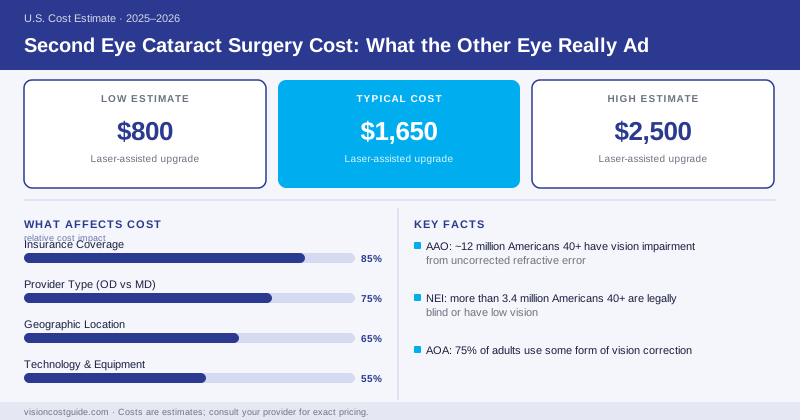
When does the second eye get cheaper? Usually it doesn’t — at least not for the surgery itself. Cataract surgery is billed per eye, so the second operation costs roughly what the first did: about $0–$2,000 out of pocket with Medicare for a standard lens. The savings, when they happen, come from your deductible, not a discount.
Here’s exactly how the math works when you’re doing both eyes.
Second-Eye Cost Breakdown
| Scenario | Out-of-Pocket for Second Eye |
|---|---|
| Standard lens, deductible already met | $0–$250 |
| Standard lens, new deductible (new plan year) | $200–$1,000+ |
| Premium/multifocal lens upgrade | $1,500–$4,000 |
| Toric lens (astigmatism) upgrade | $1,200–$3,000 |
| Laser-assisted upgrade | $800–$2,500 |
The base cataract surgery is covered per eye under Medicare Part B, which pays 80% after your deductible. Your share is the remaining 20% coinsurance plus any premium upgrades you chose.
Where the Second Eye Can Actually Cost Less
The one real saving is timing. If both surgeries fall in the same calendar year and you’ve already paid your annual Part B deductible on the first eye, the second eye only triggers coinsurance — no deductible to clear again. Schedule both in the same plan year when possible.
The flip side: if your surgeries straddle a new plan year (December and January, say), you’ll pay two deductibles. That timing can cost you hundreds.
Most cataract patients eventually need both eyes done — cataracts develop in both eyes over time, and the AAO reports that roughly half of Americans will have a cataract or have had cataract surgery by age 80. If you chose a premium IOL for the first eye, plan to match it in the second so your eyes work as a team. Mismatched lenses can cause imbalance, and the upgrade cost repeats per eye.
Why Surgeons Stagger the Eyes
Most surgeons do one eye, wait one to four weeks, then do the other. There are good reasons:
- The first eye’s healing and final prescription inform fine-tuning the second eye’s lens power
- It reduces the (small) risk of a complication affecting both eyes at once
- It lets you confirm you’re happy with a premium lens before committing the second eye
Immediate sequential bilateral cataract surgery (both eyes same day) is growing in select healthy patients, and it can cut total recovery time and visits — but it’s a clinical decision, not a cost-saving shortcut.
Matching Your Lenses
If you upgraded the first eye to a premium or multifocal lens, don’t downgrade the second to save money. Mismatched lenses — one premium, one standard — often cause anisometropia and poor binocular vision, and patients frequently regret it. Budget for matching lenses in both eyes from the start, or choose standard monofocals for both.
Recovery Repeats
Each eye has its own recovery: drops, follow-ups, and healing time. Drop costs repeat per eye, though follow-ups for both eyes often fall within overlapping Medicare global periods. See our cataract recovery cost guide for the full post-op breakdown.
Paying for Two Eyes
For standard lenses, your main costs are the per-eye coinsurance and drops. For premium upgrades, you’re paying that premium twice — budget accordingly. HSA and FSA funds work for the upgrade portions, and CareCredit can finance both eyes together. If you’re comparing lens replacement to corneal surgery for vision correction, our LASIK cost guide covers the alternative for non-cataract patients.
Bottom Line
The second eye costs about what the first one did — there’s no built-in discount on the surgery. Your best lever is timing both surgeries in the same plan year to pay one deductible instead of two. And whatever lens you chose for eye one, match it in eye two for the best visual result.
Frequently Asked Questions
About the same as the first eye — typically $0–$2,000 out of pocket with Medicare for a standard lens, since cataract surgery is billed and covered per eye.
Not usually for the surgery itself, since each eye is billed separately. You may save if you've already met your deductible from the first eye that same year.
Most surgeons stagger eyes one to four weeks apart so the first eye stabilizes, though same-day bilateral surgery is becoming more common in select cases.