A patient with advanced HIV or a recent transplant starts seeing floaters, flashing lights, or a creeping blind spot, and a dilated exam reveals the retina is being eaten away. That’s CMV retinitis — a sight-threatening infection that almost exclusively strikes people whose immune systems are severely weakened. In a healthy person, cytomegalovirus is usually harmless; in immunocompromised eyes, it’s destructive.
The treatment is urgent and the drugs aren’t cheap. Here’s what controlling it costs.
Why CMV Retinitis Happens
Cytomegalovirus (CMV) lives dormant in most adults. When the immune system collapses — advanced HIV/AIDS with very low CD4 counts, transplant immunosuppression, or certain cancer treatments — CMV can reactivate and attack the retina. So treatment has two fronts: kill the virus in the eye, and restore the immune system.
| Patient Group | Why They’re at Risk |
|---|---|
| Advanced HIV/AIDS | Very low CD4 count |
| Organ/bone marrow transplant | Anti-rejection immunosuppression |
| Chemotherapy patients | Treatment-related immune suppression |
Diagnostic Costs
A retina specialist diagnoses it on a dilated exam, often with imaging to map the damage.
| Diagnostic Step | Cost Without Insurance |
|---|---|
| Retina specialist / uveitis visit | $300–$500 |
| Dilated retinal exam with photos | Included in visit |
| OCT and fundus imaging | $150–$400 |
| Aqueous/vitreous PCR for CMV (if needed) | $500–$1,500 |
The Treatment Drugs
CMV retinitis treatment has two costs that matter, and only one shows up on the eye-care bill. The antiviral drugs — oral valganciclovir at $1,000–$2,000 a month, plus intravitreal injections or implants — are the visible expense. But the most important treatment is often free or already covered: restoring the immune system. For an HIV patient, getting on effective antiretroviral therapy to rebuild the CD4 count is what ultimately controls the infection. Antivirals buy time; immune recovery wins the war.
| Treatment | Cost |
|---|---|
| Oral valganciclovir (Valcyte) | $1,000–$2,000/month |
| IV ganciclovir (induction) | $2,000–$6,000/course |
| IV foscarnet/cidofovir | $3,000–$8,000/course |
| Intravitreal ganciclovir/foscarnet injection | $500–$1,500 each |
Treatment usually starts with intensive “induction” dosing to halt the active infection, then drops to lower “maintenance” dosing to prevent recurrence until the immune system recovers. Intravitreal injections deliver drug straight into the eye for sight-threatening lesions near the macula or optic nerve, using the same general route as an anti-VEGF injection.
Complications That Add Cost
CMV retinitis weakens the retina, and a feared complication is retinal detachment — which can require a separate retinal detachment surgery costing many thousands more. Immune recovery uveitis, an inflammatory reaction as the immune system rebounds, may also need anti-inflammatory treatment similar to managing uveitis.
If you’re immunocompromised and develop new floaters, flashes, or any blind spot, treat it as an emergency and get a dilated retinal exam fast — CMV retinitis destroys retina that doesn’t grow back. Don’t wait. And never stop maintenance antivirals or HIV medication on your own; CMV retinitis recurs aggressively when the virus is suppressed but the immune system hasn’t recovered. Stopping early is how people lose the vision they fought to save.
How Insurance and Programs Help
Most CMV retinitis patients aren’t paying retail. Commercial insurance and Medicare cover the antivirals and procedures as medical care, and HIV patients often qualify for the Ryan White program, which can cover drugs and specialist care. Transplant centers typically build CMV monitoring and treatment into their care plans. Because this bills to medical insurance and not vision insurance, confirm in-network specialists, and ask a social worker or case manager about assistance programs that can cut the high drug costs.
Bottom Line
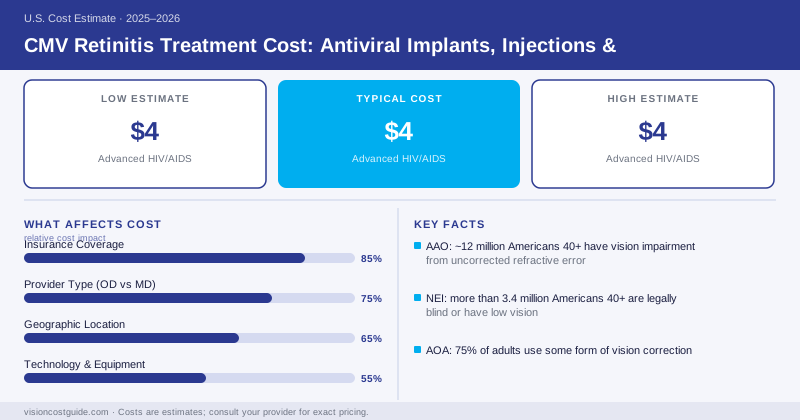
CMV retinitis treatment costs roughly $1,000–$2,000 a month for oral valganciclovir, with intravitreal injections and IV induction pushing complex cases to $5,000–$15,000+ — though insurance and programs like Ryan White cover much of it. The antivirals halt the infection, but restoring the immune system is what truly controls it. The retina already lost doesn’t recover, so the cheapest, most sight-saving move is getting a dilated exam at the very first floater or blind spot.
Frequently Asked Questions
CMV retinitis almost always affects people with severely weakened immune systems — most classically advanced HIV/AIDS with very low CD4 counts, but also organ and bone marrow transplant patients on immunosuppression and some chemotherapy patients. In a healthy immune system, cytomegalovirus rarely causes eye disease. Restoring immune function (such as effective HIV treatment) is a central part of controlling it.
Oral valganciclovir, the common first-line drug, runs roughly $1,000–$2,000 per month at retail. Intravitreal injections of ganciclovir or foscarnet cost $500–$1,500 each and may be needed repeatedly. IV induction therapy and any hospital care add more. Insurance and programs like Ryan White (for HIV patients) cover much of it, keeping out-of-pocket far lower.
Yes — untreated CMV retinitis destroys the retina and can cause irreversible blindness, and it raises the risk of retinal detachment. That's why it's treated urgently and aggressively. The damage already done doesn't reverse, but prompt antiviral treatment plus restoring the immune system can halt progression and preserve remaining vision.