Here’s how color blindness testing actually breaks down, tier by tier, from the version you’ve probably already had for free to the one you’d only need for a specific job or diagnosis.
Tier 1: The screening test — usually $0. If you’ve had a comprehensive eye exam, you’ve likely already taken a basic color vision screening. It’s the flip-through book of colored dot patterns (the Ishihara test) that reveals numbers or shapes to people with normal color vision but hides them from people with red-green color deficiency. This screening is bundled into a standard comprehensive eye exam at no extra charge, and takes under two minutes.
Tier 2: A standalone screening visit — $50–$100. If you want color vision tested without a full eye exam — for instance, before applying for a job with color-vision requirements — some optometry offices offer the Ishihara screening as a standalone service.
| Test Type | Cost | What It Determines |
|---|---|---|
| Ishihara screening (bundled in eye exam) | Free | Basic pass/fail for red-green deficiency |
| Ishihara standalone visit | $50–$100 | Same test, without full exam |
| Anomaloscope testing | $150–$300 | Precise classification and severity |
| Farnsworth D-15/D-100 arrangement test | $100–$250 | Detailed severity and axis of deficiency |
| Occupational certification testing (FAA, rail, etc.) | $75–$200 | Formal documentation for licensing/employment |
Tier 3: Formal diagnostic testing — $150–$300. If a screening test suggests color vision deficiency, or if you need a precise diagnosis for occupational or legal purposes, an anomaloscope test provides much more detailed classification — not just whether you’re color deficient, but the specific type (protan, deutan, or tritan) and severity. This level of testing is typically only available at specialized ophthalmology practices or university eye clinics, not routine optometry offices.
Why the Precision Actually Matters
Color blindness affects an estimated 1 in 12 men (about 8%) and roughly 1 in 200 women of Northern European descent, according to widely cited genetics research — a meaningful chunk of the population who may go decades without a formal diagnosis, since red-green color deficiency doesn’t affect general visual acuity and is easy to compensate for unconsciously. Most people discover it only when a screening test at a job application, driver’s license renewal, or school vision screening flags it.
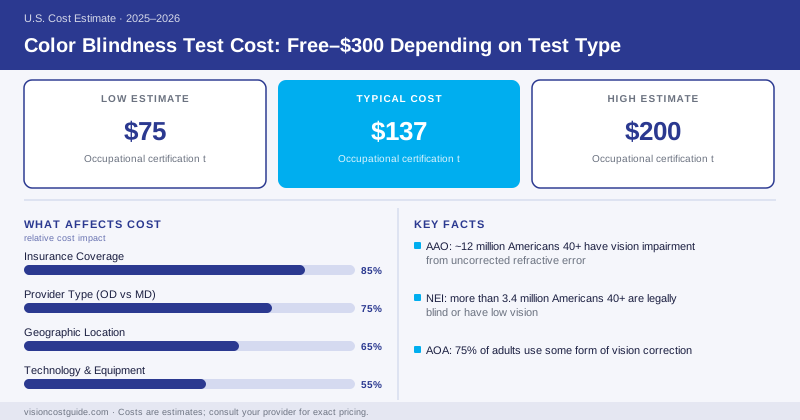
A basic color blindness screening is typically free, bundled into a routine eye exam, but formal diagnostic testing for occupational certification or precise classification runs $150–$300. If you just want to know whether you’re color deficient, ask your optometrist to include the Ishihara test at your next scheduled exam rather than paying for a standalone visit.
Who Actually Needs the Formal Version
Most people never need anything beyond the basic screening. Formal anomaloscope testing becomes relevant for specific occupational requirements — commercial pilots, certain rail and maritime positions, some military roles, and some electrical or design professions require documented color vision testing as part of certification. If your job or license application requires this documentation, check with the certifying body directly about which specific test format they’ll accept, since requirements vary by profession.
Insurance Coverage
Routine color vision screening bundled into a comprehensive eye exam is covered the same way the rest of the exam is — through vision insurance or as part of a medical visit if billed with a relevant diagnosis. Standalone or occupational certification testing, however, is typically not covered by insurance since it’s not being performed to diagnose or treat a medical condition — it’s usually an out-of-pocket cost tied to employment or licensing requirements.
There’s No Cure — But There Are Aids
Color blindness is a genetic, permanent condition with no medical treatment or cure. Specialized glasses marketed as “color blindness correction glasses” (EnChroma and similar brands, $300–$500) can enhance color differentiation for some wearers with certain types of deficiency, but they don’t restore normal color vision and results vary significantly by individual.
Don’t rely on smartphone apps or online color blindness “tests” for anything requiring official documentation — screen calibration, brightness, and viewing conditions vary too much for these results to be accepted for occupational certification. Always get formal testing done in person at a qualified eye care office for anything beyond personal curiosity.
Bottom Line
For most people, color blindness testing costs nothing beyond a routine eye exam. It’s only the formal, occupational-grade diagnostic testing — running $150–$300 — that requires a specific out-of-pocket visit, and that’s usually only necessary if a job or license explicitly requires it.