Strip away the insurance card and the real cost of contacts comes into focus fast. No allowance, no copay, no in-network discount — just you and the sticker price. For most uninsured wearers that lands somewhere between $300 and $1,150 a year, exam included. The good news? The uninsured route has more saving levers than people expect.
Roughly 45 million Americans wear contacts, the Vision Council reports, and not all of them carry vision insurance. Here’s exactly what you’ll pay out of pocket and how to push the number down.
The Two Costs You Can’t Skip
Uninsured contact spending breaks into two buckets: the annual exam plus fitting, and the lenses themselves.
| Item | Without Insurance |
|---|---|
| Comprehensive eye exam | $50–$150 |
| Contact lens fitting | $50–$150 |
| Annual lens supply | $200–$900 |
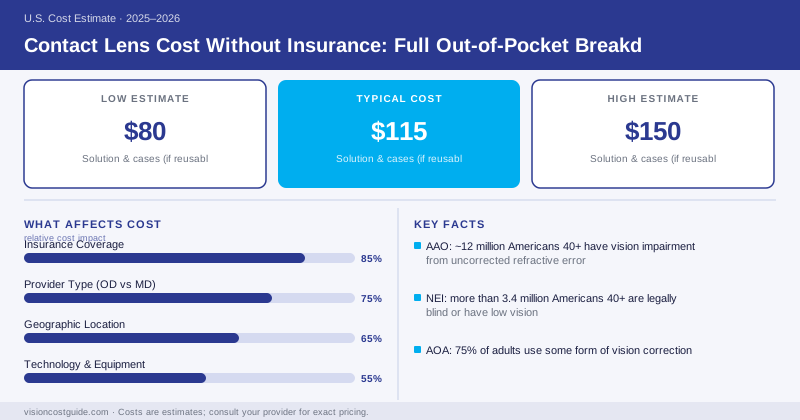
| Solution & cases (if reusable) | $80–$150 |
The exam and fitting together run $100–$250 — see our eye exam cost and contact lens exam guides for the full detail. Federal law requires a valid prescription to buy lenses, so the exam isn’t optional.
Lens Cost by Type — Uninsured
The single biggest lever on your annual bill is which lens type you choose.
| Lens Type | Annual Cost (both eyes) |
|---|---|
| Monthly (e.g. Biofinity, Air Optix) | $200–$450 |
| Two-week (e.g. Acuvue Oasys) | $250–$500 |
| Value daily (e.g. Clariti, Precision1) | $350–$750 |
| Premium daily (e.g. Dailies Total 1) | $700–$1,100 |
Monthlies are the clear value play for the uninsured — though remember to add the $80–$150 solution cost. Dailies cost more but skip cleaning entirely. Compare the modalities head to head in our monthly contacts and daily contacts breakdowns.
Without insurance, budget $300–$1,150 a year total — exam, fitting, and lenses. Picking a monthly silicone-hydrogel lens over a premium daily can save you $400–$700 annually, the single biggest move you can make.
How to Cut the Uninsured Cost
You’ve got real options here. Buy an annual supply online or at a warehouse club instead of the eye doctor’s office — that alone saves $5–$20 per box. Stack a manufacturer rebate, which can return $80–$250 on a year’s supply. Use a flexible spending account (FSA) or health savings account (HSA) if you have one — contacts, solution, and exams are all eligible, and you’re paying with pre-tax dollars. And ask retailers about exam-plus-supply bundles.
If you wear contacts only part of the time, glasses can stretch your lens supply for months. Our eyeglasses cost guide shows how a backup pair pays for itself.
Should You Get Vision Insurance Instead?
For many wearers, a vision plan’s $130–$200 contact allowance plus a discounted exam costs less than paying everything out of pocket — but not always. Our vision insurance cost guide runs the break-even math so you can decide whether the premium beats going uninsured.
Don’t skip the exam to save money, and don’t buy lenses from sellers that don’t require a prescription. An expired prescription or an unverified lens can mask eye-health problems. The CDC links improper contact use to roughly 1 million eye-infection-related medical visits a year — and one infection costs far more than an exam.
Bottom Line
Uninsured, plan for $300–$1,150 a year. Choose a monthly lens, buy an annual supply online, stack a rebate, and pay with an FSA or HSA if you can — that combination can land a careful shopper near the low end of the range. Just keep the exam in the budget. It’s the one cost worth every dollar.
Frequently Asked Questions
Expect $200–$900 a year for lenses plus a $100–$250 exam and fitting, for a total of roughly $300–$1,150 depending on lens type.
Monthly silicone-hydrogel lenses bought as an annual supply online or at a warehouse club, paired with a manufacturer rebate, are the cheapest route.
No. Federal law requires a valid, unexpired contact lens prescription to purchase lenses in the U.S., even online.