Roughly 45 million Americans wear contact lenses, and a large share of them are surprised the first time they see a separate “contact lens fitting fee” on their bill — distinct from the comprehensive eye exam they just paid for. It’s not a duplicate charge. It’s a genuinely different service.
What the Fitting Fee Actually Covers
| Fitting Type | Fee Range | What’s Included |
|---|---|---|
| Standard soft lens fitting (existing wearer) | $50–$100 | Basic curve/diameter verification, trial lenses |
| New wearer fitting | $100–$175 | Includes insertion/removal training, follow-up visit |
| Toric (astigmatism) lens fitting | $100–$200 | More complex measurements for rotational stability |
| Multifocal/presbyopia lens fitting | $125–$225 | Trial-and-adjust process for near/far balance |
| Specialty fitting (scleral, Ortho-K, keratoconus) | $150–$250+ | Multiple visits, topography, custom lens design |
A comprehensive eye exam determines your eyeglass prescription and screens for overall eye health. A contact lens fitting is an entirely separate service that determines the specific curvature, diameter, and material that will fit comfortably and safely on the unique shape of your cornea — measurements that don’t matter at all for glasses but are essential for a device sitting directly on your eye.
Why This Isn’t Just an Upsell
Getting a contact lens fit wrong isn’t a minor inconvenience — it’s a genuine safety issue. A lens that’s too tight can restrict oxygen flow to the cornea and cause chronic redness or swelling; one that’s too loose can move excessively, cause discomfort, or increase infection risk by trapping debris underneath. The fitting process, which often includes a trial pair worn for a week or two followed by a follow-up check, exists specifically to catch these problems before they become chronic.
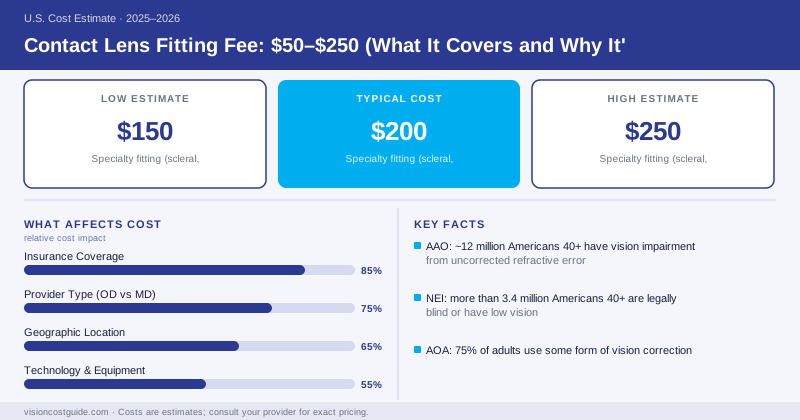
Contact lens fitting fees run $50–$250 depending on lens complexity, and they’re billed separately from your eye exam because they cover a genuinely different measurement and safety process — not a duplicate service. First-time wearers and specialty lens categories (toric, multifocal, scleral) generally fall toward the higher end.
New Wearers Pay More — Here’s Why
If you’re new to contacts, expect the higher end of the range. New-wearer fittings typically include hands-on training for insertion, removal, and cleaning, plus a mandatory follow-up visit to confirm your eyes are tolerating the lenses well and there’s no unexpected irritation. This isn’t optional padding — insertion and removal technique genuinely takes most new wearers a few tries to get comfortable with, and catching early irritation at a follow-up visit prevents it from developing into something more serious.
Insurance Coverage
Vision insurance plans vary considerably here. Some plans include a contact lens fitting allowance as part of the annual vision benefit; others treat it as a separate line item you pay out of pocket even with otherwise generous vision coverage. Check your specific plan’s contact lens fitting benefit before assuming it’s included alongside your exam coverage — this is one of the more common gaps patients discover only after receiving the bill.
Does the Fee Repeat Every Year?
Not always at the full rate. Many practices charge a reduced “re-fit” or annual verification fee for existing wearers with a stable prescription and lens type, since the process is shorter than an initial fitting — often $30–$75 rather than the full new-fit price. If your prescription and lens brand haven’t changed, ask whether a reduced annual fee applies.
Never buy a new type or brand of contact lens without a corresponding professional fitting, even if your prescription number is unchanged. Lens material, curvature, and diameter vary by brand and design — a fit that worked for one lens type doesn’t automatically transfer to another, and an improper fit raises real infection and irritation risk.
Bottom Line
Budget $50–$250 for a contact lens fitting, separate from your eye exam cost, with specialty lenses and first-time wearers at the higher end. It’s not a duplicate fee — it’s the safety check that keeps a device sitting directly on your eye actually safe to wear.