Ask any soccer player who’s tried to head a ball in glasses, and you’ll hear the same thing: they fogged up, slid down, or got knocked off. That’s why so many athletes switch to contacts. The yearly tab runs $200 to $600 depending on whether you go daily or monthly — and for sports, that choice matters more than the price tag suggests.
Daily vs. monthly: the athlete’s call
The American Optometric Association estimates more than 45 million Americans wear contact lenses, and a growing share are athletes choosing them over glasses for the freedom of movement and unobstructed peripheral vision.
| Lens Type | Annual Cost | Best For |
|---|---|---|
| Daily disposables | $400–$600 | Most athletes; toss-and-go |
| Two-week disposables | $250–$400 | Frequent but not daily training |
| Monthly lenses | $200–$350 | Budget-minded, indoor sports |
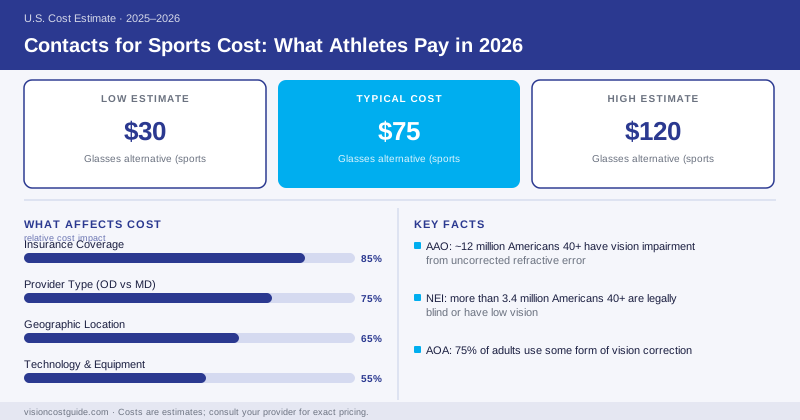
| Glasses alternative (sports goggles) | $30–$120 one-time | Contact-intolerant athletes |
Dailies win for most athletes. You pop in a fresh pair before the game, sweat in them, and throw them out. No case, no solution, no panic when one pops out at the 80th minute. The Centers for Disease Control reports that improper lens care drives most contact-related eye infections — and dailies sidestep nearly all of it.
For sports, daily disposable contacts at $400 to $600 a year are the safest, simplest pick. There’s no cleaning routine, infection risk drops, and replacing a dislodged lens costs about a dollar instead of ruining your game.
Contacts correct, goggles protect
This is the part athletes skip and regret. Contact lenses fix your vision — they do nothing to stop a finger, a ball, or an elbow. The AOA reports that thousands of sports-related eye injuries send Americans to the ER every year, and most are preventable with proper eyewear.
So the smart setup is contacts under impact protection. For racquetball, basketball, baseball, and hockey, you want polycarbonate prescription sports goggles — or non-prescription goggles over your contacts, which run $30 to $120.
Never assume contacts protect your eyes. They correct vision only. For any ball, stick, or racquet sport, wear ASTM-rated polycarbonate eye protection over your contacts. An eye injury can cost thousands to treat — and some don’t fully heal.
Swimming is the exception
Don’t wear contacts in the pool. Water — pool, lake, or ocean — carries acanthamoeba and other microbes that can cause severe, vision-threatening infections. The CDC specifically warns against swimming in contacts. For water sports, prescription swim goggles are the answer instead.
When glasses still make sense
Not everyone tolerates contacts. Dry eyes, sensitivity, or a strong astigmatism can make them uncomfortable. If that’s you, a sports-specific pair of eyeglasses in a wraparound polycarbonate frame works fine for low-contact sports. And for everyday wear off the field, standard contact lenses pricing follows the same daily-vs-monthly math.
How to spend less
- Buy a year’s supply at once. Manufacturers and retailers offer rebates worth $50 to $200.
- Use vision insurance. Most plans include a contact-lens allowance of $130 to $150.
- Get the contact-lens fitting (eye exam plus fitting, $50 to $250). A proper fit prevents the lens from sliding during play.
- Tap your FSA/HSA for both lenses and solution.
Bottom line
Daily disposables at $400 to $600 a year are the athlete’s gold standard — clean, simple, and cheap to replace mid-game. Just remember contacts only correct your vision. Pair them with polycarbonate goggles for protection, keep them out of the water, and you’re set for the season.
Frequently Asked Questions
Daily disposables run $400 to $600 a year, while monthly lenses cost $200 to $350. Most athletes prefer dailies because there's no cleaning and a lost lens mid-game costs pennies to replace.
Usually, yes. Dailies are sweat-friendly, lower-infection-risk, and you toss a damaged or dislodged lens without a second thought. That convenience is why most sports optometrists recommend them for athletes.
Yes. Contacts correct vision but offer zero impact protection. For racquet, ball, and stick sports, wear them under polycarbonate sports goggles, which cost $30 to $120.