You reach for your glasses and they’re just… gone. Left on a plane, dropped off a boat, vanished into the couch forever. Before you panic about the cost, here’s the good news: replacing lost glasses can cost as little as $20 to $60 if you order online, and you almost certainly don’t need a fresh eye exam to do it. Your prescription is sitting in your optometrist’s file right now.
Here’s how to replace them fast and cheap.
What Replacement Actually Costs
The price swing is huge depending on where you reorder. The Vision Council reports the average American pays about $242 per pair of eyeglasses at a brick-and-mortar shop — but you have far cheaper options when you’re just replacing a known prescription.
| Replacement Option | Typical Cost | Speed |
|---|---|---|
| Budget online (Zenni, EyeBuyDirect) | $20–$60 | 7–14 days |
| Mid online (Warby Parker) | $95–$145 | 7–14 days |
| Optical chain, same-day single-vision | $150–$300 | ~1 hour |
| Optical shop, progressives/specialty | $250–$400+ | 3–7 days |
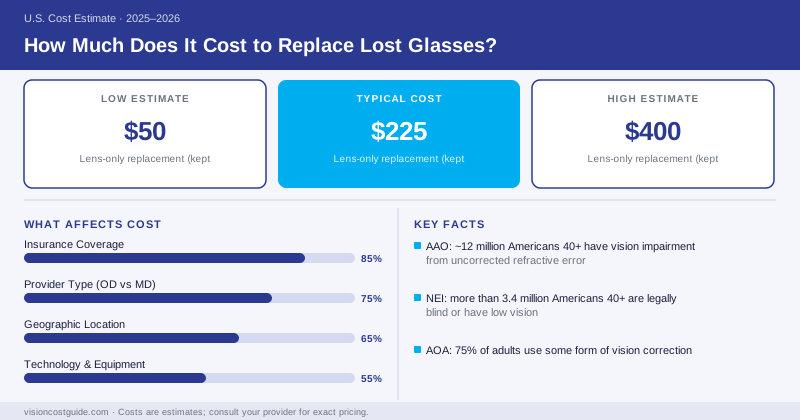
| Lens-only replacement (kept frame) | $50–$400 | 3–14 days |
If your old frame survived and you only lost or cracked a lens, lens replacement is often cheaper than a whole new pair. If the whole thing is gone, you’re buying complete glasses.
You Probably Don’t Need a New Exam
This is where people overspend. U.S. eyeglass prescriptions stay valid for one to two years, and your optometrist keeps your prescription and pupillary distance on file. Call the office, ask them to send both, and reorder — no $100+ exam required.
Under the FTC’s Eyeglass Rule, your prescriber must give you a copy of your prescription after an exam, at no extra charge. If you lost the paper copy along with the glasses, your eye doctor’s office can resend it. Ask specifically for the pupillary distance (PD) too — you’ll need that number to order online, and shops don’t always include it by default.
When You Do Need a Fresh Exam
Get a new eye exam before reordering if your prescription has expired (past the one-to-two-year window) or your vision has noticeably changed since you got the lost pair. The AOA recommends a comprehensive eye exam every one to two years for most adults — exams catch glaucoma and other conditions early, so an expired prescription is a reasonable nudge to get checked rather than a hassle to dodge.
If your prescription is current, skip straight to reordering.
Don’t guess your prescription from memory or an old online order if your vision has changed. Wearing the wrong correction causes eye strain and headaches, and an outdated prescription can mask vision changes that need attention. If it’s been more than two years, or if you’ve noticed blur, glare, or strain, spend the money on a current exam before reordering. The exam is a health screening, not just a number for the lab.
The Cheapest Long-Term Fix: A Backup Pair
The single best way to make lost glasses painless is to never be down to one pair. A $20 online spare pays for itself the first time your main glasses disappear. For ways to keep costs down on both pairs, see how to get cheap eyeglasses, and if budget is the priority, cheap eyeglasses online cost breaks down the lowest-price options.
Also worth a quick check: if you’re within your annual vision benefit, your plan may cover the replacement like any new pair. And because prescription glasses are FSA- and HSA-eligible, paying with pre-tax dollars trims the effective cost 20% to 37%.
Frequently Asked Questions
So how much does it cost to replace lost glasses? Anywhere from $20 online to $400 at a shop, depending on how fast you need them and how complex your lenses are. For a simple prescription, a budget online pair is the cheapest route by far; for a strong prescription you can’t function without, a one-hour optical-chain pair is worth the premium until a cheaper reorder arrives.
The key money-saver is realizing you usually don’t need a new exam — your valid prescription is on file, and your prescriber is required to release it. Confirm your prescription is still current, grab your PD, check whether your vision benefit has reset, and reorder. Then buy a cheap backup pair so the next disappearing act costs you nothing but a few days’ wait.
Frequently Asked Questions
Not if your prescription is still valid. U.S. eyeglass prescriptions are typically good for one to two years, and your optometrist keeps it on file. Call the office, ask them to send your current prescription and pupillary distance, and you can reorder without a new exam. You only need a fresh exam if your prescription has expired or your vision has changed.
A complete replacement pair runs $20–$60 from budget online sellers like Zenni, $95–$145 from Warby Parker, or $150–$400 at an optical shop. The Vision Council reports the U.S. average per pair is about $242 in person. If you only lost one lens or broke a frame, lens or frame replacement can be cheaper than a whole new pair.
Usually only on your normal benefit schedule. Most vision plans (VSP, EyeMed) cover a new pair of lenses every 12 months and frames every 12–24 months. If you're within your benefit window, replacement is covered like any new pair. If you already used this year's allowance, you'll pay out of pocket — though plan member discounts may still apply.
Sometimes. Optical chains like Costco Optical, LensCrafters, and Walmart Vision Center can produce simple single-vision glasses in about an hour at many locations. Strong prescriptions, progressives, and specialty coatings usually take several days because they're sent to a lab. Online orders typically take 7–14 business days to arrive.
If you still have the frame and only lost or damaged the lenses, lens replacement runs $50–$150 online or $100–$400 in a shop. If the frame is gone, you're buying a complete pair. For budget online glasses under $50, a whole new pair often costs about the same as replacing lenses, so it's rarely worth saving a cheap frame.
Keep a cheap backup pair (a $20 online spare pays for itself the first time you lose your main glasses), order replacements online using your on-file prescription and PD, and check whether your vision benefit has reset for the year. FSA and HSA funds also cover prescription glasses, cutting the effective cost 20–37% in pre-tax savings.
Find a local optical chain that offers same-day single-vision service, or visit any optometrist and have your home office fax or email your prescription. Most U.S. states require your prescriber to release your prescription on request. For a strong prescription you can't function without, a one-hour shop pair is worth the higher price until you reorder a cheaper pair later.