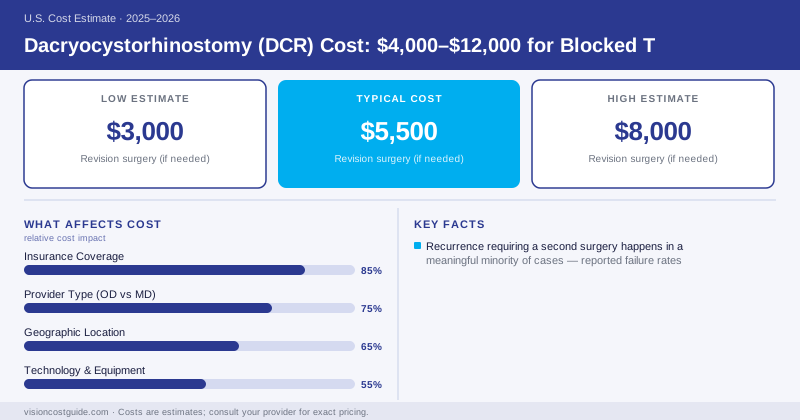
The $6,000 bill for a blocked tear duct catches most patients off guard — right up until they remember what the alternative looks like: a permanently watery, crusted, recurrently infected eye for the rest of their life.
Dacryocystorhinostomy, or DCR, is the surgery that fixes a blocked nasolacrimal duct by creating a new drainage channel directly from the tear sac into the nasal cavity, bypassing the clogged pathway entirely. It’s not cosmetic, and it’s not optional once the duct is fully obstructed — tears have nowhere else to go, and stagnant tears in a blocked sac are a setup for recurrent infection (dacryocystitis) that can spread to surrounding tissue if untreated.
DCR Cost by Surgical Approach
| Approach | Total Cost Range | Notes |
|---|---|---|
| External DCR (skin incision) | $4,000–$9,000 | Traditional approach, highest success rate |
| Endoscopic (endonasal) DCR | $5,500–$12,000 | No visible scar, done through the nostril |
| Facility/anesthesia fee | $1,500–$4,000 | Often bundled into total above |
| Silicone stent placement (if used) | $200–$600 | Temporary tube keeping new channel open |
| Stent removal visit | $100–$300 | Done 6–12 weeks post-op |
| Revision surgery (if needed) | $3,000–$8,000 | Required in 5–15% of cases |
Endoscopic DCR tends to cost more than external DCR because it requires specialized endoscopic equipment and often an ENT surgeon working alongside the ophthalmologist, but it avoids any visible facial scar — a meaningful factor for a lot of patients weighing the two options.
Why the Price Range Is So Wide
Facility type is the biggest swing factor: hospital outpatient departments bill considerably more than freestanding ambulatory surgical centers for the identical procedure. Whether general anesthesia or IV sedation is used changes the anesthesia bill substantially. And geographic region plays its usual role — DCR in a major coastal city can run 40–60% higher than the same surgery in a smaller metro area.
DCR costs $4,000–$12,000 depending on surgical approach and facility, and success rates for either external or endoscopic technique run 90–95% in experienced hands. Insurance typically covers DCR as medically necessary once a blocked duct is documented, since chronic dacryocystitis is a legitimate, recurring medical problem — not a cosmetic one.
Insurance Coverage: The Good News
Unlike a lot of ophthalmic procedures, DCR has strong insurance coverage odds. A blocked nasolacrimal duct with documented recurrent infections, chronic tearing (epiphora), or mucus discharge is coded as a medical diagnosis, and most commercial insurance plans and Medicare cover DCR once conservative treatments — like punctal dilation or antibiotic drops — have failed. Expect to pay your standard deductible and coinsurance rather than the full cash price, assuming you have documented medical necessity from your ophthalmologist.
What Leads to Needing DCR
Blocked tear ducts happen for a range of reasons: congenital narrowing that never resolved from infancy, age-related narrowing (most common in women over 40), chronic sinus disease, prior facial trauma, or scarring from previous eye surgery or radiation. Before recommending DCR, most surgeons will first try less invasive options — warm compresses, massage, or a probing and irrigation procedure — reserving DCR for cases where the duct is truly and permanently obstructed.
Recovery and Follow-Up Costs
Most patients return to normal activity within a week, though full healing of the new drainage channel takes 6–12 weeks. If a silicone stent was placed to keep the new pathway open, removing it is a quick in-office visit. Recurrence requiring a second surgery happens in a meaningful minority of cases — reported failure rates run roughly 5–15% — which is worth budgeting for mentally even if you never need it.
Don’t ignore chronic tearing paired with mucus discharge or recurrent redness near the inner corner of the eye — that combination often signals dacryocystitis, an infection of the tear sac that can escalate to a painful abscess or spread to surrounding facial tissue if untreated. See an ophthalmologist before it reaches that point.
Bottom Line
DCR runs $4,000–$12,000 depending on approach and facility, but because it’s classified as medically necessary once a duct is truly blocked, most patients pay only their normal insurance cost-sharing rather than the full price. It’s a permanent fix for a problem that otherwise never goes away on its own.