There’s a reason eye doctors hand out Dailies Total 1 trial pairs to picky wearers: the comfort is hard to beat, and the price reflects it. These are the Rolls-Royce of daily disposables, and you’ll pay accordingly — often $700 to $1,100 a year. Whether that’s worth it depends entirely on how your eyes handle a cheaper lens.
Dailies Total 1 is Alcon’s premium water-gradient daily, engineered so the lens surface is nearly 100% water where it touches your eye. The Vision Council reports daily disposables are the fastest-growing contact category in the U.S., and premium dailies like this one are a big reason wearers are willing to pay more for the convenience and comfort.
Dailies Total 1 Price Breakdown
These come in 30-packs and 90-packs. The 90-pack always wins on price per lens.
| Package | Typical Price | Per Lens | Covers (one eye) |
|---|---|---|---|
| 30-pack | $50–$80 | $1.67–$2.67 | 1 month |
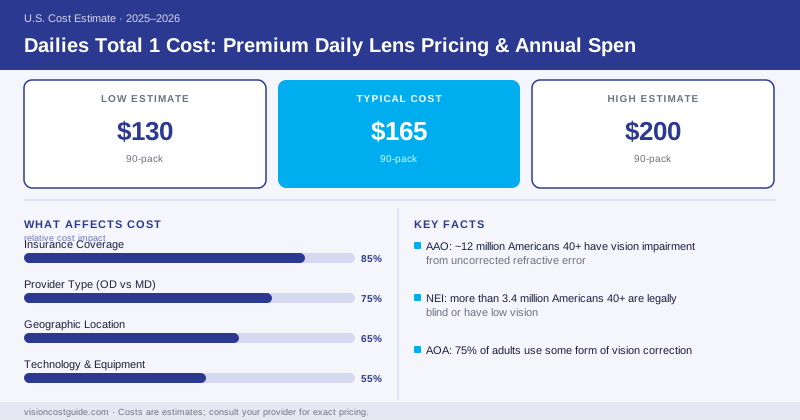
| 90-pack | $130–$200 | $1.44–$2.22 | 3 months |
Daily wear means 365 lenses per eye a year — 730 total. At roughly $1 to $1.50 per lens after the value pack, you’re looking at $700–$1,100 annually. That’s the steepest tier in the daily contacts market.
Why They Cost So Much
The water-gradient technology is genuinely different from standard silicone hydrogel dailies. The lens core holds oxygen-friendly material while the outer surface mimics your tear film, which is why dry-eye sufferers often gravitate to them. If afternoon dryness is your issue, our guide to contacts for dry eyes compares Total 1 against other dryness-friendly picks.
Dailies Total 1 is the premium daily disposable, costing $700–$1,100 a year. You’re paying for the water-gradient surface and the zero-maintenance convenience of a fresh lens every morning — no solution, no case, no cleaning.
What You’re NOT Paying For
Unlike monthly or two-week lenses, dailies skip the entire solution-and-case expense. That’s $80–$150 a year you don’t spend. So the gap between Dailies Total 1 and a reusable lens narrows a bit once you account for supplies — though it’s still wide.
| Lens Type | Annual Lens Cost | Solution Cost | Total |
|---|---|---|---|
| Dailies Total 1 | $700–$1,100 | $0 | $700–$1,100 |
| Standard daily | $400–$700 | $0 | $400–$700 |
| Premium monthly | $150–$320 | $80–$150 | $230–$470 |
How to Cut the Cost
Three real levers. Buy the 90-pack, which drops your per-lens price meaningfully. Apply your vision plan’s contact allowance — typically $130–$200, which our vision insurance cost guide breaks down. And watch for Alcon rebates on annual supplies, which can return $100–$250 when you buy a full year at once.
Are They Worth It?
If you’ve tried mid-range dailies and your eyes still feel gritty by 3 p.m., Total 1 may genuinely change your day. If you’re already comfortable in a cheaper lens, you’re paying a premium for marginal gains. Don’t forget the annual contact lens exam and fitting are required regardless of brand — your prescription expires, and so does the doctor’s go-ahead to keep ordering.
A daily lens is a single-use lens. Don’t be tempted to “stretch” Dailies Total 1 across two days to save money — they’re not built for it, and reusing single-use lenses sharply raises infection risk. The CDC ties improper contact use to roughly 1 million eye-infection-related medical visits a year.
Bottom Line
Plan for $700–$1,100 a year with Dailies Total 1. It’s the priciest daily out there, justified only if cheaper lenses leave your eyes dry or irritated. Buy the 90-pack, use your benefit, and grab a rebate — but if a standard daily feels fine, your wallet will thank you for switching.
Frequently Asked Questions
A 30-pack runs $50–$80, and a 90-pack runs $130–$200. Daily wear for both eyes totals roughly $700–$1,100 a year.
They use a water-gradient design with nearly 100% water at the surface, which makes them one of the most comfortable — and priciest — dailies sold.
Yes. Standard dailies like Acuvue Moist or Clariti run $400–$700 a year, well below Dailies Total 1's premium price.