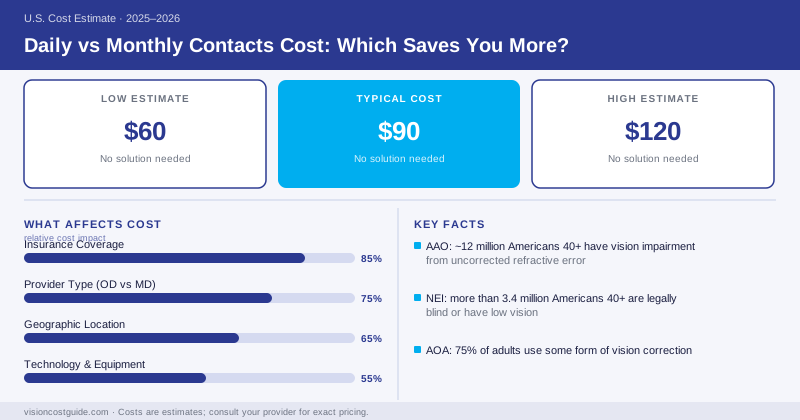
Most people assume dailies are the obvious money pit. They’re not always wrong, but the gap is smaller than it looks once you factor in the solution monthlies need. A year of dailies might run $600, a year of monthlies $300 plus $100 of solution. The premium for daily convenience is real, but it’s not double.
Let’s price out both honestly.
How the Pricing Works
Daily disposables are worn once and tossed. You go through about 730 lenses a year (two eyes, 365 days). That volume is why they cost $500–$800 annually.
Monthly lenses are worn for up to 30 days each, so you only buy 24 lenses a year. Add a cleaning routine and they land at $200–$400 plus solution.
| Daily Contacts | Monthly Contacts |
|---|---|
| $500–$800/year | $200–$400/year |
| ~730 lenses/year | 24 lenses/year |
| No solution needed | $60–$120/yr solution |
| Highest hygiene | Requires nightly cleaning |
The True Annual Cost
Here’s where people miscalculate. Monthly lenses look way cheaper until you add the cleaning solution and cases. A realistic monthly-wearer budget is $300 lenses + $100 solution = $400. Dailies at $600 are still pricier, but the real difference is closer to $200 a year, not $400.
The American Optometric Association reported that contact lens wearers number around 45 million in the U.S., and the split between daily and monthly use is roughly even, which tells you the price gap isn’t decisive for most people.
Monthly contacts save you about $200 a year once you account for solution. If that’s worth giving up the grab-and-go convenience of dailies, go monthly. If you wear lenses only a few days a week, dailies may actually cost less because you’re not throwing away unused monthlies.
When Dailies Actually Win
Part-time wearers flip the math. If you only wear contacts two or three days a week, you’d waste a monthly lens that “expires” 30 days after opening whether you wear it or not. In that case, daily contacts you buy as needed can be cheaper and far more hygienic.
The CDC has reported that improper lens hygiene contributes to roughly 1 million eye-care visits a year for contact-related infections. Dailies sidestep most of that risk because there’s no cleaning step to skip.
The Hidden Health Cost
Cheaper isn’t free if it lands you at the eye doctor. Monthly lenses demand discipline: clean nightly, replace on schedule, never sleep in them unless approved. Skip those steps and you risk corneal infections that can run hundreds in treatment.
Stretching monthly lenses past 30 days to save money is a common and costly mistake. Worn-out lenses cause irritation and raise infection risk. The $10 you save isn’t worth a $300 office visit and a scratched cornea.
Which Should You Pick?
- Full-time wearer on a budget? Monthlies win. The $200 yearly savings adds up.
- Part-time or occasional wearer? Dailies often cost less and are safer.
- Prone to skipping cleaning? Dailies remove the temptation entirely.
- Allergy sufferer? Dailies start fresh each day, reducing buildup.
If you’re rethinking the whole recurring expense, our comparison of glasses costs shows how a single pair can undercut years of either lens type. And a vision insurance plan often covers an annual lens allowance that trims either option.
Bottom line: monthlies are cheaper for daily wearers, dailies are cheaper for occasional ones. Match the lens to how often you actually wear them.
Frequently Asked Questions
Monthly contacts are cheaper. They run $200–$400 a year versus $500–$800 for dailies, even after adding solution costs.
You use a fresh pair every day, so you buy 730 lenses a year instead of 24. The convenience and hygiene come at a higher price.
Yes. Monthly and biweekly lenses require cleaning solution that adds $60–$120 a year, while dailies need none.