The CDC estimates that roughly 9.6 million Americans with diabetes have some degree of diabetic retinopathy, making it the leading cause of new blindness among working-age adults in the United States. Yet fewer than 60% of people with diabetes get their recommended annual dilated eye exam, according to CDC surveillance data — often for reasons that have more to do with confusion about cost and coverage than actual financial barriers.
What a Diabetic Eye Exam Actually Costs
| Component | Uninsured Cost | With Insurance/Medicare |
|---|---|---|
| Comprehensive dilated eye exam | $100-$250 | Typically fully covered, $0-$40 copay |
| Fundus photography (documentation) | $40-$100 | Often included, no extra charge |
| OCT imaging (if edema suspected) | $100-$250 | $20-$80 copay |
| Fluorescein angiography (if needed) | $200-$500 | Specialist copay/coinsurance |
| Follow-up visit for active retinopathy | $100-$250 | Standard specialist copay |
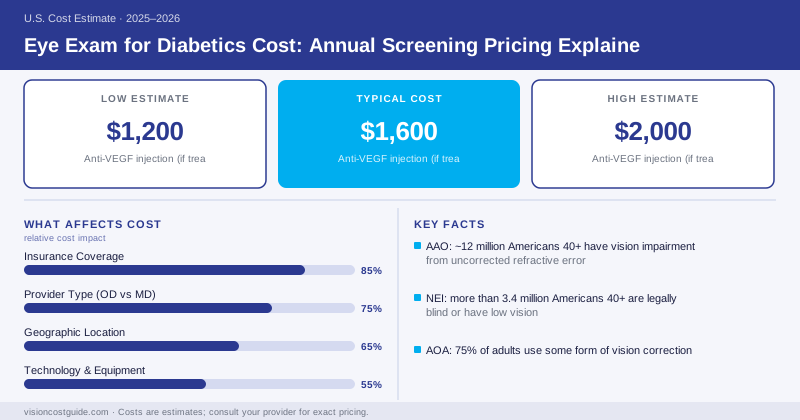
| Anti-VEGF injection (if treatment needed) | $1,200-$2,000/injection | 20% coinsurance typical under Medicare |
Why This Exam Is Billed Differently Than a Routine Eye Exam
Here’s the detail that causes the most confusion: a diabetic eye exam is billed as a medical exam, not a routine vision exam, because you’re being screened for a disease complication, not just checked for a glasses prescription update. This distinction matters enormously for cost, because it means the exam is typically covered under your medical insurance (including Medicare Part B) rather than your separate vision insurance plan — and medical insurance almost universally covers this exam for diagnosed diabetics with no annual dollar limit, unlike vision plans which often cap coverage at one routine exam per year with a modest allowance.
Medicare specifically covers one dilated diabetic eye exam per year for beneficiaries with diabetes at no additional cost beyond your standard Part B cost-sharing, recognizing this as a preventive service given how much it reduces downstream vision-loss-related costs.
Why the Dilated Part Isn’t Optional
Diabetic retinopathy develops silently in its early stages — damaged blood vessels in the retina can leak, swell, or form abnormal new vessels well before a patient notices any vision change at all. A dilated exam allows the doctor to directly visualize the entire retina, including the peripheral areas where early changes often first appear, which isn’t possible without dilation. Skipping dilation to save a few minutes of appointment time (some patients request this due to light sensitivity or driving concerns afterward) genuinely reduces the exam’s ability to catch early retinopathy.
The American Academy of Ophthalmology recommends type 1 diabetics get their first dilated eye exam within 5 years of diagnosis, while type 2 diabetics should get one at the time of diagnosis, since type 2 diabetes often goes undiagnosed for years before detection. After the initial exam, annual screening is standard for most patients — though your eye doctor may recommend more frequent monitoring (every 3-6 months) if retinopathy is already present, or may extend the interval to every 1-2 years for patients with well-controlled diabetes and no retinopathy on repeated normal exams, per updated AAO guidance.
What Happens (and What It Costs) If Retinopathy Is Found
If diabetic retinopathy is detected, follow-up costs depend entirely on severity. Mild non-proliferative retinopathy typically just means more frequent monitoring visits. Diabetic macular edema or proliferative retinopathy may require anti-VEGF injections (Eylea, Lucentis, Avastin, Vabysmo), costing $1,200-$2,000 per injection at list price, administered every 4-12 weeks — though patients typically pay only their standard medical insurance coinsurance, commonly 20% under Medicare, with the remainder covered.
Community and Free Screening Options
For uninsured patients, organizations including EyeCare America (an AAO public service program) and many local health departments offer free or low-cost diabetic eye screening events, particularly around National Diabetes Month. Community health centers and federally qualified health centers also frequently offer diabetic eye exams on a sliding fee scale based on income.
Don’t skip your annual diabetic eye exam because your vision feels normal. Diabetic retinopathy causes no symptoms in its early, most treatable stages — by the time vision changes are noticeable, damage is often more advanced and harder to fully reverse. Early detection through consistent annual screening is the single biggest factor in preventing diabetes-related vision loss.
Bottom Line
This exam is almost always covered by medical insurance or Medicare with no meaningful out-of-pocket cost for diagnosed diabetics — the barrier for most people isn’t the price, it’s not realizing this exam is billed and covered differently than a routine vision checkup. Call your insurer, confirm coverage, and get it scheduled.