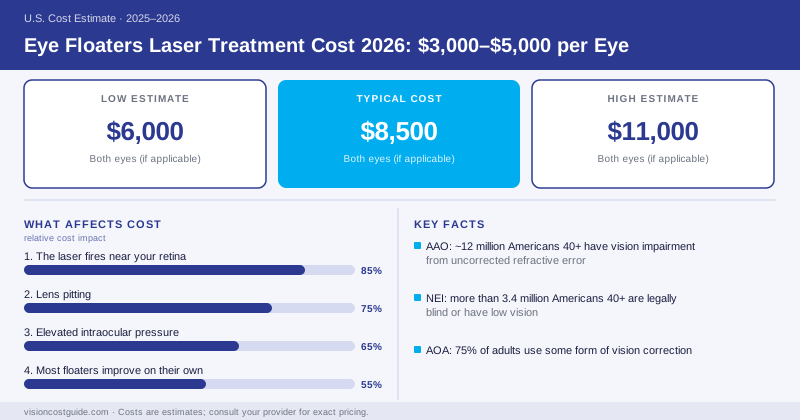
Most patients discover laser floater treatment the same way: frustrated after months of floaters, a Google search turns up “YAG laser vitreolysis” and a few clinics advertising $3,000–$5,000 treatments. Is it real? Yes. Does it work? Sometimes. Do most ophthalmologists recommend it? No. Here’s the honest picture.
What Laser Vitreolysis Actually Is
YAG laser vitreolysis uses a YAG (neodymium-doped yttrium aluminum garnet) laser — the same type used to treat posterior capsule opacification after cataract surgery — to vaporize or break up floaters in the vitreous cavity. The goal is converting large, visually disruptive floaters into smaller pieces that are less noticeable, or eliminating them entirely.
It’s a real procedure. A small number of ophthalmologists in the U.S. offer it. The largest study to date — a 2017 randomized controlled trial published in JAMA Ophthalmology — showed statistically significant improvement in floater-related symptoms compared to a sham laser treatment. But the evidence base remains thin, and most major academic ophthalmology programs don’t perform it routinely.
Cost Breakdown
| Component | Cost | Notes |
|---|---|---|
| Initial consultation (floater evaluation) | $150–$350 | Includes dilated exam, vitreous assessment |
| YAG laser vitreolysis — per session | $1,500–$2,500 | Per eye; may need multiple sessions |
| Multiple sessions (common) | $3,000–$5,000 total per eye | Most patients need 2–3 sessions |
| Post-procedure follow-up | $150–$300 per visit | Typically 1–3 follow-up visits |
| Total cost per eye (typical) | $3,000–$5,500 | All out-of-pocket; not covered by insurance |
| Both eyes (if applicable) | $6,000–$11,000 | — |
| Vitrectomy (surgical alternative) | $7,000–$15,000 per eye | Definitive but riskier; surgical center fee included |
Why Most Ophthalmologists Don’t Recommend It
The AAO hasn’t issued a formal endorsement of YAG vitreolysis as standard of care, and the specialty is genuinely divided on whether the benefit justifies the risk for typical floater patients.
The concerns are legitimate:
1. The laser fires near your retina. The vitreous floats in direct proximity to the retina. A misplaced laser pulse, or a floater that moves during treatment, can create a retinal hole or tear — which then requires urgent retinal treatment. Retinal damage from laser floater treatment has been reported in the literature.
2. Lens pitting. If the floater being targeted is near the posterior lens capsule, the laser can pit or opacify the lens — potentially worsening vision and accelerating the need for cataract surgery.
3. Elevated intraocular pressure. The cellular debris from vaporized vitreous can temporarily clog the trabecular meshwork and raise eye pressure — a concern for patients with glaucoma risk.
4. Most floaters improve on their own. Posterior vitreous detachment (PVD) — by far the most common cause of new floaters in adults over 50 — typically produces floaters that become less bothersome over 6–12 months as the vitreous collapses and the brain adapts. Spending $3,000–$5,000 on a procedure with known risks when watchful waiting has a reasonable resolution rate isn’t good medicine for most patients.
New-onset floaters, especially when accompanied by flashes of light (photopsia), require same-day or next-day evaluation by an ophthalmologist. Flashes plus floaters can indicate a retinal tear — which, untreated, can lead to retinal detachment, the surgical emergency of the eye. Don’t self-refer to a laser floater clinic if you’re seeing new flashes. See a general ophthalmologist first to rule out retinal pathology before anyone discusses treatment options.
Who Might Actually Benefit from Laser Vitreolysis
The clearest candidates for laser vitreolysis — if pursuing treatment at all — are:
- Patients with a single, large, well-defined floater (Weiss ring from PVD) near the center of vision
- The floater has been present for 6+ months and hasn’t improved with adaptation
- The floater demonstrably impairs functional vision (not just occasionally visible in bright light)
- The patient understands the procedure is off-label by mainstream standards, carries real risks, and is entirely out-of-pocket
Diffuse, small, wispy floaters — the “cobweb” type — are poor targets for laser. The procedure works best on distinct, condensed opacities, not on generalized vitreous degeneration.
The Surgical Alternative: Vitrectomy
Vitrectomy — surgical removal of the vitreous gel and its contents — is the only way to definitively eliminate floaters. It works. But it’s major intraocular surgery, with real risks:
- Retinal detachment (occurs in 1–2% of vitrectomies)
- Cataract formation (most patients develop a visually significant cataract within 1–2 years)
- Infection (endophthalmitis) — rare but potentially blinding
At $7,000–$15,000 per eye, with standard surgical risks, vitrectomy for floaters alone is considered an extreme option. Most retinal surgeons won’t perform it for floaters unless the floaters are causing severe, documented visual impairment. Insurance won’t cover it for symptomatic floaters without a medical indication beyond subjective bother.
Here’s the realistic timeline for typical age-related floaters from PVD:
- Months 1–3: Most bothersome period. The floater is large, central, and hard to ignore.
- Months 3–6: The vitreous fully detaches and settles inferiorly. The floater shifts out of the central visual axis in most patients.
- Months 6–12: Neurological adaptation. The brain learns to suppress the floater. Most patients report 70–80% reduction in subjective bother by 12 months.
- Beyond 12 months: The floater persists physically but is typically no longer functionally impairing for most people.
If a floater remains severely symptomatic at the 12-month mark and is demonstrably affecting daily function, that’s when a specialist consultation about intervention options (laser or surgical) becomes reasonable.
US vs. Abroad Pricing
Some patients travel internationally for laser vitreolysis, where prices run lower:
- UK/Europe: £1,500–£2,500 per eye (~$1,900–$3,200)
- Thailand/India: $800–$1,500 per eye
- Canada: CAD $2,000–$3,500 per eye
The savings are real. But so is the risk of receiving treatment from providers with less experience, less post-procedure follow-up capability, and no legal recourse if something goes wrong. For a procedure performed millimeters from your retina, the cheapest option is genuinely not the safest one.
The Bottom Line
Laser vitreolysis costs $3,000–$5,000 per eye, isn’t covered by insurance, and isn’t recommended by most ophthalmologists for typical floater patients. That doesn’t mean it’s never appropriate — but the bar for “appropriate” is higher than most patients realize when they first look into it.
If your floaters arrived in the last 6 months: wait. If they’ve been present for over a year and are genuinely impairing your function: see a retinal specialist (not a laser floater clinic first) to discuss your specific floater anatomy, risks, and whether you’re a good candidate. The AAO’s guidance is clear — watchful waiting is the first-line recommendation, and intervention should be reserved for selected, well-counseled patients.
Cost estimates based on AAO clinical guidance on vitreous floaters, JAMA Ophthalmology 2017 RCT data on YAG vitreolysis outcomes, and U.S. outpatient procedure pricing surveys. All laser vitreolysis costs are out-of-pocket as this procedure is classified elective by U.S. health insurers.
Frequently Asked Questions
Most ophthalmologists don't offer YAG laser vitreolysis for floaters because the evidence supporting it is limited, the risk-benefit profile is unfavorable for most patients, and floaters frequently resolve or become less bothersome on their own over 6–12 months as the brain adapts. The AAO's clinical guidance notes that while small studies show short-term symptom improvement, randomized controlled trial data is insufficient to support widespread use. There's also genuine risk: the laser fires near the retina and lens, and complications including retinal damage, elevated intraocular pressure, and lens pitting have been reported.
No. Laser vitreolysis (YAG laser for floaters) is classified as cosmetic or elective by virtually all U.S. health insurers, including Medicare. It's not covered. The full $3,000–$5,000 per eye is out-of-pocket. Some patients have attempted to argue medical necessity for severely symptomatic floaters, but appeals are almost always denied. If the floaters are caused by a medical condition (such as vitreous hemorrhage from diabetic retinopathy), the underlying condition's treatment is covered — but elective floater ablation is not.
Yes — frequently. Most new-onset floaters from posterior vitreous detachment (PVD), which is the most common cause, improve significantly within 6–12 months as the vitreous fully separates from the retina and settles into a position less obstructive to central vision. The brain also neurologically adapts and stops 'noticing' stable floaters over time. New, sudden, or very dense floaters — especially when accompanied by flashes of light — require immediate ophthalmologic evaluation to rule out retinal tear or detachment. But for typical age-related floaters: watchful waiting is the evidence-based first recommendation.