Most people assume eye herpes is some rare, exotic infection. It isn’t. The National Eye Institute identifies herpes simplex keratitis as the leading infectious cause of corneal blindness in developed countries, with an estimated 50,000 new and recurring cases diagnosed in the U.S. each year. It’s common — and treatable — but it’s also a condition that requires a genuinely different budget mindset than most eye infections, because it recurs.
Treatment Cost by Presentation
| Type/Situation | Treatment | Typical Cost |
|---|---|---|
| Initial diagnosis visit | Comprehensive eye exam + slit lamp | $150-$300 |
| Epithelial keratitis (surface infection) | Oral or topical antiviral (acyclovir/valacyclovir/ganciclovir gel) | $20-$100 |
| Stromal keratitis (deeper infection) | Antiviral + topical steroid, closer monitoring | $150-$400 for the flare |
| Recurrence prevention (suppressive therapy) | Daily low-dose oral antiviral | $15-$50/month generic |
| Herpes zoster ophthalmicus (shingles in the eye) | Oral antiviral within 72 hours of rash onset | $30-$150 |
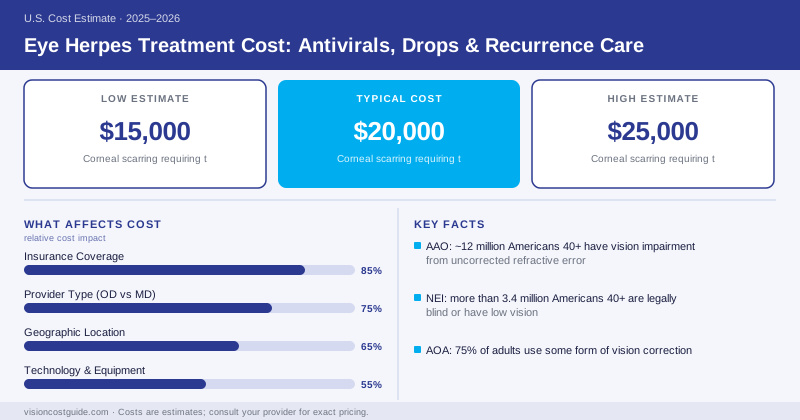
| Corneal scarring requiring transplant (severe cases) | Corneal transplant | $15,000-$25,000+ (usually insurance-covered) |
Why This Isn’t a One-Time Treatment Cost
Unlike bacterial conjunctivitis, which clears up and is gone, ocular herpes simplex is caused by a virus that establishes lifelong latency in the trigeminal nerve and can reactivate periodically — sometimes triggered by stress, illness, sun exposure, or immune suppression, sometimes with no identifiable trigger at all. This means the true cost of ocular herpes isn’t a single flare-up; it’s the cumulative cost of managing recurrences over years or decades.
Someone who has one mild episode and never has another might spend $50-$100 total in their life on this condition. Someone with frequent stromal keratitis recurrences might spend several hundred dollars per year indefinitely on suppressive therapy and monitoring.
Epithelial vs. Stromal: A Meaningful Cost Difference
Epithelial keratitis — infection limited to the cornea’s surface layer — typically responds well to topical or oral antiviral medication within 1-2 weeks and rarely causes lasting vision damage. Cost per episode: $20-$100 for medication plus the exam.
Stromal keratitis — infection or immune reaction reaching deeper corneal layers — is more serious, requires both antiviral treatment and careful, monitored use of topical corticosteroids (which must be used cautiously alongside antivirals, since steroids alone can worsen active viral infection), and carries meaningfully higher risk of corneal scarring and vision loss. This requires closer follow-up, driving cost toward $150-$400 per flare.
For patients who’ve had one episode of stromal keratitis or multiple recurrences of any type, long-term daily low-dose oral antiviral therapy (typically acyclovir or valacyclovir) has been shown in clinical trials to meaningfully reduce recurrence frequency. Generic versions cost $15-$50/month — a modest ongoing expense that’s frequently worth it compared to the cost and vision risk of repeated flare-ups, particularly stromal recurrences that carry real scarring risk. Ask your ophthalmologist whether you’re a candidate after your first significant episode, not after your third.
Herpes Zoster Ophthalmicus: A Related but Distinct Cost
Shingles affecting the eye (herpes zoster ophthalmicus) is caused by the varicella-zoster virus, not herpes simplex, but is often grouped with “eye herpes” conversationally. Prompt oral antiviral treatment started within 72 hours of rash onset significantly reduces complication risk and costs $30-$150. The shingles vaccine (Shingrix), recommended for adults 50 and older, reduces the risk of this condition entirely and is covered by Medicare Part D and most insurance with minimal or no out-of-pocket cost.
When Cost Escalates Significantly
In a small percentage of cases, repeated stromal keratitis episodes cause enough corneal scarring to significantly impair vision, requiring a corneal transplant — a major surgery costing $15,000-$25,000 or more, though this is typically well-covered by medical insurance given its clear medical necessity. This outcome is exactly why early, appropriately aggressive treatment and, where appropriate, suppressive therapy matter — they reduce the cumulative recurrence burden that leads to scarring in the first place.
Insurance Coverage
Ocular herpes treatment, including antivirals, steroids, and monitoring visits, is covered under medical insurance as an infectious/inflammatory eye disease, not a vision-plan matter. Generic antiviral medications are typically inexpensive even without insurance.
Never use topical corticosteroid eye drops for a red or irritated eye without an ophthalmologist’s diagnosis first. Steroids can dramatically worsen an undiagnosed active herpes infection and accelerate corneal damage. Any red, painful eye with light sensitivity needs a professional exam before any steroid drop is used.
Bottom Line
Budget for the possibility of recurrence, not just the first flare-up. If you’ve had more than one episode, ask about daily suppressive antiviral therapy — at $15-$50/month, it’s often the single best cost-to-protection ratio in ocular herpes management.