A custom ocular prosthesis costs $2,500-$8,300 to have made in the first place — but that number is only half the budget conversation. What almost nobody explains upfront is that the artificial eye keeps costing money for the rest of your life, in smaller, recurring pieces.
Ongoing Maintenance Costs After the Initial Fit
| Service | Typical Cost | Recommended Frequency |
|---|---|---|
| Professional polishing (ocularist) | $75-$200 per visit | Every 3-6 months |
| Deep cleaning/refitting adjustment | $100-$300 | Annually or as needed |
| Prosthesis replacement (custom) | $2,500-$8,300 | Every 5-7 years |
| Socket lubricant drops | $10-$25/bottle | Ongoing, monthly supply |
| Emergency repair (chip, crack) | $150-$500 | As needed |
| Follow-up ocularist exam | $75-$150 | Annually |
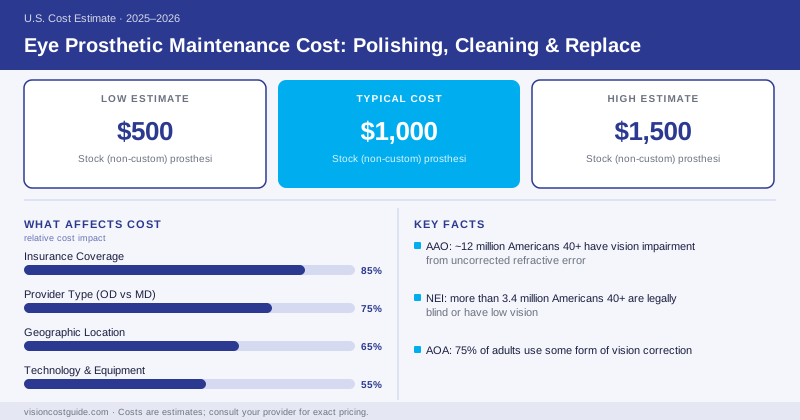
| Stock (non-custom) prosthesis replacement | $500-$1,500 | Every 3-5 years, lower-cost alternative |
Why Polishing Matters More Than People Realize
Ocular prostheses are made of medical-grade acrylic, and over months of wear the surface accumulates microscopic scratches from blinking and protein deposits from tear film — invisible to the eye but rough enough at a cellular level to irritate the socket lining and cause discomfort, discharge, or redness. An ocularist (a specialist certified specifically in prosthetic eye fabrication and fitting, distinct from an ophthalmologist or optometrist) polishes the surface back to a smooth, comfortable finish.
Most ocularists recommend polishing every 3-6 months. Skipping this isn’t just a comfort issue — a rough, unpolished prosthesis surface is one of the leading causes of chronic socket irritation and mucous discharge in long-term wearers.
Why the Prosthesis Needs Full Replacement Every 5-7 Years
The eye socket continues to change shape gradually over years, even in adults, due to normal tissue changes and bone remodeling. A prosthesis fitted perfectly in year one may fit noticeably looser or cause pressure points by year six. Additionally, acrylic material yellows and loses its color match to the natural eye over time under normal UV and environmental exposure. Most ocularists recommend a full remake every 5-7 years for adults, and considerably more often — sometimes annually — for growing children, whose socket size changes as they age.
A custom prosthesis, hand-painted and shaped to match your specific socket and natural eye, costs $2,500-$8,300 and lasts 5-7 years. A stock prosthesis — pre-made in standard sizes and colors, then fitted with minor adjustments — costs $500-$1,500 but fits and matches less precisely, and typically needs replacement sooner, every 3-5 years. Stock prostheses are a reasonable option for temporary use, financial constraints, or as a spare/backup, but most ocularists recommend custom fabrication for long-term daily wear because of the comfort and cosmetic match difference.
Insurance Coverage for Maintenance
Medical insurance coverage for prosthetic eye maintenance varies significantly by plan and state. Initial prosthesis fabrication is frequently covered under durable medical equipment or prosthetic device benefits when the eye loss resulted from trauma, cancer, or congenital absence — but routine polishing visits are inconsistently covered, and many patients pay out of pocket. Check specifically whether your plan classifies ocularist polishing visits under “prosthetic maintenance,” since some plans that cover the device itself still exclude routine upkeep.
The Real Annual Cost, Averaged Out
Doing the math across a full replacement cycle: $2,500-$8,300 divided over 5-7 years works out to roughly $400-$1,600/year, plus $150-$400/year in polishing and supplies — meaning the true annualized cost of wearing a prosthetic eye long-term runs somewhere around $550-$2,000/year for most wearers, custom or stock.
Never attempt to polish, clean with abrasive materials, or repair a cracked or chipped prosthesis yourself. Household cleaners and DIY polishing can permanently damage the acrylic surface or introduce bacteria into the socket, leading to infection. Always see a board-certified ocularist (look for American Society of Ocularists certification) for any maintenance beyond gentle saline rinsing at home.
Bottom Line
Budget for the ongoing relationship, not just the initial fabrication. Polishing every few months and full replacement every 5-7 years are both predictable, plannable costs — treat them as a recurring line item, not a surprise.