Most people assume any “eye vitamin” on the pharmacy shelf will help protect their vision. The National Eye Institute’s own research says otherwise — and the difference between the formula that works and the ones that don’t costs you nothing extra to know, but potentially a lot if you buy the wrong one.
The National Eye Institute funded two of the largest randomized clinical trials ever conducted on nutritional supplements and eye disease: AREDS and its follow-up, AREDS2. The results were specific and, frankly, narrower than the supplement aisle would have you believe. The AREDS2 formula — a precise combination of vitamin C, vitamin E, zinc, copper, lutein, and zeaxanthin — was shown to reduce the risk of progression to advanced age-related macular degeneration by roughly 25–30% over five years, but only in people who already have intermediate AMD or advanced AMD in one eye. It does nothing proven for people with normal eyes, and it doesn’t prevent AMD from starting in the first place.
What You’ll Actually Pay
| Product Type | Monthly Cost | Notes |
|---|---|---|
| PreserVision AREDS2 (brand) | $25–$45 | Bausch + Lomb, the original AREDS2 trial formula |
| ICaps AREDS2 (brand) | $20–$35 | Alcon’s version of the same formula |
| Generic/store-brand AREDS2 | $10–$20 | Same active ingredient ratios, lower price |
| General “eye health” multivitamin | $10–$30 | Often lacks the specific AREDS2 ratios |
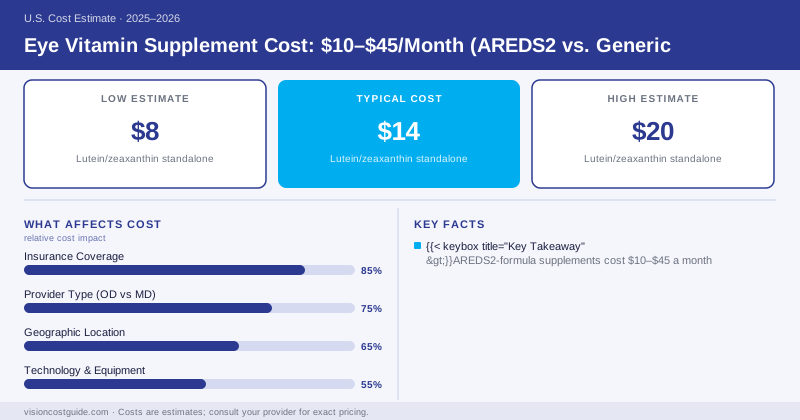
| Lutein/zeaxanthin standalone | $8–$20 | No zinc/vitamin C/E combination studied in AREDS2 |
Generic AREDS2-formula supplements cost roughly half of the name-brand versions and use the identical ingredient ratios validated in the actual trial, since the formula itself isn’t patented — only the specific brand name is.
Reading the Label Correctly
The word “AREDS2” on the label isn’t marketing fluff — it’s a specific, tested ratio: 500mg vitamin C, 400 IU vitamin E, 80mg zinc oxide (or 25mg in a lower-zinc version), 2mg copper, 10mg lutein, and 2mg zeaxanthin. If a product doesn’t list these exact amounts, it isn’t the studied formula, no matter what “eye health” claims appear on the front of the bottle. A lot of general multivitamins marketed toward “vision support” contain trace amounts of these ingredients well below the tested doses.
AREDS2-formula supplements cost $10–$45 a month and are proven, in NEI-funded trials, to slow progression in people who already have intermediate or advanced AMD in at least one eye. They’re not preventive for people with healthy eyes, and generic versions with matching ratios work identically to name brands for a fraction of the price.
Who Actually Needs Them
Your ophthalmologist determines AMD staging through a dilated exam and imaging like OCT. If you’ve been told you have intermediate AMD — or advanced AMD in one eye with the other still healthy — that’s the population the trials studied, and that’s who sees a measurable benefit. If your retina exam is normal, most eye doctors won’t recommend AREDS2 supplements at all, since there’s no evidence they prevent AMD from developing in eyes that don’t already show it.
Beta-Carotene Warning for Smokers
The original AREDS formula included beta-carotene, which was later removed in AREDS2 after research linked it to increased lung cancer risk in current and former smokers. If you smoke, double-check that your supplement uses the AREDS2 formulation without beta-carotene — some older or off-brand products still include it.
Current and former smokers should avoid AREDS-formula supplements containing beta-carotene. Look specifically for “AREDS2” on the label, which replaces beta-carotene with additional lutein and zeaxanthin and carries no increased cancer risk association in the trial data.
Insurance and Out-of-Pocket Reality
Eye vitamins are classified as over-the-counter supplements, not prescription medications, so standard health insurance doesn’t cover them. Some vision insurance plans or HSA/FSA accounts allow reimbursement if your ophthalmologist provides a letter of medical necessity documenting AMD diagnosis — worth asking your plan administrator about directly.
Bottom Line
Budget $10–$45 a month depending on brand, but let your AMD diagnosis — not the supplement aisle’s marketing — decide whether you need them at all. A $12 generic AREDS2 formula does exactly what a $45 name brand does, as long as the ratios on the label match.