What does it actually cost to fix farsightedness — and why does one person’s hyperopia get solved with $150 reading glasses while another’s requires a $5,000 surgical procedure? The answer comes down to degree of prescription, age, and whether presbyopia (age-related near-vision loss) is layered on top, which it usually is by the time most people notice hyperopia as a real problem.
Hyperopia (farsightedness) means your eye focuses images slightly behind the retina instead of directly on it, making near objects blurry while distance vision may remain relatively clear, at least until higher degrees or presbyopia complicate the picture. It’s estimated to affect somewhere between 5-10% of the U.S. population to some meaningful degree, per figures cited by the National Eye Institute, though mild hyperopia is often invisible and uncorrected in younger patients whose eyes can compensate through accommodation.
Treatment Costs Compared
| Treatment | Best For | Typical Cost |
|---|---|---|
| Single-vision reading glasses (OTC) | Mild hyperopia, near tasks only, presbyopic adults | $10-$30 |
| Prescription single-vision glasses | Mild-moderate hyperopia | $150-$400 |
| Progressive/bifocal glasses | Hyperopia + presbyopia combined | $250-$600 |
| Soft contact lenses | Moderate hyperopia, active lifestyles | $300-$600/year |
| LASIK | Mild-moderate hyperopia, stable prescription | $4,000-$6,000 (both eyes) |
| PRK | Similar range, thinner corneas | $3,600-$5,500 (both eyes) |
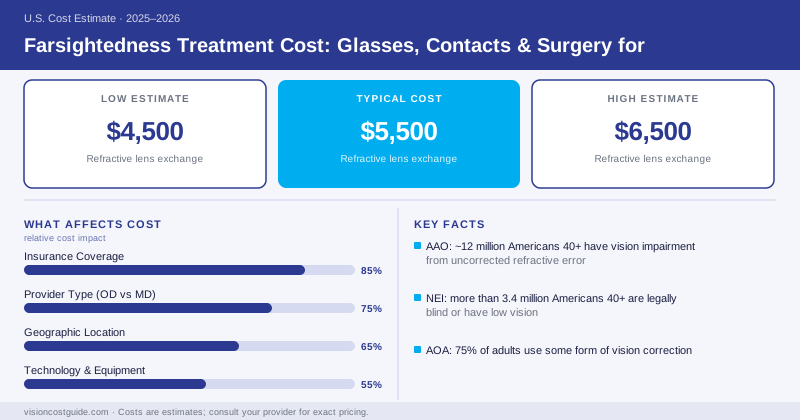
| Refractive lens exchange | High hyperopia, or hyperopia + presbyopia in 45+ | $4,500-$6,500 per eye |
Why Farsightedness Often Goes Unnoticed Until Middle Age
Younger people with mild-to-moderate hyperopia frequently compensate unconsciously through accommodation — the eye’s natural lens-focusing mechanism, which is strong and flexible at younger ages. This means someone can have measurable hyperopia on an exam for years while reporting no symptoms at all. The problem typically surfaces around the late 30s to 40s, as the natural lens gradually stiffens (the beginning of presbyopia) and can no longer compensate for the underlying hyperopia — symptoms like eye strain, headaches with near work, and blurry close-up vision often emerge together, even though the hyperopia itself hasn’t changed.
Glasses: Still the Default First Step
For most newly diagnosed hyperopia, glasses remain the standard, lowest-cost starting point. Simple single-vision lenses correct mild-moderate hyperopia effectively at $150-$400 for a complete pair. Once presbyopia enters the picture — typically in the 40s — progressive or bifocal lenses that correct both distance and near vision in one lens become the more practical choice, at a higher cost of $250-$600.
LASIK and PRK can correct hyperopia, but the effective treatable range is generally narrower than for nearsightedness — most surgeons comfortably treat up to about +4 to +5 diopters of hyperopia with laser correction, compared to a wider treatable range for myopia. Higher-degree hyperopia, or hyperopia combined with significant presbyopia in patients over 45-50, often makes a patient a better candidate for refractive lens exchange (replacing the natural lens with an artificial one) rather than laser correction, since replacing the lens addresses both the hyperopia and future cataract risk in one procedure. Ask your surgeon specifically which procedure fits your diopter range — this isn’t a one-size-fits-all decision the way it more often is for mild myopia.
Contact Lenses for Hyperopia
Soft contact lenses for hyperopia are priced similarly to lenses for any other refractive error, at $300-$600/year for daily disposables, and correct near and distance vision without the image distortion that can occur with strong hyperopic glasses lenses (which magnify the eyes noticeably behind thick lenses at higher prescriptions). For younger hyperopic patients without presbyopia, standard single-vision contacts work well; for those with both hyperopia and presbyopia, multifocal contact lenses add a modest premium, typically $50-$150/year more than single-vision lenses.
Surgical Considerations by Age
For patients under 45 with stable hyperopia and no presbyopia yet, LASIK or PRK offer a straightforward, one-time surgical correction. For patients 45 and older, where presbyopia is already present or imminent, refractive lens exchange is frequently recommended over laser correction, since it addresses both conditions simultaneously and preempts the cataract surgery this population will likely need anyway within 10-20 years.
Insurance Coverage
Glasses and contact lenses for hyperopia are covered under standard vision insurance plans similarly to any other refractive error, typically with an annual allowance toward frames/lenses or a contact lens allowance. LASIK, PRK, and refractive lens exchange are elective procedures not covered by vision or medical insurance in the large majority of cases, though FSA/HSA funds can be used for all of the above.
If you’re over 45 and considering LASIK for farsightedness, discuss refractive lens exchange as an alternative with your surgeon before committing — since presbyopia will likely progress regardless of laser correction, and lens exchange may be the more durable, longer-term solution depending on your specific prescription and age.
Bottom Line
Start with glasses for mild-moderate hyperopia — it’s the cheapest, lowest-risk option. Surgical correction makes the most financial and practical sense once you understand which procedure your specific diopter range and age actually qualify for.