That $500 you spend on an exam, glasses, and contacts each year? With an FSA, you could be paying for it with pre-tax dollars and pocketing $100 to $150 in tax savings. Vision care is one of the easiest, most predictable ways to drain an FSA — yet a shocking number of people let those dollars expire unused. Let’s fix that.
How an FSA Saves You Money on Vision
A Flexible Spending Account lets you set aside pre-tax money from your paycheck for eligible health expenses. Because the money never gets taxed, every vision dollar you run through your FSA effectively costs 20–30% less, depending on your tax bracket.
The catch is the “use it or lose it” rule. Most FSA funds expire at year-end (some plans offer a small carryover or grace period), so the smart move is planning your vision spending to use the money you’ve set aside. Our broader HSA and FSA vision expenses guide covers how the two accounts differ.
There’s one more quirk in your favor: the full annual FSA election is available to you from day one of the plan year, even though you fund it through payroll deductions over twelve months. So if you elect $2,000 and need LASIK or a big eyewear purchase in January, you can spend the whole $2,000 immediately and pay it back through the rest of the year’s paychecks. If you then left the job mid-year having spent more than you’d contributed, you generally don’t owe the difference back. That front-loaded access makes the FSA an especially powerful tool for planned, larger vision expenses.
The Full FSA-Eligible Vision List
| Eligible Expense | Typical Cost | FSA-Eligible? |
|---|---|---|
| Comprehensive eye exam | $100–$150 | Yes |
| Prescription eyeglasses | $150–$400 | Yes |
| Prescription sunglasses | $150–$300 | Yes |
| Contact lenses (prescription) | $200–$600/yr | Yes |
| Contact lens solution & cases | $50–$150/yr | Yes |
| Reading glasses (OTC) | $15–$50 | Yes |
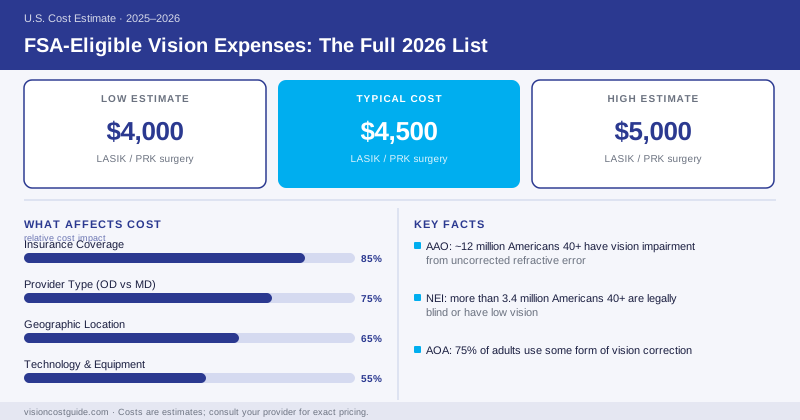
| LASIK / PRK surgery | $4,000–$5,000 | Yes |
| Non-prescription sunglasses | — | No |
| Cosmetic/colored contacts (no Rx) | — | No |
Yes — even over-the-counter reading glasses and contact lens solution qualify, no prescription needed for those. Prescription sunglasses count too, which a lot of people don’t realize.
LASIK is FSA-eligible, and it’s the single biggest way to use a vision FSA. If you’re planning surgery, time it to use a full year’s FSA contribution — at the IRS limit (around $3,200–$3,300 for 2026), running LASIK through your FSA can save $700–$900 in taxes on a single procedure. See our LASIK cost breakdown to plan the timing.
What’s NOT Eligible
Don’t get tripped up at checkout. These vision-related purchases are generally not FSA-eligible:
- Non-prescription sunglasses — even pricey ones, if there’s no corrective prescription
- Purely cosmetic colored contacts without a vision prescription
- Vision insurance premiums — the premium itself isn’t eligible, though the out-of-pocket care it covers is
- Warranty or protection plans on eyewear
When in doubt, keep the receipt and ask your FSA administrator. Many now use auto-substantiation at vision retailers, but documentation protects you if questioned.
Timing Your Spending Before Year-End
Because most FSA money expires, run a quick mental audit each fall. Got leftover funds? An annual eye exam, a fresh pair of glasses, or a year’s supply of contacts are all easy, useful ways to spend down the balance before December 31.
The Vision Council reported in 2024 that around 187 million Americans use vision correction — meaning the vast majority of FSA holders have qualifying expenses sitting right in front of them.
Watch the deadline. Standard FSAs forfeit unused funds at year-end, though some employers offer a $640-ish carryover or a 2.5-month grace period — check your specific plan. Don’t panic-buy junk just to spend it; legitimate vision needs like a new exam, backup glasses, or prescription sunglasses are far better uses than gadgets you don’t need.
Pair It With a Vision Plan
An FSA and vision insurance aren’t either/or — they stack. Use your vision plan for the covered exam and frame allowance, then pay the leftover out-of-pocket costs (lens upgrades, extra pairs, solution) with pre-tax FSA dollars. That combination squeezes the most value out of every eye-care dollar you spend.
Frequently Asked Questions
Eye exams, prescription glasses, prescription sunglasses, contact lenses, contact solution, reading glasses, and LASIK are all FSA-eligible. Non-prescription sunglasses and cosmetic contacts are not.
Because FSA money is pre-tax, you save your marginal tax rate — typically 20–30%. On $500 of annual vision spending, that's $100–$150 saved.
The health FSA contribution limit is set annually by the IRS, generally around $3,200–$3,300 per year per employee. Vision expenses count toward this same pool.