You sit down at 9 a.m., and by 2 p.m. your eyes feel like sandpaper. That’s the screen talking. Computer glasses are built to fix exactly that, and a good pair runs $80 to $400 depending on your prescription and the lens design you pick.
Here’s the thing most people miss: your everyday glasses are tuned for distance. A monitor sits about 20 to 26 inches away — an in-between zone where regular lenses force your eyes to overwork. Computer glasses move the sweet spot to that arm’s-length range.
What you’re actually paying for
The price swings on three things: your lens type, your coatings, and where you buy. The American Optometric Association notes that nearly 60% of U.S. adults report symptoms of digital eye strain after long screen sessions, so demand is high and options are everywhere.
| Option | Typical Cost |
|---|---|
| Plano (no-Rx) blue-light glasses | $20–$60 |
| Single-vision computer lenses + AR coating | $80–$180 |
| Anti-fatigue / boost lenses | $150–$300 |
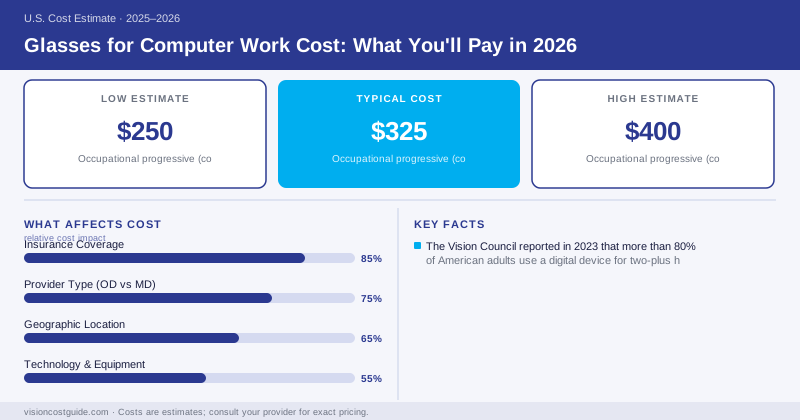
| Occupational progressive (computer-specific) | $250–$400 |
If you already wear glasses, you don’t need to start from scratch. Bring your prescription, tell the optician your monitor distance, and they’ll adjust the focal point. That measurement matters more than any marketing buzzword on the box.
A single-vision pair tuned to your monitor distance with anti-reflective coating costs about $120 and solves most screen-fatigue complaints. You don’t need the premium tier unless you also need reading and distance correction in one lens.
Single vision vs. occupational progressives
For most people under 40, single-vision computer lenses are plenty. They’re cheap, they work, and they keep the whole screen in focus.
Once presbyopia kicks in — usually mid-40s — things change. You start needing help with the keyboard, the monitor, and the sticky note on the wall, all at different distances. That’s where occupational progressive lenses earn their keep. They blend intermediate and near zones for desk work specifically, unlike standard progressives that prioritize distance. Expect to pay $250 to $400.
The Vision Council reported in 2023 that more than 80% of American adults use a digital device for two-plus hours daily, and that constant near-and-intermediate switching is exactly what wears people out.
Do the blue-light claims hold up?
You’ll see a lot of pitches about blue light. Be skeptical. The research on blue-light blocking and eye damage is thin, and the AOA has said there’s not strong evidence that it prevents harm. What actually helps fatigue is the anti-reflective coating, the correct focal distance, and taking breaks.
That said, plenty of people like how blue-light glasses feel during late-night work, and a basic pair is cheap. Just don’t pay a $90 premium for the filter alone.
Skip any optician who promises computer glasses will “prevent eye damage” from screens. Screens don’t damage your eyes. The right lenses reduce strain and fatigue — that’s the honest, useful benefit you’re paying for.
How to cut the cost
- Buy online with your existing Rx. Sites sell single-vision computer lenses for $50 to $100, frame included.
- Ask for the intermediate-only option instead of a full progressive if you only struggle at the monitor.
- Use your FSA or HSA. Prescription computer glasses qualify, which knocks 20% to 30% off the real cost.
- Check your benefits. A vision insurance plan may cover a second pair or the frame allowance.
Before you spend anything, get your eyes checked. An eye exam runs $50 to $200 and catches the difference between true eye strain and an outdated prescription — and an updated eyeglasses prescription might fix the problem without a dedicated computer pair at all.
The bottom line
Most desk workers do great with a $120 single-vision pair tuned to their monitor. Add occupational progressives at $250 to $400 once you hit your mid-40s. The blue-light filter? Optional, cheap, and not the hero feature the ads claim. Spend on the lens design and the AR coating instead — that’s where the real comfort lives.
Frequently Asked Questions
Most people pay $80 to $400. Single-vision computer lenses with anti-reflective coating land around $120, while occupational progressives can reach $400.
Sometimes. A standard plan with a $130 frame allowance might cover a basic pair, but the blue-light add-on and intermediate-focus design often cost extra out of pocket.
If you stare at screens 6-plus hours a day, a low-power or plano pair with anti-reflective coating can ease focus fatigue. Many people find $80 well spent.