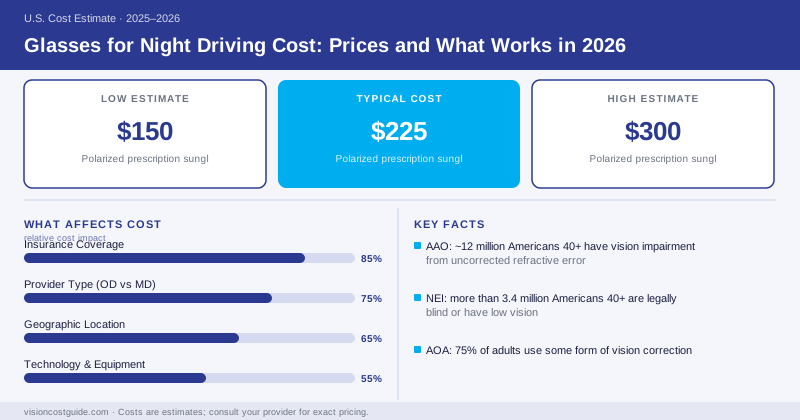
Headlights blooming into starbursts. Oncoming high-beams that leave you blinking. If night driving has gotten harder, you’re not imagining it — and the fix probably isn’t the yellow glasses at the gas station checkout. Real prescription night-driving glasses run $150 to $350, while those tinted drugstore pairs cost $20 to $40 and mostly disappoint.
Let’s sort out what’s worth buying.
Why night driving gets harder with age
Your pupils shrink as you age, letting in less light. The National Eye Institute notes that a 60-year-old’s retina receives far less light than a 20-year-old’s under the same conditions. Add early cataracts — which the NEI says affect more than half of Americans by age 80 — and oncoming headlights scatter into glare.
So before you buy anything, ask: is this glasses, or is this my eyes changing?
| Option | Typical Cost |
|---|---|
| Yellow-tinted drugstore glasses | $20–$40 |
| Clear Rx lenses + anti-reflective coating | $150–$250 |
| Premium AR coating (Crizal, etc.) | $200–$350 |
| Polarized prescription sunglasses (daytime glare) | $150–$300 |
The yellow-lens problem
Those amber lenses promise sharper night vision. The evidence says otherwise. A 2019 study published in JAMA Ophthalmology tested yellow night-driving glasses and found they did not improve drivers’ ability to detect pedestrians at night — and tinted lenses actually reduce the light reaching your eyes, which is the opposite of what you want after dark.
Avoid any tinted lens for nighttime driving. The American Optometric Association warns that tinted or “night driving” sunglasses reduce visible light at exactly the moment you need more of it. Stick to clear lenses with anti-reflective coating instead.
What actually reduces glare
The real upgrade is a current prescription with a good anti-reflective (AR) coating. AR cuts the internal reflections inside the lens that turn headlights into halos. It’s the single best-value feature for night driving.
Clear prescription lenses with anti-reflective coating — about $150 to $250 — beat yellow-tinted glasses for night driving every time. The tint reduces light; the AR coating reduces glare. Those are not the same thing.
If glare bothers you mostly during the day, that’s a different product entirely — prescription sunglasses with polarization, which cost $150 to $300 and cut reflected road glare.
Get your eyes checked first
Worsening night vision is one of the earliest signs of cataracts. Before you spend on glasses, book an eye exam for $50 to $200. If cataracts are the cause, no lens coating will fully fix it — surgery eventually will, and your optometrist can tell you where you stand.
While you’re updating your prescription, a fresh pair of eyeglasses with AR coating may solve the problem on its own. And if you’ve noticed strain building up during long drives, our guide to eye strain treatment covers the simpler fixes worth trying first.
How to save
- Add AR coating to glasses you already need — it’s a $40 to $80 upgrade, not a separate $300 purchase.
- Use FSA/HSA dollars on prescription night-driving glasses; they qualify.
- Check your vision insurance for a coating allowance or second-pair discount.
- Clean your windshield, inside and out. Free, and it cuts glare more than most people expect.
Bottom line
Skip the $30 yellow glasses. The honest fix is a clear prescription lens with anti-reflective coating — $150 to $250 — backed by an up-to-date eye exam to rule out cataracts. Spend there, and night driving gets noticeably easier without the gimmicks.
Frequently Asked Questions
Yellow-tinted drugstore pairs run $20 to $40. Prescription night-driving glasses with anti-reflective coating cost $150 to $350.
Research is mixed at best. A 2019 review found yellow lenses did not improve nighttime driving performance and may slightly reduce light reaching your eyes. Anti-reflective coating on a clear prescription lens helps more.
A current prescription with a quality anti-reflective coating, paired with a clean windshield and an eye exam to rule out cataracts. That combination costs about $150 to $250 and addresses the real cause of glare.