A $250 pair of glasses can last three years. A box of contacts lasts a few months. Stretch that over a decade and the gap gets wide fast. Yet plenty of people happily pay more for contacts because they hate how glasses feel. The cost question isn’t always the deciding one, but it should be on the table.
Here’s how the two actually compare.
The Yearly Numbers
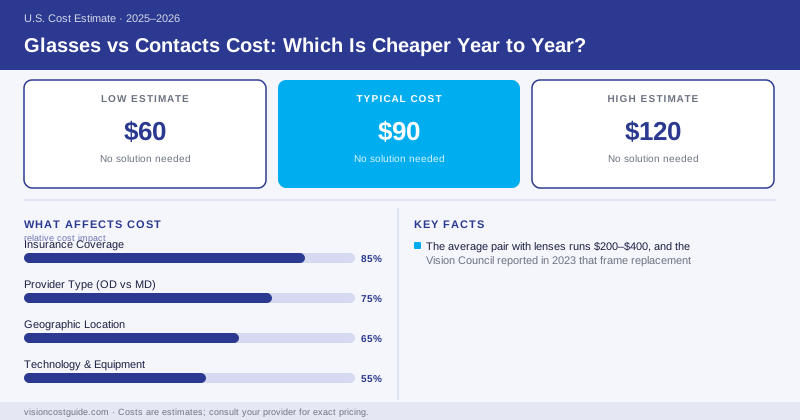
Glasses are a one-and-done purchase that lasts until your prescription changes or the frames break. The average pair with lenses runs $200–$400, and the Vision Council reported in 2023 that frame replacement happens roughly every two to three years for most adults.
Contacts are a subscription you don’t cancel. Lenses, solution, and cases total $300–$500 every year.
| Glasses | Contacts |
|---|---|
| $200–$400 per pair | $300–$500 per year |
| Lasts 2–3 years | Replaced monthly or daily |
| No solution needed | $60–$120/yr solution |
| One purchase | Recurring annual cost |
Cost Over Five Years
Say you keep one pair of glasses for three years at $300, then replace it. Over five years that’s roughly $500–$600 total.
Now run contacts over the same five years at $400 annually. That’s $2,000, and that’s before the backup glasses your optometrist will still want you to own.
The math leans heavily toward glasses for budget-minded wearers.
Glasses win on cost almost every time. Over five years, glasses run $500–$600 while contacts hit $2,000 or more. If price is your top concern, glasses are the clear pick, and you can still buy contacts for occasional use.
Where Contacts Catch Up (and Cost More)
Daily disposables are the priciest route. They’re the most hygienic and convenient, but at $500–$700 a year, daily contacts cost more than monthlies. The American Optometric Association notes that daily wear reduces infection risk, so some people pay the premium for peace of mind.
Contacts also need their own exam. A contact lens fitting adds $50–$150 on top of a standard eye exam because the doctor measures your cornea and checks the fit.
The Hidden Costs People Forget
- Backup glasses. Almost every contact wearer needs a pair for sick days and sleep. That’s $150–$300 you spend regardless.
- Solution and cases. Monthly lens wearers spend $60–$120 a year keeping lenses clean.
- Replacing lost or torn lenses. Contacts get dropped down drains. Glasses rarely vanish.
Don’t skip the backup glasses to save money. Sleeping in contacts not approved for overnight wear sharply raises your risk of corneal infection, which can cost thousands to treat. A $150 backup pair is cheaper than an ER visit.
What About Replacement Frequency?
How often you replace either one swings the math hard. Glasses break, scratch, or go out of style, but a careful wearer can stretch a single pair to four or five years. The Vision Council reported in 2023 that lens technology and frame durability keep improving, so quality frames last longer than they used to. Contacts have no such flexibility. A monthly lens expires 30 days after opening whether you wear it daily or twice a week, and dailies are gone the moment you take them out. That built-in obsolescence is what keeps the contact bill rolling in year after year, while a good pair of glasses just keeps working.
When Contacts Are Worth the Extra
Cost isn’t everything. Athletes, people who dislike frames on their face, and those with strong prescriptions that look thick in glasses often find contacts worth every dollar. Vision is personal.
If you’re trying to cut spending either way, a vision insurance plan can knock $100–$200 off an annual contact supply or a new pair of frames. Many employer plans bundle one exam plus an allowance toward either glasses or contacts.
The honest summary: glasses are the cheaper habit, contacts are the convenient one. Most people compromise by owning glasses and using contacts for the times that matter.
Frequently Asked Questions
Glasses are usually cheaper long-term. A $250 pair lasts two to three years, while contacts cost $300–$500 every year plus solution.
Most contact wearers spend $300–$500 a year on lenses, solution, and cases, according to Vision Council data from 2023.
Yes. Eye doctors recommend a backup pair, which adds $150–$300 to your contact budget. Most people end up paying for both.