In 2010, every cataract surgery in America was done by hand. Today, a femtosecond laser can perform several of the trickiest steps — and that upgrade costs you $800–$2,500 per eye, because Medicare pays for the traditional manual surgery but treats the laser as elective. The FDA cleared the first femtosecond laser for cataract surgery in 2010, and it’s been a premium add-on ever since.
So the real question isn’t whether laser cataract surgery exists. It’s whether it’s worth paying extra for in your specific case.
Laser vs. Traditional: The Cost Difference
| Approach | What You Pay Out of Pocket |
|---|---|
| Traditional manual phacoemulsification (Medicare baseline) | $0 |
| Femtosecond laser-assisted upgrade | $800–$2,500 per eye |
| Laser + astigmatism correction | $1,500–$3,000 per eye |
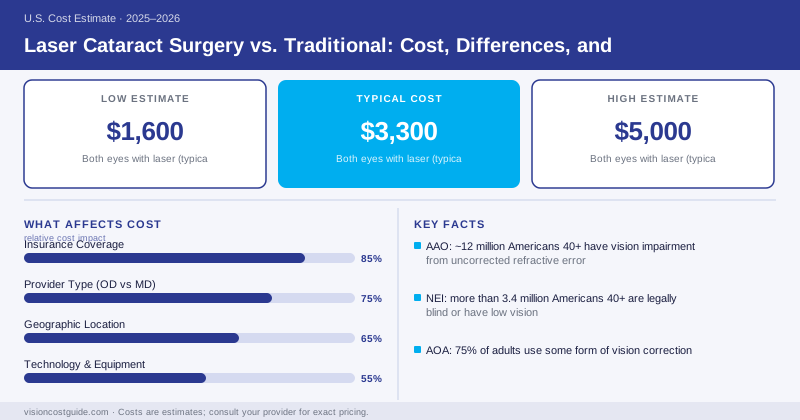
| Both eyes with laser (typical) | $1,600–$5,000 |
The base cataract surgery is covered either way. The laser premium covers the technology fee, and it’s usually bundled when you also choose astigmatism correction or a premium lens.
What the Laser Actually Does
In traditional surgery, the surgeon uses a handheld blade and manual technique to open the eye’s capsule, soften the cataract, and place incisions. With laser-assisted surgery, a femtosecond laser performs the corneal incisions, the capsule opening (capsulorhexis), and pre-fragments the cataract before ultrasound removes it.
The pitch is precision. The laser creates a perfectly round, centered capsule opening and can place precise arcuate incisions to correct astigmatism. That precision can matter most when you’re also implanting a premium lens that depends on exact centering.
The honest verdict from large studies: for routine cataracts with a standard lens, visual outcomes are essentially equivalent between laser and manual surgery. Major reviews, including those summarized by the AAO, have not shown a meaningful difference in final vision or safety for typical cases. The laser’s value shows up in specific situations — astigmatism correction, premium multifocal lenses, dense cataracts, or unusual anatomy — not as a blanket upgrade for everyone.
When the Laser Upgrade Makes Sense
Pay for the laser when it solves a specific problem:
- You’re correcting astigmatism — laser arcuate incisions can be more precise than manual ones
- You’re getting a premium IOL or multifocal lens — exact capsule centering helps these lenses perform
- You have a dense or complex cataract — laser fragmentation can reduce ultrasound energy needed
- Your surgeon recommends it for your anatomy — a hard-to-reach or unusual eye may benefit
Skip it when you have a straightforward cataract, no significant astigmatism, and you’re happy with a standard monofocal lens that Medicare fully covers.
The “Bundling” Trap to Watch For
Some practices bundle the laser fee into premium-lens packages so you can’t choose manual surgery with an upgraded lens — you’re forced to buy both. Ask explicitly whether you can have a premium lens with traditional manual surgery, and what each component costs separately. The laser and the lens are technically separate decisions, and a transparent surgeon will price them that way.
How to Pay
Since Medicare and most insurers won’t cover the laser premium, patients typically use HSA or FSA dollars or finance through CareCredit. The laser fee, the lens upgrade, and astigmatism correction are each separate line items — get an itemized quote so you know exactly what you’re funding.
Laser vs. Other Vision Procedures
If you’re researching cataracts, you may also be weighing corneal options. The mechanics differ completely — cataract surgery replaces the lens, while LASIK and PRK reshape the cornea. They solve different problems, but the femtosecond laser technology overlaps with what’s used in LASIK flap creation.
Bottom Line
Laser-assisted cataract surgery is real technology that delivers genuine precision — but for the average routine cataract, that precision doesn’t translate into better vision than skilled manual surgery. Pay the $800–$2,500 premium when you’re correcting astigmatism, choosing a premium lens, or facing a complex eye. For a standard case, the free manual surgery Medicare covers gives you the same outcome.
Frequently Asked Questions
Laser-assisted (femtosecond) cataract surgery typically adds $800–$2,500 per eye out of pocket, since Medicare covers the traditional manual procedure but not the laser upgrade.
Medicare covers the cataract surgery itself but not the femtosecond laser upgrade, which it considers elective. You pay that difference out of pocket.
It can be, especially when paired with a premium or toric lens or for astigmatism correction. For a routine case with a standard lens, the outcomes are comparable to manual surgery.