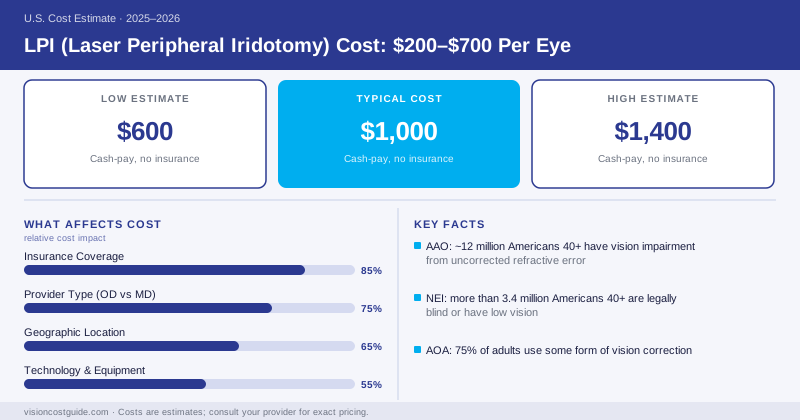
How much does it cost to prevent an eye emergency you don’t even know is coming? For a laser peripheral iridotomy, the answer is usually a few hundred dollars — and most patients never find out how much worse the alternative could have been.
An LPI is a quick outpatient laser procedure that creates a tiny hole near the edge of the iris, giving fluid inside the eye a new path to drain. It’s the standard treatment — and often the preventive treatment — for narrow or occludable anterior chamber angles, the anatomical setup that leads to acute angle-closure glaucoma if left alone.
LPI Cost Breakdown
| Cost Component | Price Range | Notes |
|---|---|---|
| Procedure fee (per eye) | $200–$700 | Outpatient office or ASC-based |
| Facility/technical fee | $150–$400 | Applies if done at an ambulatory surgical center |
| Pre-procedure eye pressure check | Usually bundled | Included in comprehensive exam |
| Post-procedure follow-up visit | $75–$200 | Confirms the hole is patent and pressure is stable |
| Medicare/insurance copay | $40–$150 | Typical out-of-pocket for both eyes combined |
| Cash-pay, no insurance | $600–$1,400 | Both eyes, done same day |
Both eyes are frequently treated within weeks of each other, since narrow-angle anatomy is usually present in both — even if only one eye has had symptoms.
Why LPI Gets Done at All
Angle-closure glaucoma is a smaller share of U.S. glaucoma cases than the more familiar open-angle type, but it’s disproportionately dangerous. When the drainage angle closes suddenly, eye pressure can spike within hours, damaging the optic nerve fast enough to cause permanent vision loss before most people even reach an emergency room. An LPI removes that risk almost entirely by giving fluid a permanent second route out of the eye, regardless of whether the angle narrows further.
Your optometrist or ophthalmologist typically finds a narrow angle during a routine dilated exam or gonioscopy — a specialized lens exam that directly visualizes the drainage structures. If you’re told you have “narrow angles” or are at risk for angle closure, that’s the finding that leads to an LPI recommendation.
LPI costs $200–$700 per eye and is classified as medically necessary preventive care, so most insurance plans and Medicare cover the bulk of it. The procedure takes about 5–10 minutes per eye and most patients resume normal activity the same day.
What Drives the Price Range
Location matters most — big metro ophthalmology practices tend to bill higher facility fees than smaller regional clinics. Whether the procedure happens in-office versus at a surgical center changes the technical fee substantially. And if you need iridoplasty added on afterward because the angle remains crowded, that’s a separate line item on top of the base LPI cost.
Insurance Coverage Reality
Because narrow angles carry a real, documented risk of acute glaucoma, this isn’t treated like an elective procedure. Medicare Part B typically covers LPI with the standard 20% coinsurance after the deductible, and most commercial vision-adjacent medical plans (this is billed as a medical, not vision, service) follow similar cost-sharing. You should expect a bill closer to the copay range than the full cash-pay price unless you’re uninsured.
The Cost of Not Getting One
An acute angle-closure attack, if it happens, typically means an emergency room visit, IV pressure-lowering medications, possible hospital admission, and emergency laser treatment — a bill that can run $3,000–$10,000 or more, with a real chance of permanent optic nerve damage if treatment is delayed even a few hours.
Symptoms of acute angle closure — sudden severe eye pain, headache, blurred vision, halos around lights, nausea, and vomiting — are a true ophthalmic emergency. Go to an emergency room or call your ophthalmologist immediately; every hour of delay increases the risk of permanent vision loss.
Bottom Line
At $200–$700 per eye, an LPI is one of the more affordable preventive procedures in ophthalmology, and it’s usually covered because the risk it eliminates is genuinely dangerous. If gonioscopy shows you have narrow angles, don’t treat this as optional — schedule it.