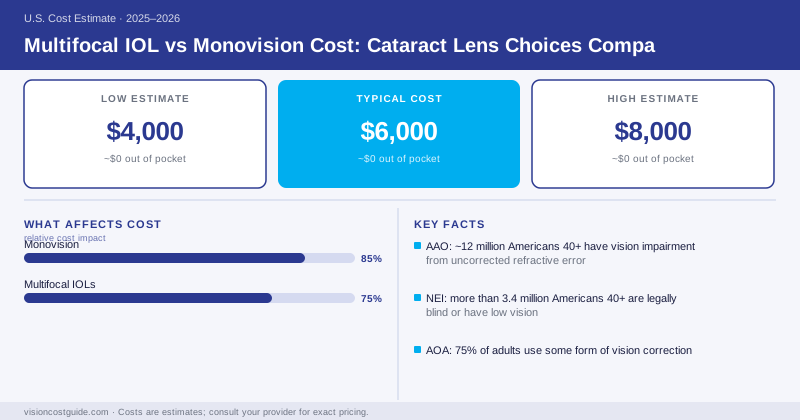
Two patients get cataract surgery the same week. One pays nothing beyond their Medicare share. The other writes a check for $6,000. The difference comes down to one decision made before surgery: monovision with standard lenses, or premium multifocal IOLs. Both can free you from glasses. Only one is expensive.
Here’s how to weigh the cost against the convenience.
What Each Approach Means
After cataract surgery, your natural lens is replaced with an artificial intraocular lens (IOL). The type you choose determines both your vision and your bill.
Monovision uses two standard monofocal lenses. One eye is set for distance, the other for near. Your brain merges the images. Medicare and most insurance cover monofocal lenses, so this route is often fully covered.
Multifocal IOLs are premium lenses with multiple focal zones built in, giving both eyes near and far vision. Insurance treats them as an upgrade, so you pay the difference.
| Monovision | Multifocal IOLs |
|---|---|
| Standard monofocal lenses | Premium multi-zone lenses |
| Often covered by Medicare | $2,000–$4,000 per eye extra |
| ~$0 out of pocket | $4,000–$8,000 both eyes |
| Both eyes work together | Each eye sees near + far |
The Cost Gap Explained
The American Academy of Ophthalmology notes that Medicare covers the cataract surgery itself plus a basic monofocal lens. Choose monovision and you’ve used those covered lenses cleverly, with little extra cost.
Choose multifocal IOLs and you’re buying a premium device Medicare won’t pay for. That’s the $2,000–$4,000 per eye you’ll see on the quote. The American Society of Cataract and Refractive Surgery has reported that premium lens adoption keeps rising, which suggests many patients decide the glasses-free convenience is worth the spend.
Monovision can cost you almost nothing because Medicare covers the standard lenses. Multifocal IOLs add $4,000–$8,000 for both eyes but give crisp near and far vision in each eye. If your budget is tight, monovision is the smart play. If you want maximum freedom from glasses and can afford it, multifocal earns its price.
The Trade-Offs Beyond Money
Monovision is cheaper but takes adjustment. About one in five people never fully adapts to having one eye for distance and one for near, and depth perception can dip slightly. It’s worth test-driving the concept with contact lenses before committing surgically.
Multifocal IOLs deliver glasses-free vision at most distances, but they can cause halos and glare around lights at night. The AAO notes some patients find night driving harder for the first few months as the brain adapts.
Don’t choose multifocal IOLs if you’re a night-shift driver or pilot without discussing glare risk first. The premium lenses can create halos that bother some patients permanently. Monovision avoids that issue entirely.
Who Should Choose Which
- Budget is the priority? Monovision, often covered, is the value choice.
- Want glasses-free near and far? Multifocal IOLs justify the cost for many.
- Drive a lot at night? Monovision sidesteps the halo issue.
- Already comfortable with monovision contacts? You’ll likely adapt to surgical monovision easily.
Either way, the cataract removal itself is covered for most insured patients. The premium is purely the lens upgrade. If you want the full picture on the underlying procedure, our cataract surgery cost guide breaks down what’s covered and what isn’t.
The takeaway: monovision wins on price, multifocal wins on convenience. Test monovision with contacts first, then decide if the premium is worth it for you.
Frequently Asked Questions
Multifocal IOLs add $2,000–$4,000 per eye out of pocket. Monovision uses standard monofocal lenses, which Medicare typically covers, so it can cost little to nothing extra.
Medicare covers the standard monofocal lens used in monovision but not the premium multifocal upgrade. You pay the difference, usually $2,000–$4,000 per eye.
One eye is set for distance, the other for near. Your brain adapts, but some people struggle with the imbalance, and depth perception can suffer slightly.