Can a $400 pair of glasses actually slow down your child’s eyesight from getting worse? For a specific category of lens, the research says yes — and the reason it matters more than ever is a number that’s been climbing for decades.
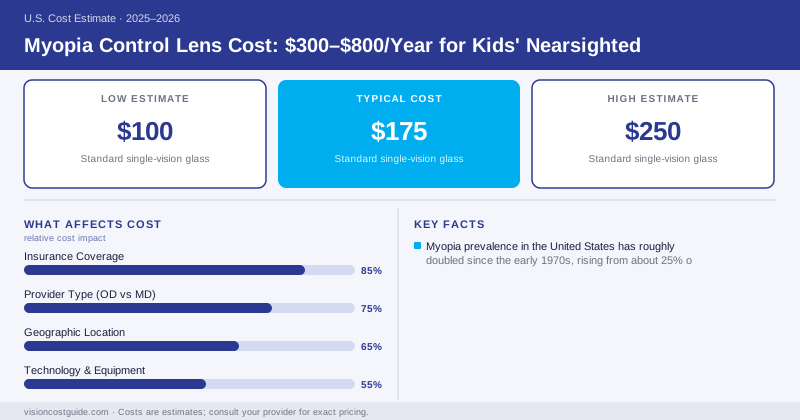
Myopia prevalence in the United States has roughly doubled since the early 1970s, rising from about 25% of the population to over 41% in more recent NEI-supported epidemiological studies. For children, that trend usually means a pair of glasses gets stronger every year or two through the school-age years — until myopia control lenses entered the picture as a way to actually slow that progression, not just correct it.
What Myopia Control Actually Costs
| Option | Annual Cost | Notes |
|---|---|---|
| MiSight soft contact lenses | $500–$800 | FDA-approved specifically for myopia control in children |
| Orthokeratology (Ortho-K) | $1,000–$1,800 first year | Overnight-wear rigid lenses; reshapes cornea |
| DIMS/multi-segment myopia control glasses | $300–$600 | Specialty lens design worn as regular glasses |
| Low-dose atropine eye drops | $200–$500 | Prescribed alongside or instead of specialty lenses |
| Standard single-vision glasses (comparison) | $100–$250 | No myopia control effect |
The gap between standard glasses and myopia control options is real, but so is the difference in what each does long-term: standard lenses correct vision without slowing progression, while myopia control options are specifically designed to reduce how much a child’s prescription worsens year over year.
Why the Extra Cost Might Be Worth It
Myopia isn’t just an inconvenience that gets fixed with a stronger prescription. Higher degrees of myopia carry meaningfully increased lifetime risk of serious eye conditions — retinal detachment, myopic macular degeneration, and glaucoma all become more likely as prescription strength increases. Slowing progression during the childhood years when myopia develops fastest can mean the difference between a child reaching adulthood with a moderate, manageable prescription versus a high one carrying elevated long-term risk.
Myopia control lenses cost $300–$800 a year, roughly double the cost of standard corrective lenses, but clinical trials have shown they can slow myopia progression by 30–60% compared to standard correction. For children diagnosed with progressing myopia, that reduction can mean a meaningfully lower final prescription by their late teens.
Which Option Fits Which Family
MiSight contact lenses require a child mature enough to handle daily contact lens insertion and removal — typically age 8 and up. Orthokeratology lenses are worn overnight and removed during the day, appealing to active kids who don’t want to wear anything visible, but require more diligent hygiene given overnight wear. DIMS glasses look and function like regular glasses, making them the lowest-friction option for younger or less independent children, though they may show a somewhat smaller progression-slowing effect in some studies compared to Ortho-K or MiSight.
Insurance Coverage
This is the frustrating part: most vision insurance plans treat myopia control lenses as a specialty or elective upgrade, providing at most a standard frame/lens allowance that barely dents the actual cost. A small but growing number of plans have begun covering a portion of myopia control fitting fees given the mounting research, so it’s worth asking your specific plan directly rather than assuming it’s excluded.
How Long Treatment Typically Lasts
Myopia progresses fastest in younger school-age children and typically slows by the mid-to-late teens. Most eye doctors recommend continuing myopia control treatment through at least age 15–18, meaning the $300–$800 annual cost is realistically a multi-year commitment rather than a one-time expense.
Don’t attempt orthokeratology or overnight lens wear without proper professional fitting and follow-up — improper fit or poor lens hygiene with overnight wear carries a higher infection risk than daytime-only lens wear. This is not a lens category to shop for online without an in-person specialty fitting.
Bottom Line
At $300–$800 a year, myopia control lenses cost more than standard glasses, but for a child with progressing nearsightedness, the research increasingly supports the extra spend as a real investment in long-term eye health, not just a cosmetic upgrade. Talk to a pediatric eye doctor about which option — contacts, overnight lenses, or specialty glasses — fits your child’s age and lifestyle best.