The same pair of glasses can cost $40 online or $320 at your eye doctor’s office. Same prescription, wildly different price. So what’s the extra $280 buying? Sometimes real value, sometimes just markup. Knowing the difference is how you avoid overpaying without ending up with glasses that don’t fit right.
Let’s compare the two routes honestly.
The Price Reality
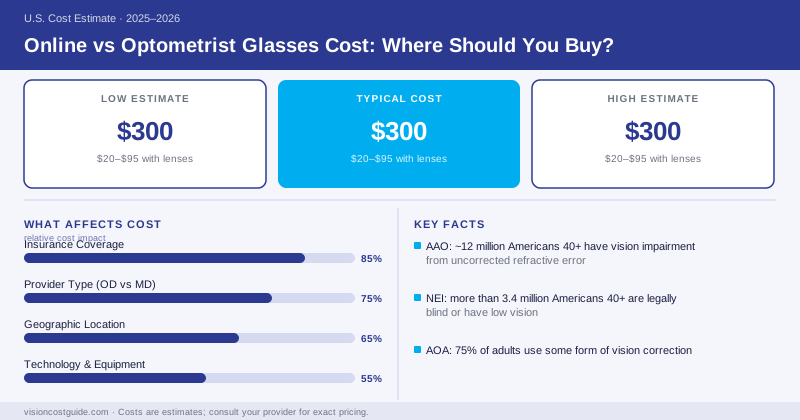
Online retailers like Zenni and EyeBuyDirect sell complete pairs, frames plus prescription lenses, starting around $20–$95. They keep costs low by skipping physical stores and selling direct.
Optometrist offices and optical shops average $300 or more for a complete pair. The Vision Council reported in 2023 that the average out-of-pocket spend on a pair of prescription glasses at retail sits well above online prices.
| Online | Optometrist Office |
|---|---|
| $20–$95 with lenses | $300+ complete pair |
| Self-measured PD | Professional fitting |
| Ships in 1–2 weeks | Same-day adjustments |
| Limited try-on | Try on in person |
What the Extra Money Buys
The optometrist’s price isn’t pure markup. You’re paying for things online can’t easily replicate:
- Accurate pupillary distance (PD). A trained optician measures it precisely. Online, you guess or self-measure, and small errors cause eyestrain.
- In-person fitting and adjustments. Frames get bent to your face for free, sometimes for life.
- Immediate problem-solving. If the lenses feel wrong, you walk back in.
For complex prescriptions, especially progressives, that hands-on accuracy matters. The American Optometric Association notes that progressive lenses require precise measurements to position the focal zones correctly.
Online glasses save you $200–$280 per pair and work great for simple single-vision prescriptions. Optometrist offices cost more but earn it for progressives, strong prescriptions, or anyone who wants professional fitting. The smart move: buy your everyday backup pairs online and your primary progressives in person.
When Online Is the Obvious Choice
If you have a straightforward single-vision prescription and an accurate PD from your eye exam, online is hard to beat. You can buy three stylish pairs for what one costs at the office. Our guide to eyeglasses costs shows just how steep the in-store markup can get.
Backup pairs, kids’ glasses (which get destroyed anyway), and trendy frames you’ll tire of are all perfect for the online route.
When to Pay the Premium
Strong prescriptions, high astigmatism, progressives, and prism corrections all benefit from professional handling. A poorly made progressive can give you headaches and a useless pair.
Always get your PD measured during your eye exam and ask for it in writing. Federal rules entitle you to your prescription, but PD is often left off. Without it, online glasses become a guessing game that can land you with eyestrain.
The Hybrid Strategy That Saves Most
Smart shoppers do both. Get your exam and a precise PD at the optometrist. Buy your important progressives there if needed. Then order cheap backups and fashion frames online. This way you bank the savings without sacrificing accuracy where it counts.
A vision insurance plan usually applies its frame allowance only at in-network optical shops, so factor that in. If your plan gives you $150 toward frames at the office, the effective price gap shrinks. And if you wear contacts too, some plans let you pick one benefit per year.
The bottom line: online for value, optometrist for precision. Use both and stop overpaying for either.
Frequently Asked Questions
Much cheaper. Online pairs start at $20–$95 with lenses, while a complete pair from an optometrist's office averages $300 or more.
They can be, if you have a correct prescription and accurate pupillary distance. Errors in PD measurement are the most common reason online glasses feel off.
You're paying for in-person fitting, frame adjustments, premium lens coatings, and the convenience of fixing problems on the spot.