At 6 weeks old, Emma’s left eye wasn’t tracking the same way as her right. Her pediatrician noticed it at the one-month well visit. Three days later, a pediatric ophthalmologist confirmed a dense congenital cataract covering most of the lens. Surgery was scheduled for the following week. The total treatment cost over her first five years of life would exceed $18,000.
Pediatric cataracts are rare — Prevent Blindness America estimates congenital cataracts affect approximately 3 in 10,000 births in the United States — but when they occur, treatment is urgent and expensive. Unlike adult cataracts, where you can watch and wait, a child’s developing visual system cannot afford delay.
Why Pediatric Cataracts Are Different
An adult with a cataract has years of normal vision already established in the brain. A child — especially an infant — does not. The visual cortex develops almost entirely in response to the images it receives during the first months and years of life. A cloudy lens means the brain gets a blurred, degraded image at exactly the time it’s building its visual processing architecture. The result, if untreated, is amblyopia: a permanent reduction in visual acuity that can’t be fully reversed later.
For infants with dense cataracts, the AAO and American Association for Pediatric Ophthalmology and Strabismus (AAPOS) recommend surgery within the first 4–6 weeks of diagnosis. There is no safe “let’s monitor this” option for a complete lens opacity in a young infant.
Developmental or “lamellar” cataracts that appear later in childhood — often between ages 2 and 10 — allow a slightly longer decision window, but still require prompt attention.
What Does Pediatric Cataract Surgery Actually Cost?
The surgical cost covers general anesthesia, the operating room, and the surgeon’s fee. Because these procedures are performed under general anesthesia on infants and young children, the facility and anesthesia components are significant.
| Component | Cost Range | Notes |
|---|---|---|
| Surgeon fee | $1,500–$3,500 per eye | Pediatric ophthalmology subspecialist |
| Anesthesia | $800–$2,000 | General anesthesia required for all pediatric cases |
| Facility / OR fee | $2,000–$5,000 | Hospital OR typically higher than ASC |
| Intraocular lens (IOL), if implanted | $500–$1,500 | Premium pediatric IOL; some surgeons defer IOL in infants |
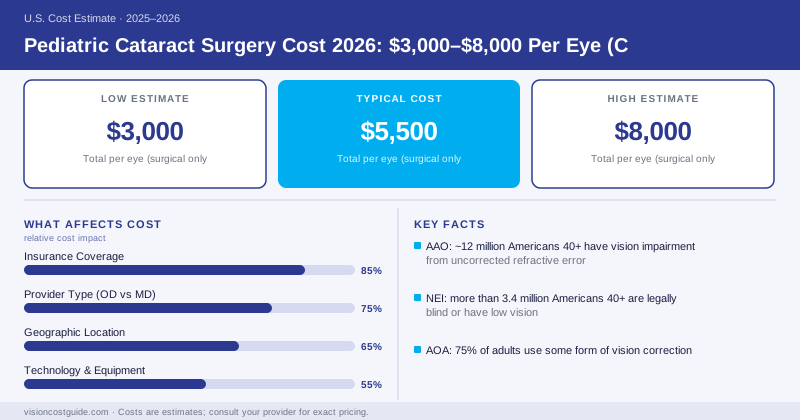
| Total per eye (surgical only) | $3,000–$8,000 | Before insurance; most covered as medical necessity |
| Bilateral cataract surgery | $6,000–$16,000 | ~30% of congenital cases affect both eyes |
After surgery, the real cost picture emerges — and it extends for years.
Post-Surgical Rehabilitation: The Long Tail of Costs
Surgery removes the cloudy lens. But now the child has no natural lens in that eye (aphakia) and needs optical correction immediately to prevent amblyopia from taking hold. This is the most demanding and often most expensive part of treatment.
Option A: Aphakic Contact Lenses
For infants where the IOL is deferred (common in babies under 6 months), a high-powered aphakic contact lens must be fitted and worn almost continuously. The prescription is extremely high (+20 to +30 diopters) and the lenses are custom-fitted. Costs include:
- Initial fitting: $200–$500
- Monthly lens replacement: $80–$300/month depending on lens type
- Over 3–5 years until IOL implantation: $3,000–$10,000+
This also requires daily lens insertion and removal in an infant by parents — a skill that takes practice, patience, and ongoing support from the optometrist.
Option B: Intraocular Lens (IOL) at Time of Surgery
Implanting an IOL eliminates the daily contact lens burden, but there’s a catch: a baby’s eye grows dramatically in the first few years of life. An IOL sized for a newborn will leave the child significantly nearsighted by age 5. That’s actually intentional — surgeons choose an IOL power that anticipates growth — but the child will still need glasses throughout childhood to fine-tune correction.
Patching for Amblyopia Prevention
Regardless of optical approach, the fellow (non-operated) eye must be patched for several hours daily to force the recovering eye to develop. This is non-negotiable. Without patching, the strong eye dominates and amblyopia develops in the surgical eye despite the clear lens.
Patching costs are trivial ($20–$50/month in adhesive patches), but the compliance burden is real. Infants resist vigorously.
| Rehabilitation Component | Cost Estimate | Timeframe |
|---|---|---|
| Aphakic contact lenses (infant) | $80–$300/month | Until IOL at ~2–4 years |
| Glasses (post-IOL or post-toddler) | $150–$400 per pair | Every 1–2 years |
| Adhesive patches for amblyopia | $20–$50/month | 2–5+ years |
| Vision therapy (if residual amblyopia) | $1,500–$5,000 | 20–40 sessions |
| Annual pediatric ophthalmology visits | $150–$400/visit | Ongoing through adolescence |
| IOL exchange (as eye grows) | $2,000–$5,000 | Often needed at age 5–10 |
| Total rehabilitation (first 5–7 years) | $5,000–$20,000 | Varies by approach and response |
The NIH-funded IATS randomized trial directly compared IOL implantation vs. aphakic contact lenses in 114 infants under 7 months with unilateral cataract. At the 5-year follow-up, both groups showed similar visual acuity outcomes. The contact lens group had a higher rate of adverse events requiring additional surgery; the IOL group had equivalent vision with somewhat fewer office visits. Most pediatric ophthalmologists now implant IOLs in infants over 4–6 months; under that age, aphakic contact lenses remain the standard approach at most centers.
Insurance Coverage — Better Than You’d Expect
Because congenital and childhood cataracts are genuine medical conditions, insurance coverage is generally quite good compared to most vision care. Key points:
- Surgery: Covered under medical insurance as medically necessary. Prior authorization is typically required but rarely denied for congenital cataracts.
- Aphakic contact lenses: Covered as prosthetic devices under medical insurance in most states. Not subject to standard vision plan contact lens allowances (those are for refractive correction, not prosthetics).
- Glasses: Covered under pediatric EHB for children under 19 in ACA-compliant plans. Vision insurance supplements if available.
- Vision therapy: Covered by some commercial medical plans under CPT 92065. Call your medical insurer specifically — not the vision plan.
Out-of-pocket costs in families with commercial insurance typically amount to deductibles and specialist copays. Medicaid-enrolled children typically pay little to nothing.
If your child is diagnosed with a congenital cataract, get a referral to a pediatric ophthalmologist within days, not weeks. The urgency is real. A dense lens opacity in an infant under 3 months can cause permanent, irreversible amblyopia within 4–8 weeks. This is one of the rare ophthalmic emergencies in pediatric medicine.
The Lifetime Picture
A child born with a unilateral congenital cataract who receives timely surgery and excellent rehabilitation may achieve vision close to 20/30 or better in the treated eye by school age — not quite normal, but functional. Bilateral cataract cases often do somewhat better because patching compliance is less critical when both eyes need rehabilitation equally.
The total cost from infancy to adulthood — surgery, lenses, glasses, patching supplies, annual follow-up visits, possible IOL exchange, possible vision therapy — typically lands between $10,000 and $30,000 for a unilateral case over the first 15 years of life. Most of that is covered by medical insurance. What isn’t covered is the time: the parent handling contact lenses in a screaming infant twice daily, the ophthalmology appointments every 8–12 weeks for years, the constant vigilance against amblyopia.
The cost is real. But so are the outcomes when treatment starts on time.
Cost estimates based on AAO Pediatric Ophthalmology guidelines, AAPOS clinical statements, and Infant Aphakia Treatment Study published outcomes. Individual costs vary by hospital, clinic, and insurance plan.
Frequently Asked Questions
Yes — congenital and childhood cataracts are treated as medical conditions, not elective procedures, so they're covered under medical insurance rather than vision insurance. Most commercial plans and Medicaid cover the surgery itself. Post-surgical rehabilitation (contact lenses, glasses, patching) is typically covered under the pediatric Essential Health Benefits (EHB) provisions of the ACA. Out-of-pocket costs are mostly deductibles and copays, which vary widely by plan.
Untreated cataracts in infants cause permanent amblyopia (lazy eye) within weeks to months. The visual cortex during infancy is undergoing critical development, and if it doesn't receive a clear image from the affected eye, it reassigns that neural processing to the fellow eye — permanently. The longer surgery is delayed after diagnosis, the worse the long-term visual outcome. Most pediatric ophthalmologists recommend surgery within 4–6 weeks of diagnosis for a dense congenital cataract in an infant under 12 weeks old.
Both approaches work, and the debate among pediatric ophthalmologists is ongoing. IOLs (intraocular lenses) eliminate the need for daily contact lens handling in a newborn — which is technically demanding and stressful for families — but require a lens exchange later as the eye grows. Aphakic contact lenses avoid early implant surgery but require careful daily handling and a long-term commitment. The Infant Aphakia Treatment Study (IATS), a major NIH-funded randomized trial, found no significant difference in visual outcomes between the two approaches at age 5 — the choice is often made based on family preference and surgeon experience.