A basic pair of kids’ glasses in the 1990s ran around $60–$80 — adjusted for inflation, that’s roughly $130–$180 in today’s dollars. The actual average today runs closer to $150–$350. So what changed, and is the extra cost actually buying something meaningful, or is it just retail markup?
Pediatric Glasses Cost Breakdown
| Cost Component | Price Range | Notes |
|---|---|---|
| Frame (kids’ specific, flexible/durable) | $50–$150 | Designed to withstand rough handling |
| Polycarbonate impact-resistant lenses | $40–$100 | Now standard of care, not an upgrade |
| Anti-scratch coating | Often bundled | Standard on kids’ lenses |
| Frame warranty/breakage replacement | $20–$50 | Widely offered now, rare decades ago |
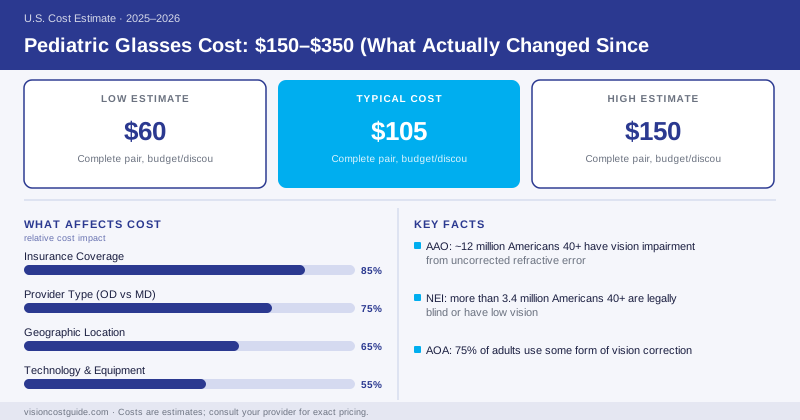
| Complete pair, mid-range | $150–$350 | Frame + lenses + coatings |
| Complete pair, budget/discount retailer | $60–$150 | Zenni, warehouse clubs, some insurance networks |
The single biggest change isn’t marketing — it’s material safety standards. Polycarbonate and Trivex lens materials, now the near-universal standard for children’s glasses, are dramatically more impact-resistant than the glass or standard plastic lenses common decades ago, reducing eye injury risk from a shattered lens during sports or falls. That protection isn’t an upsell; most eye doctors consider it close to mandatory for active kids.
Kids’ glasses cost $150–$350 today, more than the inflation-adjusted price from decades past, largely because impact-resistant polycarbonate lenses and frame warranties are now standard rather than optional add-ons. Budget retailers can bring the total down to $60–$150 without sacrificing the impact-resistant lens material that actually matters for safety.
Why the Warranty Isn’t Just an Upsell
Kids break glasses. It’s less a possibility than an expectation, and most optical retailers and independent opticians now offer a one-year (or longer) breakage warranty specifically for pediatric frames, typically $20–$50. Given that a full frame replacement without warranty coverage runs $50–$150, most parents find the warranty pays for itself within the first year for genuinely active kids.
Where the Savings Actually Are
Online retailers and warehouse clubs have compressed pricing at the budget end considerably more than traditional optical shops have. A complete pair — frame, polycarbonate lenses, and basic coatings — from a discount retailer like Zenni or a warehouse club optical department can run $60–$150, similar in real terms to the 1990s price, while still including the now-standard impact-resistant lens material. The tradeoff is typically less in-person adjustment support and a narrower frame selection compared to a traditional pediatric optical shop.
Insurance Coverage
Most vision insurance plans provide an annual allowance for a complete pair of children’s glasses, frequently more generous for kids’ plans than adult plans given how often prescriptions and frames need replacing during growth years. Check specifically whether your plan covers polycarbonate lenses at no extra cost for children — many do, recognizing the safety rationale, even when adult plans charge extra for the same material upgrade.
How Often Kids Actually Need New Glasses
Unlike adults, whose prescriptions often stay stable for years, children’s eyes are actively growing and changing, meaning prescription updates are more frequent — often annually, sometimes more for younger kids or those with rapidly progressing myopia. Budget for the possibility of a prescription change at each annual exam, rather than assuming one pair will last multiple years the way it more commonly does for adults.
Never buy non-prescription “reading glasses” style frames off a store shelf for a child who needs vision correction. Children’s prescriptions frequently include astigmatism correction or differ between the two eyes, needs that generic over-the-counter glasses simply can’t address, and using them can actually worsen conditions like amblyopia if a real prescription is delayed.
Bottom Line
At $150–$350 for a mid-range pair, kids’ glasses cost more than a straight inflation adjustment from decades past would suggest, but the added cost buys genuinely improved impact-resistant materials and warranty protection that didn’t widely exist before. Budget-friendly options exist that keep the safety-critical lens material while trimming everything else.