Angle-closure glaucoma causes roughly half of all glaucoma-related blindness worldwide, despite making up a much smaller share of glaucoma cases in the United States than the more common open-angle form. That mismatch — rare but disproportionately blinding — is exactly why laser peripheral iridoplasty exists, and why ophthalmologists don’t hesitate to recommend it when the anatomy calls for it.
Photoablative iridoplasty (also called laser peripheral iridoplasty, or LPIP) uses a laser to shrink and flatten the peripheral iris, pulling it away from the eye’s drainage angle. It’s typically performed as a companion procedure to a laser peripheral iridotomy (LPI) when the iridotomy alone doesn’t fully open a crowded angle — a configuration called plateau iris syndrome.
What You’ll Actually Pay
Because iridoplasty is almost always billed as a medically necessary procedure to prevent an acute glaucoma attack, insurance coverage is the norm rather than the exception.
| Cost Component | Price Range | Notes |
|---|---|---|
| Procedure fee (per eye) | $300–$900 | Outpatient, done in-office or ambulatory surgical center |
| Facility fee (if ASC-based) | $200–$500 | Varies by region and facility type |
| Follow-up gonioscopy exam | $75–$200 | Confirms the angle has opened |
| Medicare/insurance copay | $40–$150 | Typical out-of-pocket after coverage |
| Combined with LPI same session | +$150–$400 | Common bundling discount vs. separate visits |
Most patients with standard health insurance or Medicare pay a copay in the $40–$150 range rather than the full cash price, since angle-closure glaucoma risk is a documented medical diagnosis, not a cosmetic or elective condition.
Why the Price Varies So Much
Three things move the number. First, geography — big-city ophthalmology practices and academic centers tend to bill higher facility fees than rural clinics. Second, whether it’s bundled with an iridotomy in the same visit, which usually saves you a second facility fee and copay. Third, whether you need both eyes treated, since plateau iris configuration is frequently bilateral and most surgeons recommend treating the fellow eye within weeks to prevent an attack on that side too.
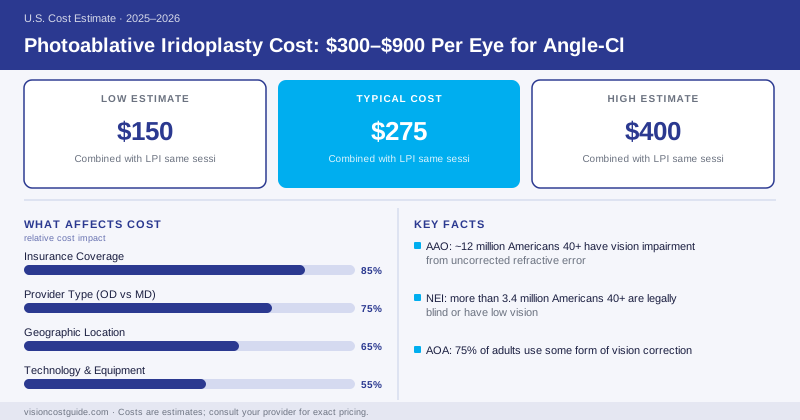
Photoablative iridoplasty runs $300–$900 per eye before insurance, but because it treats a real risk of vision-threatening acute angle closure, most insurance plans and Medicare cover it with only a modest copay. Ask your surgeon whether both eyes need treatment — plateau iris is often bilateral.
How It Differs From a Standard Iridotomy
An laser peripheral iridotomy punches a small hole through the iris to equalize pressure between the front and back chambers of the eye — it’s the first-line treatment for angle closure. Iridoplasty is a second step for the subset of patients whose angle stays crowded even after that hole is made, because the iris root itself is bunched up against the drainage structures. Not everyone needs it; your ophthalmologist will check with gonioscopy after the iridotomy before recommending it.
What Happens If You Skip It
An acute angle-closure attack is a genuine ophthalmic emergency — sudden eye pain, blurred vision, halos around lights, nausea, and a rock-hard eye that needs treatment within hours to prevent permanent optic nerve damage. Emergency management of an acute attack (IV medications, emergency laser, possible hospitalization) routinely costs $3,000–$10,000 and carries real risk of permanent vision loss, compared to the $300–$900 preventive iridoplasty that could have avoided it entirely.
If you’ve been told you have a narrow or occludable angle and your doctor recommends iridoplasty, don’t put it off. Angle-closure attacks can develop within hours and are a leading cause of preventable blindness worldwide. Delaying a $300–$900 outpatient laser procedure to “wait and see” is one of the costlier gambles in eye care.
Bottom Line
Budget $300–$900 per eye for photoablative iridoplasty, expect insurance or Medicare to cover most of that if it’s medically indicated, and don’t skip the follow-up gonioscopy that confirms the angle actually opened. It’s a short outpatient procedure standing between you and a much more expensive — and far more frightening — emergency room visit.