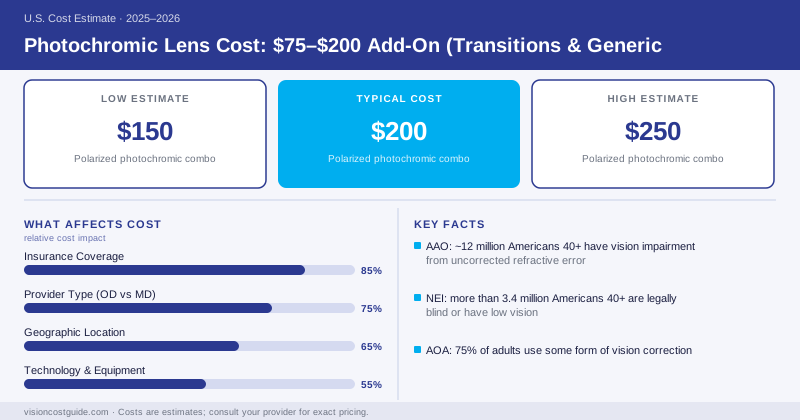
Add $100 to $150 to your glasses order, and you can potentially skip buying a separate pair of prescription sunglasses entirely — that’s the whole photochromic pitch, and for a lot of wearers, it actually holds up.
Photochromic lenses contain molecules that react to UV light, darkening automatically outdoors and returning to clear indoors within minutes. Transitions is the best-known brand, but generic photochromic options from other lens manufacturers offer the same basic mechanism at a lower price point.
What Photochromic Lenses Actually Cost
| Option | Add-On Cost | Notes |
|---|---|---|
| Generic photochromic (non-branded) | $50–$120 | Slower transition speed, less UV consistency |
| Transitions Signature GEN 8 | $100–$175 | Faster transition, better clarity indoors |
| Transitions XTRActive | $125–$200 | Designed to activate somewhat even behind car windshields |
| Transitions for sunglasses-specific tint | $100–$180 | Fixed darker base tint with photochromic response |
| Polarized photochromic combo | $150–$250 | Adds glare reduction on top of light response |
Generic photochromic lenses cost less but typically take longer to both darken and clear compared to Transitions, and may show a slight residual tint even indoors — a tradeoff worth testing in person if you’re sensitive to lens appearance.
The UV Protection Case, Not Just the Convenience Case
The American Academy of Ophthalmology recommends wearing 100% UV-blocking lenses outdoors, noting that cumulative UV exposure contributes to cataract development and other eye surface conditions like pterygium over a lifetime. Photochromic lenses, in addition to the convenience of not carrying a separate pair of sunglasses, provide consistent full UV protection any time you’re outdoors — including on overcast days, when regular clear lenses without a photochromic or UV coating typically don’t offer meaningful protection despite the reduced glare.
Photochromic lenses cost $75–$200 as an add-on to your glasses order, and they provide genuine UV protection benefits beyond simple convenience. Standard photochromic lenses don’t darken meaningfully behind a car windshield due to windshield UV filtering — if you want darkening while driving, look specifically for a windshield-activated variant like Transitions XTRActive.
The Windshield Problem
This trips up a lot of new photochromic wearers: standard photochromic lenses react to UV light, and most car windshields block the majority of UV rays, meaning standard photochromic lenses barely darken while driving — exactly when a lot of people expect the tinting benefit most. If reducing glare while driving is your primary reason for considering photochromic lenses, specifically ask for a windshield-activated variant, which uses a different light-triggering mechanism designed to respond even through UV-filtered glass.
Is It Worth Skipping a Separate Sunglasses Pair?
A basic pair of prescription sunglasses typically costs $150–$400 including frame and lenses. If photochromic lenses cost $75–$200 as an add-on to glasses you’re already buying, the math often favors photochromic — particularly for people who frequently move between indoor and outdoor settings throughout the day and find swapping glasses genuinely inconvenient. For dedicated outdoor activities like driving long distances or intense sun exposure, however, many eye doctors still recommend a separate, dedicated polarized sunglasses pair for maximum glare reduction.
Insurance Coverage
Photochromic lenses are typically classified as a lens upgrade or add-on by vision insurance plans, similar to anti-reflective coating or high-index materials — meaning your plan’s standard lens allowance applies, but the photochromic add-on itself is usually an out-of-pocket cost beyond that allowance, generally not separately covered.
Photochromic lenses take longer to darken in cold weather and can take several minutes to fully clear when moving from bright outdoor light back indoors — don’t rely on them for sudden lighting transitions like driving into a dark tunnel, where a genuinely dark lens hasn’t had time to lighten yet.
Bottom Line
At $75–$200 as an add-on, photochromic lenses offer real convenience and genuine UV protection for most wearers, with the notable exception of driving, where standard versions barely react behind a windshield. Choose a windshield-activated variant specifically if glare reduction while driving matters to you.