Maria had tried three different eye drops over eight months before her optometrist mentioned an option that costs less than a single bottle of prescription dry-eye medication: a tiny silicone plug, inserted in the office in under five minutes, that keeps her own tears on the surface of her eye longer.
Punctal plugs are small devices — typically silicone or a dissolvable collagen-based material — inserted into the tear drainage openings (puncta) in the corner of the eyelid. By partially or fully blocking drainage, they keep natural tears on the eye’s surface longer, which is often exactly what’s needed for moderate-to-severe dry eye disease that hasn’t responded well to drops alone.
What Punctal Plugs Actually Cost
| Plug Type | Cost Per Eye | Notes |
|---|---|---|
| Temporary dissolvable (collagen) | $25–$75 | Dissolves in days to weeks; used as a trial |
| Semi-permanent silicone | $100–$300 | Lasts months to years; removable |
| Punctal cautery/permanent closure | $150–$400 | Rarely used; not reversible |
| Insertion/office visit fee | Often bundled | Sometimes billed separately |
| Removal (if needed) | $50–$150 | If plug is uncomfortable or migrates |
Most ophthalmologists and optometrists start patients with a temporary dissolvable plug first, as a low-cost trial to confirm symptom improvement before committing to a longer-lasting silicone version.
Why Doctors Recommend a Trial First
Dry eye disease is estimated to affect a substantial share of American adults, with population-based studies putting diagnosed and undiagnosed cases in the tens of millions nationally. Not everyone with dry eye symptoms responds well to punctal occlusion — some patients actually notice increased tearing discomfort or a sensation of pressure, which is why a $25–$75 temporary plug trial makes far more financial sense than jumping straight to a $100–$300 semi-permanent version that turns out to be the wrong fit.
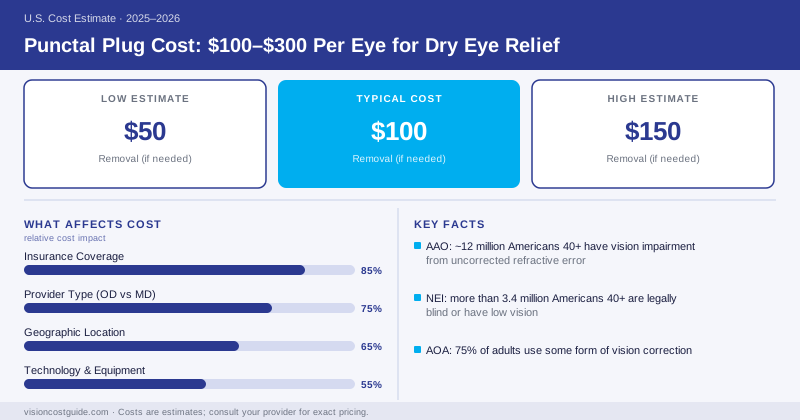
Punctal plugs cost $25–$75 per eye for a temporary trial and $100–$300 for semi-permanent silicone versions. Insurance frequently covers punctal plugs when dry eye is documented and conservative treatments like artificial tears have already been tried, since it’s classified as a medical procedure rather than a cosmetic or elective one.
Insurance Coverage
Because punctal plugs treat a diagnosed medical condition — moderate-to-severe dry eye disease, often with documented corneal staining or symptom scores — most commercial insurance plans and Medicare cover them, typically after you’ve tried and documented failure of artificial tears or prescription dry eye drops for a period of weeks to months. Expect a copay similar to a standard office procedure rather than the full cash price if your ophthalmologist documents medical necessity.
What Drives Long-Term Cost
Silicone plugs can migrate, fall out, or occasionally need removal if they cause irritation, each of which can mean an additional office visit. Some patients need plugs replaced every one to two years as they naturally work their way out. Factor in an occasional follow-up visit ($75–$150) when budgeting the true annual cost, rather than assuming the initial insertion is a one-time expense.
Alternatives Worth Comparing
For milder dry eye, prescription anti-inflammatory drops like cyclosporine or lifitegrast run $300–$600 a month without insurance coverage — a cost that makes a one-time $100–$300 punctal plug look considerably more affordable if it achieves similar symptom relief. For more severe cases that don’t respond to plugs, in-office treatments like intense pulsed light or thermal pulsation therapy run $500–$1,500 per session and are typically not covered by insurance.
Rarely, silicone punctal plugs can cause a painful obstruction if they migrate into the tear drainage canal rather than falling out. If you develop new swelling, pain, or discharge near the inner corner of your eye after plug insertion, contact your eye doctor promptly rather than waiting for your next scheduled visit.
Bottom Line
At $25–$300 per eye depending on plug type, punctal plugs are one of the more affordable and frequently insurance-covered options for moderate-to-severe dry eye. Ask your eye doctor about starting with a temporary trial plug before committing to the longer-lasting version.