LASIK has been available in the US since 1999. SMILE got FDA approval in 2016. Those extra 17 years explain a lot — SMILE is newer, offered at fewer centers, and costs more. But for patients who are good candidates, the flapless design addresses one of LASIK’s most persistent complaints: post-surgical dry eye.
Here’s the full cost picture and what you need to know before pursuing SMILE.
What ReLEx SMILE Actually Does
SMILE stands for Small Incision Lenticule Extraction. Where LASIK uses a microkeratome or femtosecond laser to cut a flap, fold it back, reshape the corneal tissue with an excimer laser, and replace the flap — SMILE does the whole procedure through a tiny 2–4mm arc incision. No flap at all.
A femtosecond laser (the VisuMax system from ZEISS) creates a small disc-shaped piece of corneal tissue called a lenticule, sized and shaped precisely to correct your prescription. The surgeon removes the lenticule through the small incision, and the remaining cornea has a new shape — and new focal length.
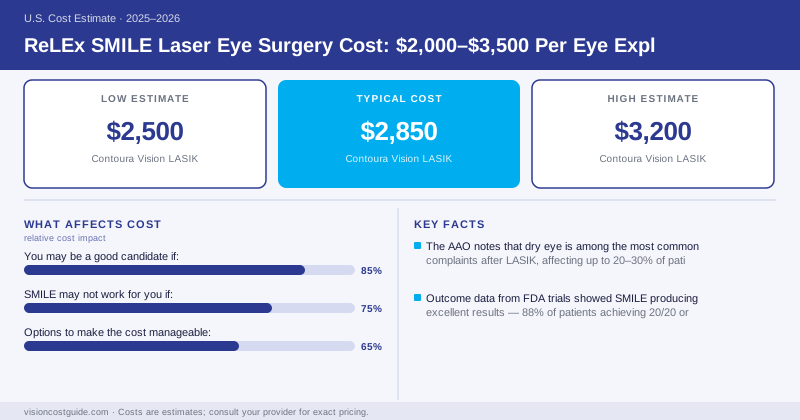
Because the procedure doesn’t sever the same nerve networks that LASIK’s flap does, SMILE typically disrupts fewer corneal sensory nerves. The result: less post-surgical dryness in many patients. The AAO notes that dry eye is among the most common complaints after LASIK, affecting up to 20–30% of patients in the first year. SMILE’s smaller incision profile reduces that risk.
2026 Cost Breakdown
| Procedure | Cost Per Eye | Both Eyes | Notes |
|---|---|---|---|
| ReLEx SMILE (standard) | $2,000–$3,000 | $4,000–$6,000 | Correction for myopia only |
| ReLEx SMILE (premium/complex) | $3,000–$3,500 | $6,000–$7,000 | High prescription, astigmatism |
| LASIK (standard) | $2,000–$2,500 | $4,000–$5,000 | Broader prescription range |
| PRK | $1,800–$2,500 | $3,600–$5,000 | No flap, longer recovery |
| Contoura Vision LASIK | $2,500–$3,200 | $5,000–$6,400 | Topography-guided LASIK |
Three factors drive the premium. First, the ZEISS VisuMax platform is expensive and fewer practices own one. Second, surgeons need additional certification and case volume to perform SMILE well. Third, genuine market scarcity — if there’s one SMILE provider in your metro area, there’s no price competition to push costs down.
Who Is a Good Candidate for SMILE?
SMILE works well for myopia (nearsightedness) up to about -10.00 diopters and mild to moderate astigmatism. But it’s not right for everyone.
You may be a good candidate if:
- You have moderate to high myopia and would otherwise need LASIK or PRK
- You have pre-existing dry eye symptoms — SMILE’s reduced nerve disruption may be preferable
- You’re in a physically demanding job or sport where a corneal flap creates flap-dislocation risk
- Your corneal thickness supports the procedure (the surgeon will measure this)
SMILE may not work for you if:
- You have hyperopia (farsightedness) — SMILE doesn’t yet treat this in the US
- Your astigmatism is high or complex
- You have an active corneal disease like keratoconus
- Your cornea is too thin
The candidacy exam — meticulous corneal mapping, topography, pachymetry (thickness measurement), and refraction — costs $100–$300 and is essential before any quote matters. Don’t skip it.
SMILE vs. LASIK vs. PRK: The Real Comparison
LASIK creates a flap and heals within 24 hours — visual recovery is fast. SMILE has no flap but recovery is still fast (most patients see well within 1–3 days). PRK removes the surface epithelium entirely, which means slower recovery (1–2 weeks) but the lowest long-term dry eye rates and no flap risk at all.
For dry-eye-prone patients, the ranking is often: PRK ≈ SMILE > LASIK. For prescription range and speed of visual recovery: LASIK ≈ SMILE > PRK.
| Factor | SMILE | LASIK | PRK |
|---|---|---|---|
| Flap created | No | Yes | No |
| Post-op dry eye risk | Lower | Higher | Lowest |
| Recovery time | 1–3 days | 1–2 days | 7–14 days |
| Treats hyperopia | No (US) | Yes | Yes |
| Typical cost per eye | $2,000–$3,500 | $2,000–$3,200 | $1,800–$2,500 |
Where to Find SMILE Providers
SMILE requires the ZEISS VisuMax laser platform, which is less common than the platforms used for LASIK. As of 2026, SMILE is available at major academic eye centers, large refractive surgery practices in metropolitan areas, and LASIK chains that have invested in the platform.
Finding a surgeon matters more here than with commodity LASIK. Look for someone who has performed 500+ SMILE procedures, not 50. Outcome data from FDA trials showed SMILE producing excellent results — 88% of patients achieving 20/20 or better uncorrected — but that data came from experienced surgeons.
Some practices market “SMILE” as a general term or rebrand their custom LASIK as flapless when it still creates a partial flap. True ReLEx SMILE uses only the VisuMax femtosecond laser and creates no flap. Ask specifically: “Is this Johnson & Johnson VisuMax-based ReLEx SMILE with no corneal flap?” If the answer is vague, that’s your answer.
Paying for SMILE
Insurance won’t cover it. Plan on full out-of-pocket expense.
Options to make the cost manageable:
- HSA/FSA funds — both are eligible expenses for refractive surgery
- CareCredit or Alphaeon Credit — 12–24 month financing, often 0% promotional APR if paid on time
- Payment plans — many refractive surgery practices offer in-house plans
- Package pricing — some surgeons bundle pre-op testing, the procedure, and 1-year enhancement guarantee into one price
Enhancement policies matter: ask what happens if your vision regresses. A reputable SMILE surgeon should offer free or low-cost enhancement within 1–2 years if your result drifts. Get it in writing.
The Bottom Line
SMILE costs $2,000–$3,500 per eye — a meaningful premium over standard LASIK, but for specific patients it’s a premium that buys something real: a flapless procedure with lower post-surgical dry eye rates and no flap-related risk. If dry eye is a concern for you or your prescription falls in SMILE’s correction range, it’s worth seeking out a consultation at a center that offers both LASIK and SMILE so you can compare.
If you’re also weighing the cost of continuing to wear contacts, the LASIK vs. contacts lifetime cost comparison may help frame what refractive surgery is actually worth over time.
Frequently Asked Questions
ReLEx SMILE typically costs $2,000–$3,500 per eye, or $4,000–$7,000 for both eyes. Pricing varies by surgeon experience, geographic market, and whether pre-op testing is bundled. Because fewer US centers offer SMILE than LASIK, you're less likely to find deep discount pricing on it.
For the right candidate, SMILE offers meaningful advantages: no corneal flap means no flap-related complications, and less corneal nerve disruption typically means lower rates of post-surgical dry eye. Outcomes for myopia correction are comparable to LASIK. However, SMILE currently can't correct farsightedness (hyperopia) or significant astigmatism in all cases, so LASIK remains the broader option for most prescriptions.
Almost never. Like LASIK, SMILE is classified as elective refractive surgery by nearly all insurers and is excluded from standard health and vision plans. Some employers offer FSA/HSA accounts that can be used, and some surgeons offer financing. Military personnel may have access to subsidized refractive surgery through select military treatment facilities.