The appeal of rimless glasses is obvious the moment you put them on: they nearly disappear on your face. No bold frame, no heavy metal — just lenses that seem to float. But that minimalist look comes with a quirk most shoppers don’t expect — the lenses, not a frame, carry the structure, and that changes the price math.
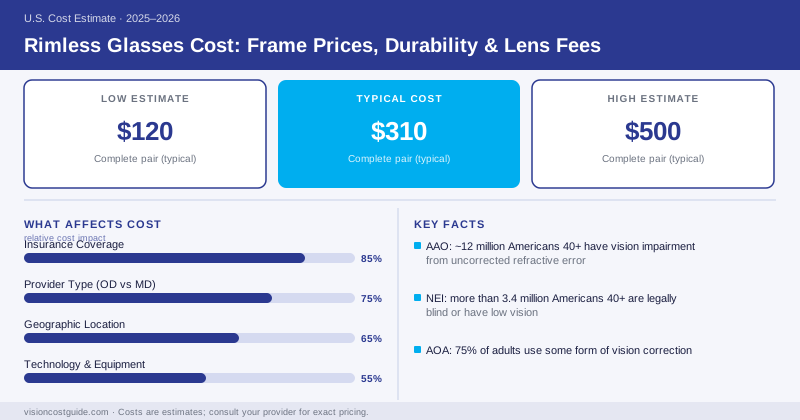
Rimless glasses range from $120 to $500+ for a complete pair. The mounting hardware is cheap; it’s the lens requirements that drive the cost. Here’s how it breaks down.
Rimless Glasses Price Breakdown
| Item | Cost |
|---|---|
| Rimless mount (online) | $30–$80 |
| Rimless mount (premium brand) | $150–$400 |
| Polycarbonate lenses (recommended) | +$30–$80 |
| Trivex lenses (premium impact-resistant) | +$60–$120 |
| Drilling/edge work | Often included; +$20–$40 if separate |
| Anti-reflective coating | +$30–$100 |
| Complete pair (typical) | $120–$500 |
Notice the mount itself can be cheap — under $80 online. The cost climbs because rimless designs essentially force you into sturdier, more expensive lens materials. You can’t safely put basic CR-39 plastic in a drilled rimless mount; it’ll crack at the holes.
Why the Lens Material Matters So Much
In a rimless design, the lens is the frame. The drill holes that anchor the temples and bridge are stress points, so the lens has to be impact-resistant. That means polycarbonate or Trivex — materials that cost more than standard plastic. Trivex in particular is prized for rimless because it resists cracking around drill holes better than polycarbonate, though it costs more.
Rimless glasses cost $120–$500+ for a complete pair. The mount is cheap, but the required impact-resistant lenses (polycarbonate or Trivex) add $30–$120 to the lens bill. Budget for sturdier lens material — skimping on it leads to cracked lenses at the drill holes. The look is unbeatable, but the durability trade-off is real.
The Durability Trade-Off
Rimless glasses are lighter and more discreet than any framed style, but they’re also the most fragile. Without a rim protecting the lens edges, drops and bumps stress the drill points directly. They demand gentler handling and benefit hugely from a hard case. If you’re rough on glasses or buying for an active kid, a full-rim or semi-rimless design holds up far better.
Who Rimless Glasses Suit Best
They’re a great fit if you:
- Want the lightest, least-noticeable frame possible
- Have a mild-to-moderate prescription (thinner lenses look cleaner rimless)
- Prefer a professional, understated aesthetic
- Are willing to handle glasses carefully
They’re a poor fit for very strong prescriptions (thick lens edges look bulky and unattractive without a rim) and for anyone hard on their eyewear.
Strong prescriptions and rimless don’t mix well. High-minus prescriptions produce thick lens edges that look bulky and unbalanced in a rimless mount, and the added lens weight stresses the drill holes. If your prescription is above roughly ±4.00, talk to your optician about high-index lenses or consider a semi-rimless or full-rim style instead. The savings on lens drama are worth it.
How It Compares to Other Frame Styles
Rimless typically costs more than a basic full-rim plastic frame because of the lens material requirement, but it can land below premium designer eyeglass frames. Many rimless mounts pair beautifully with titanium frames hardware, combining lightness with strength. If you want minimalism and durability together, titanium-mounted rimless is the sweet spot — for a price.
Bottom Line
Rimless glasses cost $120–$500+ for a complete pair, with the lens material doing most of the heavy lifting on price. They deliver an unmatched lightweight, near-invisible look, but you’re trading away some durability and you’ll need impact-resistant lenses. Best for mild prescriptions and careful wearers. If you love the aesthetic, budget for quality lenses and consider adding an anti-reflective coating so those barely-there lenses stay crystal clear.
Frequently Asked Questions
A complete pair of rimless glasses typically costs $120–$500+. The mounting hardware is inexpensive, but the lenses must be thicker and drilled, which adds to the lens portion of the bill.
Because the lens does double duty as the structure, it must be drilled and often made of impact-resistant materials like polycarbonate or Trivex. That added lens work and material can raise the total versus a simple full-rim frame.
They're lighter and nearly invisible but more fragile than full-rim glasses. The drill holes are stress points, so polycarbonate or Trivex lenses are strongly recommended for durability.