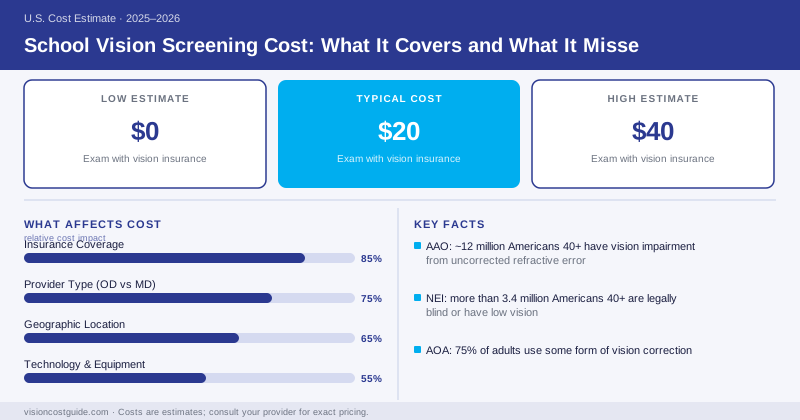
Free isn’t the same as thorough. School vision screenings cost nothing for most families, which is great, but that $0 price tag hides a problem: a screening can miss the majority of vision issues a child actually has. Understanding the gap could save your kid from a year of squinting through class.
A school screening is a quick check, usually a wall chart for distance vision, run by the nurse or a volunteer group. It flags some kids for follow-up. It is not, and was never meant to be, a substitute for a comprehensive eye exam.
What a Screening Does and Doesn’t Do
Screenings are designed to be fast and cheap, so they test a narrow slice of vision.
What they catch:
- Significant distance-vision blur (the classic eye chart)
- Sometimes obvious eye misalignment
- Occasionally color vision, depending on the program
What they routinely miss:
- Near-vision and focusing problems that affect reading
- Eye-teaming disorders like convergence insufficiency
- Mild-to-moderate refractive errors
- Eye-health conditions only visible on a full exam
Studies cited by the American Optometric Association estimate that school screenings can miss a large share of vision problems, with some research putting the figure as high as 60% to 75% of kids who actually need care.
The Cost Comparison
| Service | Cost | Thoroughness |
|---|---|---|
| School vision screening | $0–$40 | Limited (pass/fail) |
| Pediatrician vision screening | $0 (well-visit) | Limited |
| Comprehensive pediatric eye exam | $75–$200 | Complete |
| Exam with vision insurance | $0–$40 copay | Complete |
The lesson isn’t that screenings are bad. They’re a useful first net. The lesson is that a “pass” doesn’t mean clear eyes, and the real diagnostic value lives in a comprehensive pediatric eye exam.
School vision screenings are usually free but can miss 60%–75% of children’s vision problems. Treat a passing screening as a starting point, not a clean bill of eye health. A full exam is the only reliable check.
Why So Many Problems Slip Through
The math is simple. A wall chart tests distance vision while a kid sits still and reads letters. But most school work happens up close: reading, writing, tablets. A child can have 20/20 distance vision and still struggle with near focusing or eye-teaming, the exact skills a chart never measures.
Kids also adapt. They rarely complain, because blurry or doubled vision is the only world they know. So they squint, hold pages close, avoid reading, or get labeled as struggling students, when the real issue is undiagnosed and entirely fixable.
What Parents Should Do
Use screenings, but don’t lean on them. A sensible plan:
- Get a comprehensive eye exam before first grade, per AOA guidance
- Repeat exams every one to two years through school, more often if your child wears glasses
- Don’t wait for a failed screening to book an exam
- Watch for behavioral signs: squinting, head tilting, eye rubbing, avoiding reading, sitting close to screens
If your child does need correction, our glasses for kids guide covers what frames and lenses cost, and vision insurance can cut the exam price to a small copay.
A passed screening can create false reassurance that delays real care. The CDC notes that early childhood is the critical window for treating conditions like amblyopia, and missing that window can cause permanent vision loss. Don’t let a free screening lull you into skipping the comprehensive exam.
Bottom Line
School vision screenings are worth doing precisely because they’re free and easy, they catch some kids who’d otherwise go unnoticed. But their value ends there. With a documented miss rate as high as three in four problem cases, a screening is a smoke detector, not a fire inspection.
The takeaway for parents: let your child do the school screening, then book a comprehensive eye exam on a regular schedule no matter the result. With vision insurance, that exam can cost as little as a copay, and it’s the only test that actually rules out the problems a screening was never built to find.
Frequently Asked Questions
School vision screenings are typically free, run by the school nurse or a volunteer program. Some districts charge a small fee of up to $40 if administered by an outside vendor, but most cost nothing.
No. A screening is a quick pass-fail check, mainly for distance acuity. Research shows screenings miss a large share of vision problems, including near-vision issues, eye-teaming disorders, and eye-health conditions a full exam would catch.
Yes. The American Optometric Association recommends a comprehensive eye exam before first grade and regularly after, regardless of screening results, because passing a screening doesn't rule out a problem.