Roughly 50% of scleritis cases are associated with an underlying systemic autoimmune condition — most commonly rheumatoid arthritis, granulomatosis with polyangiitis, or lupus — according to figures cited across ophthalmology and rheumatology literature. That statistic changes the entire cost conversation, because treating scleritis often means treating a body-wide disease, not just an eye.
Scleritis is a severe, often deeply painful inflammation of the sclera — the white outer wall of the eye — distinct from and considerably more serious than episcleritis, its far more common and much milder look-alike. Getting the diagnosis right at the outset matters enormously for both your treatment plan and your budget.
Treatment Costs by Severity and Cause
| Treatment | Used For | Typical Cost |
|---|---|---|
| Diagnostic workup (labs, imaging, rheumatology referral) | Identifying underlying cause | $300-$1,500 |
| Oral NSAIDs | Mild, non-necrotizing scleritis | $10-$40/month (generic) |
| Oral corticosteroids | Moderate-severe flares | $10-$30/month (generic prednisone) |
| Steroid-sparing immunosuppressants (methotrexate, azathioprine) | Recurrent or steroid-dependent cases | $30-$150/month |
| Biologic immunosuppressants (infliximab, rituximab, adalimumab) | Severe, refractory, or vasculitis-associated cases | $1,500-$5,000+/month (often largely insurance-covered) |
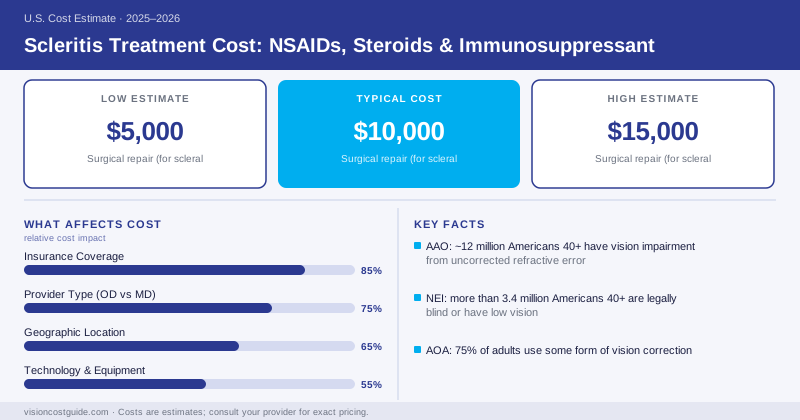
| Surgical repair (for scleral thinning/perforation) | Rare, severe necrotizing cases | $5,000-$15,000+ |
Why the Diagnostic Workup Is Its Own Significant Cost
Because scleritis is so frequently a marker of systemic autoimmune disease, a proper workup extends well beyond the eye exam itself. Expect blood tests (ANA, rheumatoid factor, ANCA, and others depending on clinical suspicion), possibly chest imaging (to screen for granulomatosis with polyangiitis or sarcoidosis), and typically a rheumatology referral for co-management. This diagnostic phase alone commonly runs $300-$1,500 before any treatment even begins — and it’s arguably the most important phase, since identifying and treating an underlying condition like undiagnosed rheumatoid arthritis has health implications far beyond the eye.
First-Line Treatment: Oral NSAIDs
For mild, non-necrotizing scleritis without an aggressive underlying cause, oral NSAIDs (like indomethacin or ibuprofen at prescription-strength doses) are often the first treatment tried, at a modest $10-$40/month for generic versions. Topical steroid drops alone are notably not considered adequate treatment for true scleritis — unlike episcleritis, scleritis typically requires systemic (oral or injected) treatment to adequately control inflammation.
Because of the strong association with systemic autoimmune disease, most ophthalmologists co-manage scleritis patients with a rheumatologist from early in the treatment course — even before lab results confirm a specific diagnosis, if clinical suspicion is high. This adds a second specialist’s visits and potentially medication costs to your budget, but it also means any underlying condition (which may have been silently active for years) gets identified and treated, which can meaningfully change your long-term health trajectory beyond just resolving the eye symptoms.
Escalation to Immunosuppressants
For scleritis that doesn’t respond adequately to NSAIDs and oral steroids, or for necrotizing scleritis (a more severe, vision- and eye-structure-threatening subtype), steroid-sparing immunosuppressants become necessary, both to control inflammation and to avoid the significant side effects of long-term oral steroid use. Conventional options like methotrexate cost a relatively modest $30-$150/month. Biologic medications — reserved for severe or vasculitis-associated cases — cost dramatically more, $1,500-$5,000+/month at list price, though patients typically pay far less out of pocket thanks to insurance coverage and manufacturer copay assistance programs, given the clear medical necessity for these severe cases.
Insurance Coverage
Scleritis treatment, including the diagnostic workup, rheumatology co-management, and all medication tiers, is covered under medical insurance as a serious systemic-linked eye disease. Biologic medications typically require prior authorization but are approved readily when necrotizing or vasculitis-associated scleritis is documented, given the vision-threatening nature of the condition if undertreated.
Scleritis pain is characteristically severe — often described as a deep, boring ache that wakes patients at night and radiates to the jaw or forehead — and is a genuine red flag that should prompt same-day or next-day ophthalmology evaluation, not a wait-and-see approach. Untreated necrotizing scleritis can lead to scleral thinning, perforation, and permanent vision loss.
Bottom Line
If you have severe, boring eye pain rather than mild irritation, don’t self-diagnose this as “just an irritated eye” — get evaluated promptly. The diagnostic workup is a real cost, but it’s the step that identifies whether you’re also dealing with an undiagnosed autoimmune condition that needs treatment in its own right.