“Scratch-proof” is the word salespeople use. It’s not true. No coating makes a lens scratch-proof — but a scratch-resistant coating does make lenses meaningfully tougher, and it’s often free anyway. So the real cost question is narrower than you’d think.
Scratch-resistant coating runs $0 to $40. The wide range exists because it’s bundled free with many lens materials and charged separately on others. Here’s exactly when you pay and whether it’s worth it.
Scratch-Resistant Coating Price Breakdown
| Item | Cost |
|---|---|
| On basic plastic (CR-39) lenses | $10–$40 add-on |
| On polycarbonate lenses | Usually included free |
| On Trivex lenses | Usually included free |
| On high-index lenses | Usually included free |
| Bundled with AR coating | Often free |
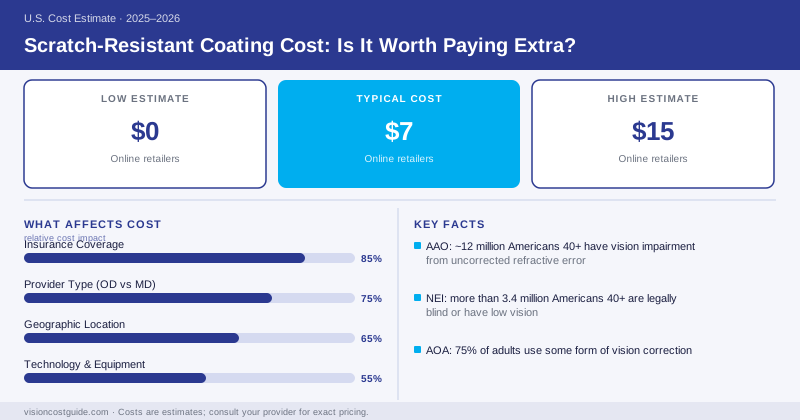
| Online retailers | $0–$15 |
The pattern is clear: the coating is mostly an upcharge only on the cheapest plastic lenses. Step up to polycarbonate, Trivex, or high-index, and it typically comes built in at no extra cost.
What the Coating Actually Does
Scratch-resistant coating is a hard, clear layer applied to the lens surface (and often both surfaces). It dramatically reduces the everyday micro-scratches that come from cleaning, casual handling, and dropping glasses. It does not make lenses immune to scratches — sand, grit, and wiping a dry, dusty lens will still scratch coated lenses. Think of it as a major upgrade in durability, not a force field.
Scratch-resistant coating costs $0–$40, and it’s free on most lens materials except basic plastic. On cheap CR-39 lenses, the small upcharge is genuinely worth it. On polycarbonate, Trivex, or high-index, it’s already included. It reduces scratches significantly but doesn’t make lenses scratch-proof — proper cleaning still matters.
When to Pay for It
The only real decision point is basic plastic (CR-39) lenses, where the coating is an add-on. In that case, paying $10–$40 is almost always worth it — uncoated plastic scratches fast, and a scratched lens is essentially ruined since scratches can’t be buffed out. For the cost of a few dollars, you extend the usable life of your glasses considerably.
When It’s a Non-Decision
If you’re choosing polycarbonate (the standard for kids and active wearers), Trivex, or high-index lenses, scratch-resistant coating almost always comes free. There’s no separate decision and no upsell to fall for — it’s just part of the package. Don’t let anyone charge you extra for a coating that’s already standard on those materials.
Cleaning habits matter more than the coating. Wiping dry, dusty lenses with your shirt grinds grit into the surface and scratches even coated lenses. Rinse lenses with water first, then dry with a microfiber cloth. A scratch-resistant coating buys you durability, but bad cleaning habits will scratch any lens. Don’t pay for the coating and then sabotage it with a paper towel.
How It Fits With Other Coatings
Scratch-resistant coating is usually paired with an anti-reflective coating, and many AR packages include scratch protection automatically. If you’re adding AR for screen glare, check whether scratch resistance is bundled — it usually is, which means you may already be covered without a separate charge. Layering these correctly keeps your eyeglasses clearer and longer-lasting without overpaying.
Bottom Line
Scratch-resistant coating costs $0–$40, but in practice it’s free on every lens material except basic plastic. On CR-39 lenses, pay the small upcharge — it’s worth it. On polycarbonate, Trivex, or high-index, it’s already included, so refuse any separate charge. It reduces scratches significantly but isn’t scratch-proof, so clean your lenses properly. When figuring out why glasses are so expensive, this is one add-on that’s often less of a cost than you’d expect.
Frequently Asked Questions
Scratch-resistant coating typically costs $0–$40 as an add-on. It's frequently included free on polycarbonate, Trivex, and high-index lenses, and charged separately mainly on basic plastic lenses.
No. No coating makes lenses scratch-proof. It significantly increases scratch resistance and reduces everyday surface scratches, but lenses can still scratch from sand, grit, or abrasive cleaning.
For basic plastic (CR-39) lenses, yes, the small upcharge is worthwhile. For polycarbonate or high-index lenses where it's usually included free, there's no separate decision to make.